
Industrial design is constantly evolving to meet the demanding requirements of modern manufacturing and material handling operations. Among the critical components that experienced engineers carefully evaluate when designing crane systems and heavy machinery, power delivery systems play a fundamental role in operational success. The choice of cable technology can make the difference between smooth, efficient operations and costly downtime that affects productivity.
When examining the landscape of industrial power solutions, one technology consistently stands out for its reliability and performance characteristics. Advanced festoon cable systems have become the preferred choice for industrial designers working on projects ranging from port facilities to manufacturing plants. Understanding why these specialized cables dominate the specifications of top engineering firms reveals important insights into modern industrial design priorities.
Key Takeaways
The preference of top industrial designers for advanced festoon cable products reflects fundamental principles that guide successful engineering practice:
- Specialized cable products engineered specifically for festoon applications deliver superior performance compared to adapted general-purpose cables
- Material selection and construction quality directly impact reliability, service life, and total cost of ownership
- Environmental resistance capabilities must match the specific conditions of each application environment
- Data transmission capabilities enable sophisticated control systems and monitoring technologies
- Compliance with recognized industry standards ensures safety and performance reliability
- Real-world performance data validates the advantages of properly specified cable systems
- Total lifecycle cost considerations justify investment in quality cable products
Engineers designing industrial equipment must evaluate power delivery systems with the same rigor applied to mechanical and structural components. The cable system represents a critical element that influences overall equipment reliability, maintenance requirements, and operational efficiency.
Understanding the Role of Power Delivery in Industrial Design
Every crane system, whether it’s a ship-to-shore gantry crane at a busy port or an overhead crane in a steel mill, requires continuous power delivery to operate effectively. The power supply system must maintain consistent electrical connectivity while the equipment moves along its designated path. This seemingly simple requirement becomes complex when you consider the environmental challenges, mechanical stresses, and safety requirements involved.
Industrial designers face multiple considerations when selecting power delivery systems. The solution must withstand constant flexing and movement, resist environmental factors like moisture and temperature extremes, maintain reliable signal transmission, and minimize maintenance requirements while maximizing operational lifespan. These demands have led experienced engineers to favor specialized cable solutions designed specifically for dynamic industrial applications.
The Technical Advantages That Define Superior Cable Systems
When industrial designers evaluate cable technologies for mobile equipment applications, they examine specific performance characteristics that directly impact system reliability. Advanced cable products engineered for festoon applications incorporate several critical features that set them apart from conventional wiring solutions.
Material Engineering and Construction Quality
The internal construction of specialized industrial cables represents years of engineering refinement. High-quality festoon cables utilize specially designed flexible stranded copper conductors that maintain electrical integrity through millions of flexing cycles. The insulation materials are carefully selected for their ability to withstand mechanical stress while providing excellent electrical properties.
Modern cable designs often incorporate EPR rubber insulation combined with chloroprene rubber sheathing, materials chosen for their superior resistance to environmental factors. This combination provides protection against oil exposure, UV radiation, moisture penetration, and ozone degradation. For applications requiring data transmission alongside power delivery, aluminum-polyethylene screening prevents electromagnetic interference that could compromise signal quality.
Mechanical Performance Under Real-World Conditions
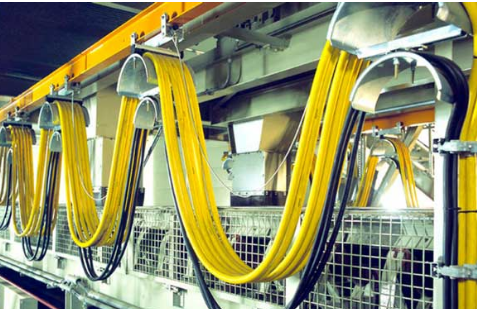
The physical design of advanced festoon cables addresses the unique mechanical challenges of suspended, moving applications. Unlike cables designed for fixed installations, these products must maintain their structural integrity while forming loops and experiencing continuous motion along a track system.
The flat profile design commonly used in festoon applications offers distinct advantages. This configuration prevents the cable from twisting during movement, a critical factor in maintaining long-term reliability. The flat design also optimizes space utilization in compact installations where multiple cables must run parallel to each other. Engineers appreciate that this design allows for a minimum bending radius of approximately ten times the cable’s outer diameter, reducing mechanical stress at flex points.
Temperature performance represents another crucial specification. Quality festoon cables maintain flexibility and electrical performance across a wide temperature range, typically from negative forty degrees Celsius to positive eighty degrees Celsius during flexible operation. This capability ensures reliable performance in both frigid outdoor port environments and hot industrial facilities.
Why Leading Engineering Firms Specify Advanced Cable Products
Industrial designers at top engineering firms base their component selections on rigorous evaluation criteria that prioritize long-term performance and total cost of ownership. Their preference for advanced festoon cable products stems from documented advantages that directly impact project success.
Operational Reliability and System Uptime
Equipment downtime in industrial facilities translates directly into lost revenue and reduced productivity. A port crane that experiences electrical failures can disrupt entire shipping schedules, while a manufacturing overhead crane stoppage halts production lines. Engineers selecting power delivery systems understand that cable reliability directly influences overall system availability.
Advanced festoon cables demonstrate proven reliability in demanding applications. Their robust construction withstands the mechanical stresses of continuous movement, with quality products designed for festoon systems operating at speeds up to 240 meters per minute on mono-spiral reel configurations. This performance capability accommodates the requirements of modern port equipment, including Quay Cranes that require high-speed operation.
The weather resistance incorporated into premium cable designs ensures consistent performance regardless of environmental conditions. Outdoor festoon systems at shipping terminals face exposure to salt spray, UV radiation, and temperature fluctuations. Engineers specify cables rated for outdoor use because they understand these environmental factors can rapidly degrade inferior products.
Maintenance Efficiency and Lifecycle Cost
When industrial designers evaluate components for major projects, they consider maintenance requirements and expected service life as critical factors in the total cost equation. Advanced festoon cable systems offer compelling advantages in both areas.
The modular nature of properly designed festoon systems simplifies maintenance procedures. When cable replacement becomes necessary, the system design allows technicians to complete the work efficiently without extensive equipment disassembly. This accessibility reduces maintenance labor costs and minimizes equipment downtime during service operations.
Quality cables designed specifically for festoon applications demonstrate extended service life compared to adapted general-purpose cables. The specialized construction withstands the unique stresses of suspended, moving applications without premature failure. Engineers recognize that higher initial material costs are justified by reduced replacement frequency and lower total lifecycle expenses.
Safety and Compliance Considerations
Safety requirements drive many design decisions in industrial applications. Power delivery systems must meet stringent electrical safety standards while operating in environments where equipment failure could endanger personnel or cause property damage.
Advanced festoon cables incorporate safety features that address multiple hazard scenarios. Fire resistance testing to IEC 60332-1 standards ensures cables won’t propagate flames in fire situations. The robust insulation and sheathing materials provide protection against electrical faults that could create shock hazards. For applications in potentially explosive atmospheres, specialized cable variants meet the requirements for explosion-proof installations.
Application-Specific Design Considerations
Industrial designers must match cable specifications to the specific demands of each application. The diversity of festoon cable products available allows engineers to optimize systems for different operational environments and performance requirements.
Port and Maritime Applications
Port facilities represent one of the most demanding environments for cable systems. Ship-to-shore cranes, rubber-tired gantry cranes, and rail-mounted gantry cranes all require robust power delivery that functions reliably despite constant movement, exposure to salt water, and temperature variations.
Engineers designing port equipment typically specify cables rated for 0.6/1 kV operation that can handle the high power demands of large crane motors and control systems. The cables must resist corrosion from marine environments while maintaining flexibility in cold weather conditions. Premium festoon cables designed for maritime applications incorporate materials and construction techniques specifically engineered to address these challenges.
The high operational speeds required in modern port facilities also influence cable selection. Container terminals operating at maximum efficiency require crane systems that move rapidly without compromising safety or reliability. Advanced cable products maintain their performance characteristics at travel speeds up to 240 meters per minute, meeting the demands of the fastest port equipment.
Manufacturing and Heavy Industry
Manufacturing facilities utilize overhead cranes and material handling equipment that operate continuously throughout production shifts. The reliability of these systems directly impacts production output and operational efficiency.
In steel mills, foundries, and heavy manufacturing environments, cables face exposure to extreme temperatures, airborne contaminants, and potential impact hazards. Engineers specify festoon cables with robust sheathing that resists oil, chemicals, and mechanical damage. The ability to withstand ambient temperatures up to 80 degrees Celsius during operation ensures reliable performance in hot industrial environments.
The data transmission capabilities of advanced cables have become increasingly important as manufacturing facilities implement automated systems and smart monitoring technologies. Modern festoon cables can incorporate conductors for power delivery alongside screened pairs for transmitting control signals and data without interference, enabling sophisticated automation while simplifying system installation.
The Engineering Process Behind Cable Selection
When industrial designers approach the task of specifying power delivery systems for mobile equipment, they follow a systematic evaluation process that considers multiple factors affecting performance and reliability.
Load and Environmental Analysis
Engineers begin by analyzing the electrical loads that the cable system must support. This includes the power requirements of drive motors, control systems, and any auxiliary equipment. Simultaneously, they evaluate environmental factors including temperature ranges, exposure to moisture or chemicals, and potential mechanical hazards.
This analysis determines the fundamental cable specifications including conductor size, insulation materials, and sheathing requirements. For complex systems, designers may specify different cable types for different circuits, optimizing each for its specific function while ensuring compatibility within the overall festoon system.
Mechanical Design Integration
The cable selection must integrate seamlessly with the mechanical design of the festoon system. Engineers calculate the required cable lengths based on the travel distance of the equipment, accounting for the loop configuration that allows the cable to extend and retract smoothly during operation.
The weight and flexibility of the cable influence the design of support trolleys and track systems. Advanced festoon cables engineered with lightweight, flexible construction reduce the mechanical load on the festoon hardware while improving overall system performance. This consideration becomes particularly important in longer travel distances where cable weight accumulates significantly.
Quality Standards and Testing Requirements
Leading industrial design firms specify cables that meet recognized international standards for performance and safety. Standards such as DIN VDE 250 Part 814 provide frameworks for evaluating cable construction, electrical properties, and environmental resistance.
Engineers often require specific test certifications including AC voltage testing, conductor temperature ratings, and flame resistance verification. These certifications provide assurance that the cable will perform as expected under real-world operating conditions. The availability of test documentation and technical specifications allows designers to make informed decisions based on verified performance data.
Real-World Performance Data and Case Studies
The preference for advanced festoon cable products among top industrial designers is validated by performance data from operational installations worldwide. Examining real-world applications provides insights into the benefits these systems deliver.
Port Facility Implementations
Modern container terminals represent some of the most demanding applications for festoon cable systems. A typical ship-to-shore crane operates continuously during vessel loading and unloading operations, with the festoon system extending and retracting thousands of times per shift.
Performance data from port installations demonstrates the reliability advantages of properly specified festoon cables. Quality cable products designed for these applications routinely achieve service lives exceeding five years of continuous operation in harsh marine environments. This performance contrasts sharply with lower-grade cables that may require replacement within two years under similar conditions.
The economic impact of improved reliability is substantial. A container terminal operating ten ship-to-shore cranes can avoid significant replacement costs and minimize disruption to cargo operations by specifying advanced cable products initially. The reduction in maintenance interventions also improves safety by limiting the time personnel spend performing work on active equipment.
Heavy Manufacturing Installations
Steel mills and heavy manufacturing facilities provide another valuable perspective on festoon cable performance. In these environments, overhead cranes operate in conditions that test the limits of cable durability, including high ambient temperatures, exposure to metal particles and dust, and continuous mechanical cycling.
Advanced festoon cables specified for these applications demonstrate their value through extended service life and reduced failure rates. Facilities that have upgraded from basic cable products to engineered festoon cables report measurable improvements in system reliability and reductions in unplanned downtime.
The data transmission capabilities of modern festoon cables have enabled manufacturers to implement predictive maintenance programs that further improve operational efficiency. By incorporating sensors and monitoring systems connected through the cable infrastructure, facilities gain real-time insights into equipment condition and performance trends.
Future Trends in Industrial Cable Technology
The industrial design landscape continues evolving as new technologies and operational requirements emerge. Leading cable manufacturers invest in research and development to advance festoon cable capabilities in several key areas.
Enhanced Materials and Construction
Ongoing materials science research is producing new insulation and sheathing compounds that offer improved performance characteristics. Engineers anticipate next-generation cables with enhanced flexibility, superior environmental resistance, and extended service life. These developments will enable the design of more compact, efficient festoon systems while maintaining or improving reliability.
The integration of advanced polymers and composite materials may reduce cable weight without sacrificing mechanical strength or electrical performance. Lighter cables reduce the load on festoon hardware and enable longer travel distances in single-system configurations. These improvements directly benefit industrial designers seeking to optimize system designs while minimizing structural requirements.
Smart Cable Technology
The convergence of cable technology with Internet of Things sensors and monitoring capabilities represents an emerging trend with significant implications for industrial design. Future festoon cables may incorporate embedded sensors that monitor cable condition, detecting issues like insulation degradation or conductor damage before failures occur.
This smart cable technology would provide facility operators with unprecedented visibility into power delivery system health, enabling truly predictive maintenance strategies. Industrial designers recognize that these capabilities align with broader industry movements toward smart manufacturing and data-driven operations.
Frequently Asked Questions
What makes festoon cable different from regular industrial cable?
Festoon cables are specifically engineered to withstand the unique stresses of suspended, moving applications. Unlike fixed installation cables, they feature specialized conductor stranding for flexibility, robust insulation materials that resist environmental degradation, and construction optimized for continuous flexing cycles. The flat profile design common in festoon cables prevents twisting during movement and allows for compact installation in space-constrained applications.
How do environmental factors influence festoon cable selection?
Environmental conditions directly impact cable performance and longevity. Port applications require cables resistant to salt water, UV radiation, and temperature extremes. Manufacturing environments may expose cables to oils, chemicals, and high temperatures. Engineers evaluate the insulation and sheathing materials to ensure they provide adequate protection for the specific environmental challenges present in each application.
What is the typical service life of quality festoon cables?
Service life varies based on application conditions, but properly specified and installed festoon cables routinely achieve five years or more of continuous operation in demanding environments. Factors affecting service life include travel speed and frequency, environmental conditions, cable quality and construction, and maintenance practices. Quality cables designed specifically for festoon applications demonstrate significantly longer service life than adapted general-purpose cables.
Can festoon cables support both power and data transmission?
Modern festoon cables can incorporate multiple conductor types within a single cable assembly. This allows simultaneous transmission of power for equipment operation and data signals for control systems and monitoring equipment. Screened conductor pairs prevent electromagnetic interference that could compromise data transmission quality. This integrated capability simplifies system installation and reduces the number of separate cables required in the festoon system.
What factors determine the appropriate cable size for a festoon application?
Engineers consider several factors when sizing festoon cables, including electrical load requirements and voltage drop calculations, travel distance and loop configuration requirements, environmental conditions and temperature derating factors, mechanical stress from cable weight and flexing cycles, and future expansion requirements and system flexibility. Proper cable sizing ensures reliable operation while optimizing system cost and performance characteristics.
Conclusion
The preference of leading industrial designers for advanced festoon cable products reflects informed engineering judgment based on performance requirements, reliability data, and total cost considerations. These specialized cables deliver the combination of mechanical durability, electrical performance, and environmental resistance required for demanding mobile equipment applications.
As industrial facilities continue advancing toward greater automation and operational efficiency, the power delivery infrastructure that supports critical equipment becomes increasingly important. The cable systems specified today will influence facility operations for years to come, making thoughtful selection essential. Engineers who understand the technical advantages of properly specified festoon cables position their projects for success by prioritizing reliability, performance, and long-term value over initial cost considerations alone.
The evolution of cable technology continues, with new materials and capabilities emerging to meet the changing needs of industrial operations. Industrial designers who stay informed about these developments can leverage the latest innovations to create more efficient, reliable systems that deliver competitive advantages for their clients and organizations.