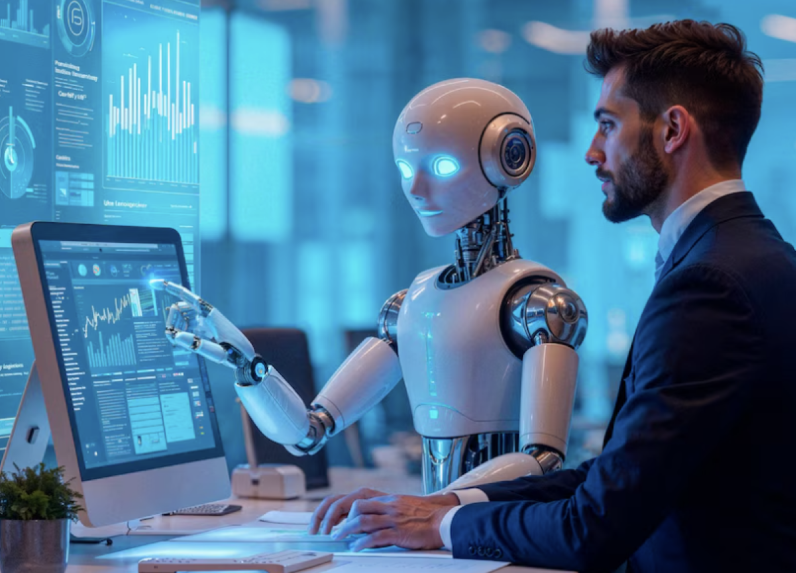

Many headlines paint technologies as something that replaces jobs. The reality is more practical. AI will take on more of a role of how work gets done, rather than who is getting the work done.
However, the vast majority of roles will not be eliminated. They are being adjusted. Tasks shift. Priorities change. Skills evolve.
Where AI Shows Up Day to Day
AI doesn’t arrive with fanfare. It integrates within regular usage tools. Your emails, calendars, documents, and dashboards are a tad smarter now.
Ways that AI in the workplace presents itself as follows:
Drafting and refining written content
- Summarizing meetings and long reports
- Sorting data and spotting patterns
- Answering routine internal questions
These use cases make a time saving without varying the job titles.
The Real Value: Fewer Interruptions
Maybe this incessant switching is just a symptom of modern work. Notifications, alerts, and admin operations disrupt concentration. AI reduces that friction.
AI in the workplace helps human beings by taking care of repetitive processes.
- Stay focused longer
- Finish tasks faster
- Reduce mental fatigue
Taking less breaks leads to a better work output, and not an improved work production.
Skills Are Shifting, Not Vanishing
With simple tasks being handled by AI, humans need to have skilled capabilities. Judgement, creativity, communication, and context are still important.
Workplace AI is critical for humans and to support humans on the job so successful teams going to invest in:
- Clear thinking and problem-solving
- Strong written and verbal communication
- Reviewing and improving AI output
AI provides drafts. Humans provide direction and meaning.
See also: The Most High-Tech Hotels in the World Accepting Cryptocurrency Payments
Trust Comes from Transparency
One sure way AI gets shot down is when it catches people off-guard. Clear communication builds trust. Employees need to know how and why tools are utilized.
This use of AI in the workplace is healthy when it:
- Clear guidelines on acceptable use
- Human review of important decisions
- Demand for privacy and data protection
When AI is used to support people instead of surveilling them, trust is built.
Small Changes Deliver Big Wins
Companies don’t need sweeping transformations. Micro-use helps get results in shorter timeframes.
Good starting points include:
- Automating meeting notes
- Speeding up internal reports
- Improving customer response drafts
These are wins that demonstrate value with little or no disturbance.
Leadership Sets the Tone
Employees watch leadership behavior closely. And when teams have responsible, open leaders use AI, they follow.
Strong workplace AI leadership revolves around:
- Productivity, not surveillance
- Support, not pressure
- Learning, not perfection
This method fosters fear-less adoption.
Final Thoughts
AI is not the future of work. It’s the present. If there is a place where AI fits the mold best it is when the friction is gotten rid of and human intuition is complemented and decision making is optimized.
When used right, AI is not taking the place of work. It improves it.