
Maintaining a commercial roof is not just about aesthetics—it’s a critical aspect of protecting your building’s structural integrity and ensuring a safe, productive environment for its occupants. Business owners who proactively address roofing troubles can avoid costly interruptions and shield themselves from unexpected repairs. Working closely with a trusted commercial roof repair company is often the most reliable way to ensure your roof stays in optimal condition year-round.
Yet, even with the most robust roofing materials, all commercial roofs face potential threats from environmental conditions, aging materials, and improper maintenance. Understanding the most frequent commercial roofing problems—and how to respond to them—can dramatically extend the lifespan of your roof and reduce safety risks within your business.
From ponding water and leaks to the impact of extreme weather, this guide digs deep into common issues and actionable steps for resolving them quickly and efficiently. With a solid maintenance plan and a partner who specializes in commercial roofing, you can minimize disruptions and enhance your investment.
Commercial properties can lose thousands in energy efficiency, repairs, and even lost business time due to unresolved roof issues. Identifying these problems at an early stage is the first line of defense, and investing in solutions pays dividends in the long run.
See also: Future of Global Tech Delivery Software Development Company Models
Roof Leaks
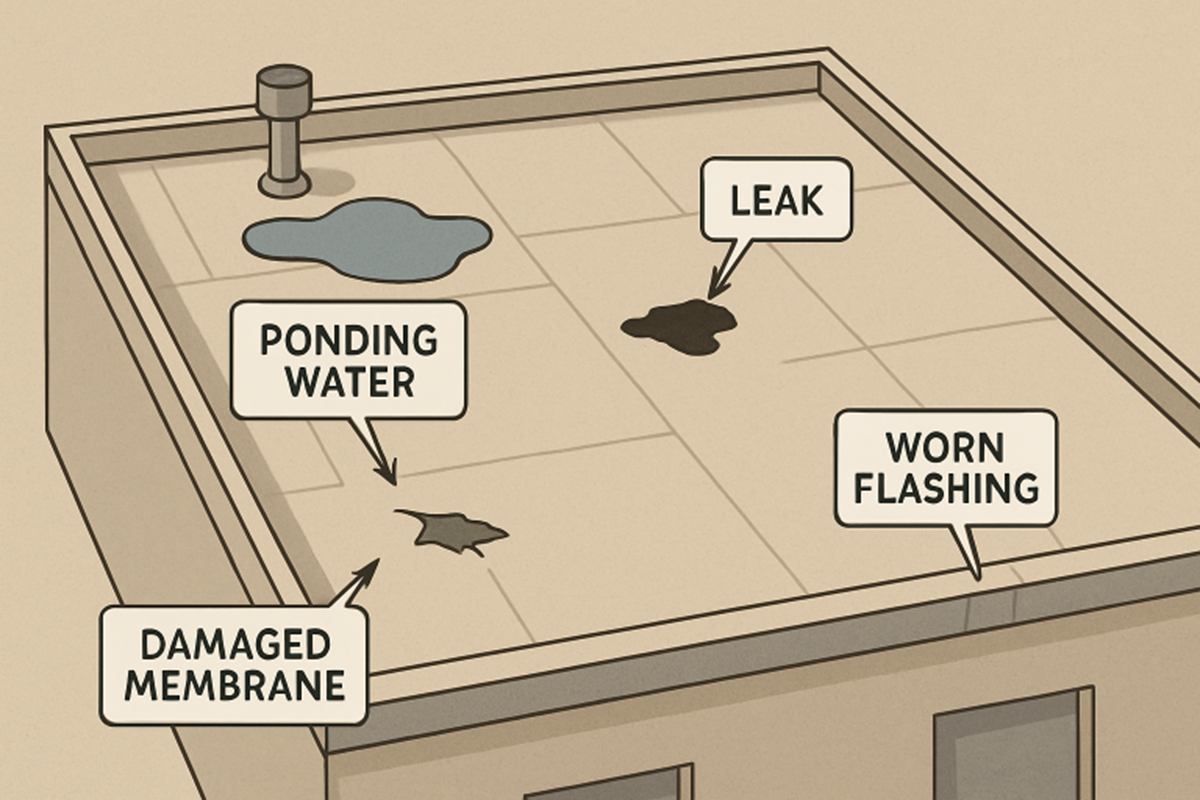
Roof leaks are among the most common challenges facing commercial property owners and facility managers. Often originating from damaged membranes, aging sealants, punctures, or deteriorating flashing, even a minor leak can result in significant property damage if not addressed promptly. In emergency situations, taking immediate steps to control water intrusion as outlined in This Old House guide to emergency roof leak repair can help minimize interior damage until permanent repairs are completed. Regular maintenance inspections are crucial for identifying early warning signs such as water stains, ceiling discoloration, or mold growth. Fixing leaks often involves patching affected areas, resealing penetrations, and replacing failing flashing to prevent the problem from escalating.
Ponding Water
Ponding water is defined as rainwater that remains on the surface of a flat or low-slope roof for over 48 hours after precipitation. Chronic ponding can weaken roofing membranes, increase the risk of leaks, promote moss or algae growth, and—over time—weaken the structural deck. Solutions include improving the roof’s slope, upgrading or installing additional drains, and routinely clearing debris from gutters and downspouts. Preventative measures greatly reduce the likelihood of pooling and the subsequent problems it causes.
Membrane Damage
Single-ply membranes, BUR (Built-Up Roofing), and other commercial roof coverings are vital in keeping your building watertight. However, these materials are vulnerable to punctures from dropped tools, foot traffic during HVAC servicing, or impact from debris. Tears, shrinkage, and blistering may also develop as the roof ages. To prevent significant membrane damage, install protective walk pads in high-traffic zones and schedule annual maintenance checks. When damage is found, prompt professional repair or replacement is critical.
Flashing Failures
Flashing is essential for sealing edges, joints, and penetrations (such as vents and skylights) against water intrusion. Years of exposure to sunlight, fluctuating temperatures, and seasonal storms can dry out or crack flashing, while improper installation may cause premature failure. Routine inspections, particularly after severe weather, are vital for detecting loose, rusted, or damaged flashing. Timely repairs, resealing, and, when necessary, full replacement, help maintain the building envelope’s integrity.
Poor Installation
Incorrect installation techniques—whether in material selection, seam sealing, or flashing attachment—can result in chronic problems, such as leaks, insufficient drainage, or premature wear. To prevent these issues, always use experienced, certified roofing contractors who follow manufacturer specifications and current industry standards. Correct installation reduces risks and ensures your warranty remains valid, protecting your investment for years to come.
Lack of Maintenance
Even the most robust roofing systems require regular maintenance to stay in prime condition. When regular upkeep is neglected, small defects—for example, loose fasteners, clogged drains, or minor membrane punctures—can quickly turn into larger, costlier issues. Building managers should implement a preventative maintenance schedule that includes detailed inspections at least twice annually and after major storms, accompanied by prompt repairs for any identified deficiencies.
Weather Damage
Commercial roofs are constantly exposed to extreme weather, including heavy rain, hail, snow, and high winds. Severe weather can cause immediate, visible destruction or exacerbate existing vulnerabilities. Investing in impact-resistant roofing materials helps mitigate storm damage, while post-event inspections allow for the swift detection and repair of any issues. Establishing an emergency response plan for roofing emergencies is also crucial in severe climate zones to prevent operational downtime and interior damages.
Conclusion
Effective management of commercial roofing issues begins with awareness, regular inspection, and proactive solutions. By understanding and addressing the most common threats—from leaks and ponding to weather-related damages—you protect not only the building but also the business operations and people inside. Staying ahead of problems through maintenance and professional support is an investment that pays dividends in reliability and peace of mind.