
Introduction
In sudden cardiac emergencies, immediate action is critical. Many hesitate to help, fearing they might do something wrong. However, simple actions, like Hands-Only CPR, can sustain life until emergency services arrive. This easy-to-learn technique focuses solely on chest compressions to keep blood circulating to the brain and vital organs. Learning this method empowers you to be a life-saver in an emergency.
What is Hands-Only CPR?
Hands-Only CPR simplifies the rescue process by removing the need for mouth-to-mouth breaths. The core action is pushing hard and fast in the center of the chest to manually pump the heart.
Use this method if the person:
- Suddenly collapses and is unresponsive.
- Is not breathing or is only gasping.
- You are not trained in full CPR.
This technique is most effective for adults and teenagers experiencing sudden cardiac arrest.
First Steps: Safety and Response Check
Before beginning, ensure the area is safe, free from hazards like fire or traffic. Next, check the victim’s responsiveness:
- Check: Tap their shoulder and shout, “Are you okay?”
- Look: Check for normal breathing for no more than 10 seconds.
- Call: If there is no response, immediately call emergency services (911 or local equivalent).
If others are present, delegate one person to call for help and another to locate an Automated External Defibrillator (AED).
Proper Positioning for Compressions
Correct hand placement and body mechanics are essential for effective compressions:
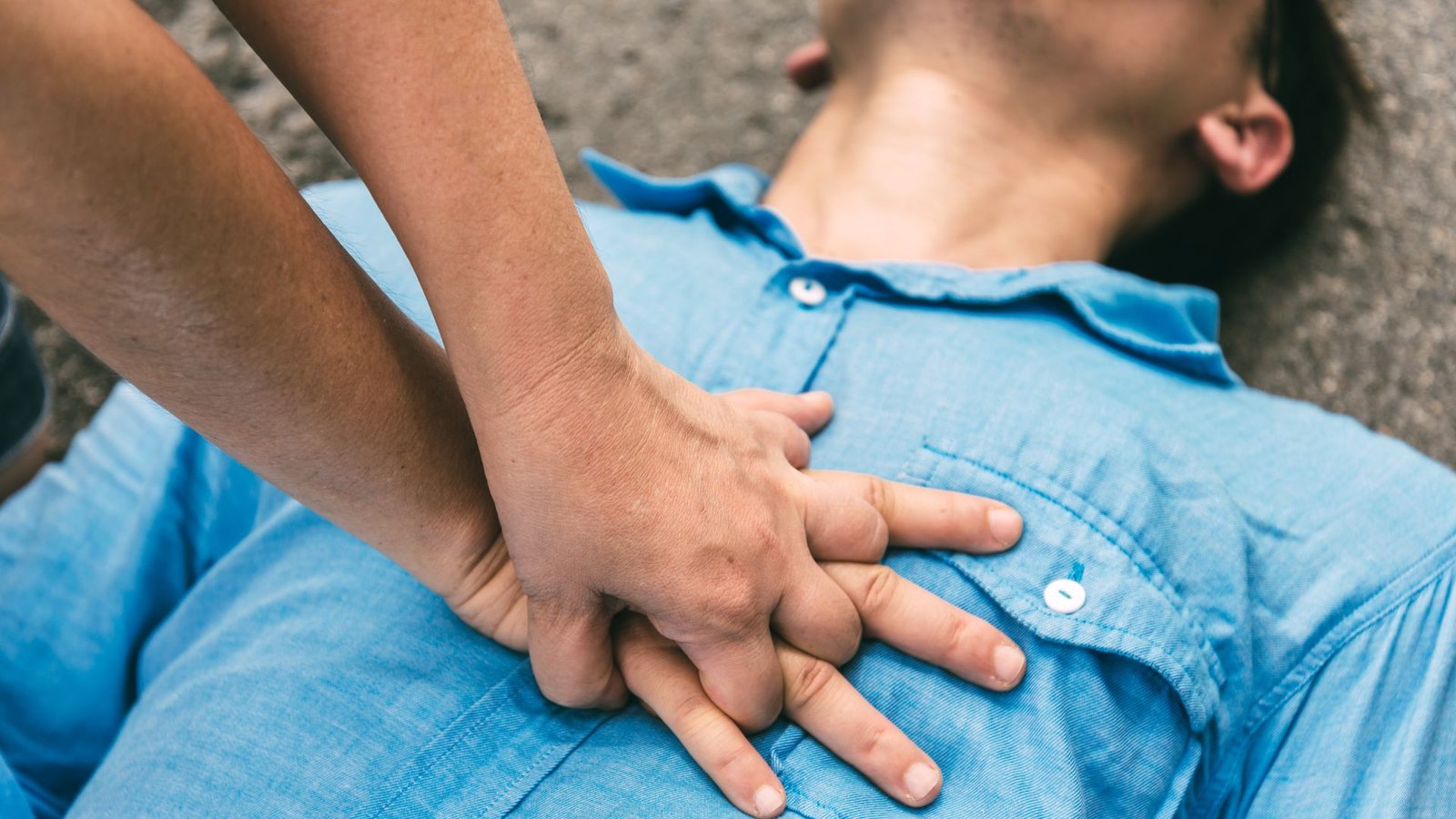
- Place the heel of one hand in the center of the chest, between the nipples.
- Interlock your fingers by placing your other hand on top.
- Keep your arms straight and position your shoulders directly over your hands.
- Use your upper body weight to press down firmly.
This positioning ensures control and helps achieve the necessary depth and speed.
Performing Effective Chest Compressions
To maximize the chance of survival, keep compressions consistent and strong:
- Depth: Push hard, at least 2 inches deep into the chest.
- Rate: Maintain a pace of 100 to 120 compressions per minute (the rhythm of “Stayin’ Alive” is a good guide).
- Recoil: Allow the chest to fully rise between each push.
- Continuity: Continue compressions without long interruptions.
Keep performing compressions until professional help takes over, an AED is ready, or the person begins to breathe.
Integrating an AED (If Available)
AEDs are common in public spaces and offer voice-guided instructions:
- Power On: Turn on the device and follow the voice prompts.
- Attach Pads: Place the electrode pads on the person’s body as indicated on the device.
- Analyze: Stand clear while the AED analyzes the heart rhythm.
- Shock: Deliver a shock if the AED advises it, and immediately resume chest compressions.
AEDs are designed to be used safely by individuals without medical training.
Common Mistakes to Avoid
Ensure the effectiveness of your efforts by avoiding these frequent errors:
- Pausing: Stopping compressions too frequently or for too long.
- Shallow Pushes: Not pressing deep enough (less than 2 inches).
- Leaning: Failing to allow the chest to fully recoil between compressions.
- Delaying the Call: Forgetting to contact emergency services right away.
Continuous, strong compressions are key to keeping oxygen flowing and maximizing the victim’s chance of survival.
Why Time is Critical
Cardiac arrest cuts off oxygen supply to the brain and other organs, with brain damage potentially starting in just four minutes. Hands-Only CPR bridges this gap by maintaining circulation, gaining crucial time until emergency teams arrive. Immediate bystander action can double or triple a person’s survival rate.
Building Confidence with CPR Training
While Hands-Only CPR is simple, formal training enhances confidence and effectiveness. A certified CPR course will help you:
- Master the correct depth and speed.
- Gain hands-on practice using manikins.
- Learn the proper use and timing of an AED.
- Develop the ability to remain calm in an emergency.
Training also covers techniques for child and infant CPR. You can learn from trusted professionals and get certified through MyCPR NOW, which offers clear, preparation-focused lessons.
The Power of Bystander Action
Bystanders are the first, vital link in the emergency response chain. You don’t need a medical background to save a life—just the courage to act and the right technique. By promoting CPR awareness, you help create a safer community. Share your knowledge and remember that you can make a profound difference.
Conclusion
Hands-Only CPR is an accessible, powerful skill. Checking the scene, calling for help, providing firm chest compressions, and using an AED are the simple steps that sustain life. Every moment of inaction risks a life. Gain this essential skill today through MyCPR NOW to be prepared for when it truly matters. Your few minutes of training could be the reason someone is given a second chance.