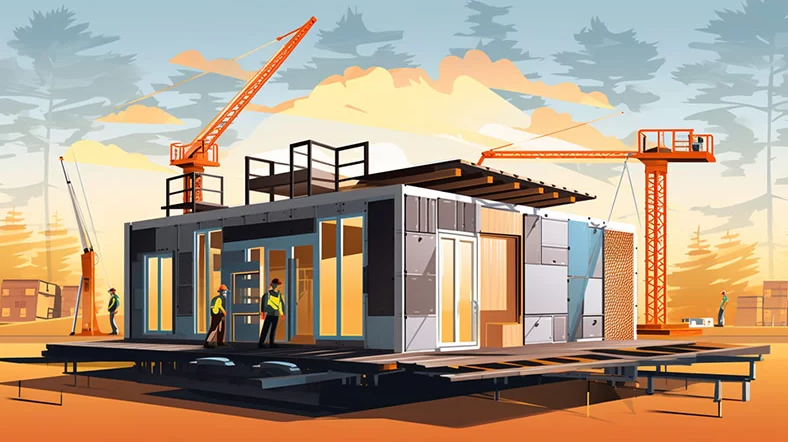

A fully furnished hotel room, complete with plumbing, electrical systems, and interior finishes, rolls down the highway on a specialized trailer at 3 AM. Two states away, a modular classroom arrives at a school campus and gets lifted into place before students return from summer break. These scenarios would have seemed far-fetched two decades ago, but advances in transport technology have made them routine.
Modular and prefabricated construction has grown rapidly because it shifts 70% to 90% of building work into controlled factory environments. But the industry’s success hinges on one critical challenge: getting those finished modules from the factory floor to the job site without damage, delays, or budget overruns. Transport innovation has become the silent driver behind prefab’s viability.
The Unique Challenges of Moving Buildings
Unlike raw construction materials, prefabricated building modules arrive with drywall installed, fixtures mounted, and finishes applied. A single crack, shift, or water intrusion during transport can require costly repairs that wipe out the time savings prefab construction promises.
These modules also present serious logistical hurdles. A single residential module can weigh 20,000 to 80,000 pounds and stretch 60 feet long by 16 feet wide. Commercial modules for hotels, hospitals, and apartment buildings often push these dimensions even further. Moving something that large requires equipment, expertise, and coordination that standard freight carriers simply cannot provide.
Add regulatory complexity to the mix. Each state maintains different permit requirements for oversized loads, with varying rules about escort vehicles, travel times, and approved routes. A module traveling from a factory in Pennsylvania to a job site in Virginia might need three separate state permits, each with unique restrictions.
Advanced Trailer Systems
The backbone of modern modular transport is purpose-built trailer technology. These aren’t standard flatbeds with a few extra straps. They’re engineered specifically for the structural requirements of prefabricated loads.
Hydraulic and Extendable Platforms
Hydraulic trailer systems have transformed how modules get loaded, transported, and placed. Adjustable hydraulic platforms can extend to bridge over obstructions, lift modules to clear obstacles, or lower them precisely onto foundation points. This flexibility eliminates scenarios where modules get stuck at job sites because conventional equipment cannot position them correctly.
Extendable trailers address the variable dimensions of modular construction. Rather than ordering custom trailers for each project, transport providers can adjust platform lengths and widths to accommodate non-standard loads. This reduces equipment costs and wait times for projects with unusual module configurations.
Self-Propelled Modular Transporters
For the largest and heaviest modules, self-propelled modular transporters (SPMTs) represent the cutting edge of transport capability. These computer-controlled platforms feature dozens of axles arranged in a grid, with each axle capable of 360-degree steering. A single SPMT can carry loads exceeding 20,000 tons, and multiple units can be linked together for even larger structures.
SPMTs move at walking speed, typically under one mile per hour when fully loaded, but their precision is unmatched. Operators control them via handheld panels, positioning modules within millimeters of their final placement. For projects requiring extreme accuracy or involving extraordinarily heavy loads, SPMTs eliminate the margin for error that conventional trailers introduce.
See also: How Digital Marketing Services for Small Business Can Boost Growth?
Digital Tracking and Route Intelligence
Moving a 60-foot module through populated areas requires more than a skilled driver and a big trailer. It demands real-time information and proactive problem-solving.
GPS and IoT Integration
Modern modular transport fleets operate with GPS tracking that goes far beyond simple location monitoring. Sensors track not just where a module is, but its orientation, vibration levels, and environmental exposure. If a load shifts during transit or encounters unexpected road conditions, dispatchers know immediately and can coordinate responses before minor issues become major damage.
This tracking also provides project managers with accurate arrival predictions. Construction sites can time crane crews, foundation teams, and installation workers to be ready the moment a module arrives. Late deliveries cost money, but so do crews standing idle because a module showed up earlier than expected.
Route Optimization Software
Route planning for oversized loads has traditionally relied on experienced drivers who know which roads accommodate large trailers and which ones don’t. That institutional knowledge remains valuable, but software now supplements it with data on bridge clearances, weight limits, road construction, and traffic patterns.
Advanced routing platforms calculate not just the shortest path, but the safest and most efficient one. They account for low overpasses, narrow intersections, restricted travel windows, and permit requirements. Some systems even incorporate weather forecasts, recommending schedule adjustments when storms threaten to delay deliveries or create hazardous driving conditions.
Weather and Environmental Protection
Factory-built modules leave production with finished interiors that cannot tolerate moisture, temperature extremes, or UV exposure. Transport solutions have adapted to protect these sensitive loads.
Shrink wrapping has become standard practice for modules traveling any significant distance. This protective layer shields against rain, road spray, and debris. For longer journeys or harsh conditions, enclosed transport options provide complete environmental control, though at a higher cost.
Seasonal transport planning also plays a role. Experienced logistics providers monitor weather patterns and adjust schedules to avoid moving modules during severe storms, extreme heat that could damage adhesives and finishes, or freeze-thaw cycles that create treacherous road conditions. The goal is to get modules to sites in the same condition they left the factory.
Coordination and Timing Precision
Prefabricated construction operates on tight schedules. A hotel project might involve dozens of modules arriving in a specific sequence over several weeks, with each module needing to be placed before the next one can be positioned. Transport delays cascade through the entire project timeline.
Just-in-Time Delivery Models
Borrowing from manufacturing, modular construction has embraced just-in-time delivery. Rather than stockpiling modules at job sites where they face weather exposure and potential damage, transport providers time arrivals to match installation schedules. A module leaves the factory, travels to the site, and gets placed on its foundation the same day.
This approach requires precise coordination between factory production, transport logistics, and site crews. When it works, it eliminates storage costs, reduces damage risks, and keeps projects moving at maximum speed. When coordination breaks down, the consequences ripple through every team involved.
Staging and Warehousing Solutions
Not every project can achieve perfect just-in-time delivery. Weather delays, permit issues, or site preparation problems sometimes create gaps between module arrival and installation readiness. Forward-thinking transport providers offer secured staging facilities where modules can wait in controlled environments until sites are ready to receive them.
These staging solutions have become particularly important for large commercial projects where dozens of modules must be sequenced precisely. Rather than rushing production to match transport windows, factories can build at an optimal pace while transport partners manage the logistics of storage, sequencing, and delivery.
Where Transport Technology Is Heading
The innovations transforming modular transport continue to accelerate. Electric and hybrid transport vehicles are entering service, reducing the carbon footprint of an industry that already offers sustainability advantages over traditional construction. Autonomous truck technology, while still developing for general freight, shows particular promise for the controlled, low-speed movements that modular transport often requires.
Regional prefabrication hubs are also reshaping transport economics. By locating factories closer to major construction markets, the industry can reduce transport distances, lower costs, and minimize the risks that come with long-haul movements of oversized loads.
The Logistics Behind the Promise
Modular and prefabricated construction promises faster timelines, better quality control, and reduced site disruption. But those promises depend entirely on transport systems capable of moving finished building sections safely and efficiently.
The innovations happening in trailer design, digital tracking, route optimization, and environmental protection are what make prefab construction viable at a commercial scale. As these technologies continue advancing, the gap between factory production and final installation will keep shrinking, opening new possibilities for how and where buildings get constructed.