
Do you ever feel like you’re fighting with your own tools? That you spend more time working around your software’s limitations than doing your actual job? If that sounds familiar, you’re not alone. Many businesses settle for “off-the-shelf” solutions that, in the end, create more friction than efficiency.
But there’s another way. An approach where the tool adapts to you, not the other way around. That’s the promise of custom software development. Forget seeing it as just another IT expense; think of it as building a strategic asset that will genuinely fuel your growth.
Why “Good Enough” Isn’t Good Enough Anymore
Comparing standard software to custom software is a bit like comparing a ready-to-wear suit to a tailor-made one. The first might get the job done for an occasion, but it’s never a perfect fit. The second is designed to fit you like a glove, highlight your strengths, and give you unshakable confidence.
For your business, the benefits are just as clear:
- Get Your Flow Back: No more workarounds or multiplying spreadsheets. A custom tool is built to embrace your unique workflows. The result? Your teams adopt it effortlessly and can focus on what truly matters.
- A Real Time (and Money) Saver: Imagine all the manual, repetitive tasks you could automate. A well-designed tool works *for* you, freeing up precious time for innovation and customer relationships.
- A Fortress for Your Data: Popular software solutions are prime targets for hackers because their vulnerabilities are widely known. A unique codebase is much harder to crack. You can rest easy knowing your sensitive data is better protected.
- A Tool That Grows With You: Your business isn’t static, so why should your software be? A custom solution is built to be scalable. You can add features as you expand, without being at the mercy of a third-party’s update schedule.
The Journey to Building Your Perfect Tool
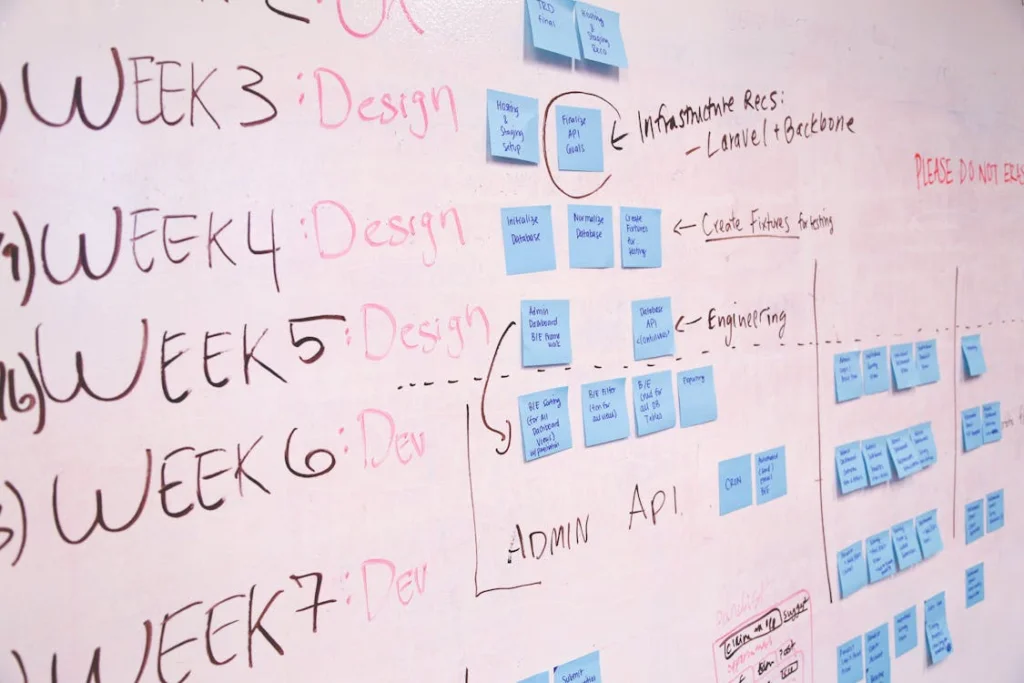
So, what does it actually take to bring a piece of custom software to life? It’s not about a developer locking themselves in a dark room for months. It’s a collaborative journey with clear, logical steps.
- The “What If?” Phase (Analysis & Strategy): This is the most critical part. It’s a series of conversations where you, your team, and the developers dream big and also get practical. What are the biggest bottlenecks you want to solve? What would the perfect tool do? This all gets translated into a clear project plan (or “spec sheet”).
- The Blueprint (Design & Prototyping): Before a single brick is laid on a house, you need a blueprint. It’s the same here. The team will create wireframes and mockups and visual sketches of your future software. This is where you get to say, “Can we move this button here?” or “What if this dashboard showed this instead?” It’s cheap to make changes now, but expensive later.
- The Build (Development): This is where the magic happens and the code gets written. The developers take the blueprint and start building your application, usually in “sprints” or small, manageable chunks. You’ll often get to see progress along the way, ensuring everything is on the right track.
- The Stress Test (Testing & QA): Before going live, the software is put through its paces. The quality assurance (QA) team tries to break it in every way imaginable. Their goal is to find and squash every bug so that your first experience with the tool is smooth and frustration-free.
- Launch Day (Deployment & Beyond): The software is rolled out to your team. But the journey doesn’t end there. Great software comes with ongoing support for updates, training, and adding new features down the road.
So, Is Custom Software Right for You?
If you’re looking to just manage a few contacts, a standard CRM will do. But if your business has unique processes, if you’re serious about efficiency, and if you want to build a real, long-term competitive advantage, then a custom development solution isn’t just a good idea, it’s essential.
Investing in a tool that is built just for you is a powerful statement. It shows you’re committed to empowering your team, optimizing your business, and leading your industry. The key is finding the right technology partner to guide you through the process and turn your vision into a reality.