Oil-Filled vs Dry-Type Distribution Transformers: What Works Best in Saudi Arabia?

When it comes to selecting the right distribution transformer for projects in Saudi Arabia, the decision is rarely straightforward. The region’s extreme climate, rapid infrastructure development, and strict safety standards all play a major role in determining whether oil-filled or dry-type transformers are the better fit.
For project developers, utilities, and EPC contractors working with experienced distribution transformer suppliers or sourcing from Indian transformer manufacturers, understanding the practical differences between these two technologies is essential. The right choice can significantly impact performance, safety, lifecycle cost, and long-term reliability.
Why does transformer selection matter more in Saudi Arabia?
Saudi Arabia presents one of the most demanding operating environments in the world. High ambient temperatures, frequent dust storms, coastal humidity in certain regions, and growing urban density all influence transformer performance.
In such conditions, transformers are expected to deliver consistent output without frequent maintenance or risk of failure. This is why many developers rely on trusted Indian transformer manufacturers, who design equipment specifically for harsh environments and export extensively to GCC countries.
The choice between oil-filled and dry-type transformers is not just technical—it is strategic.
What are oil-filled distribution transformers?
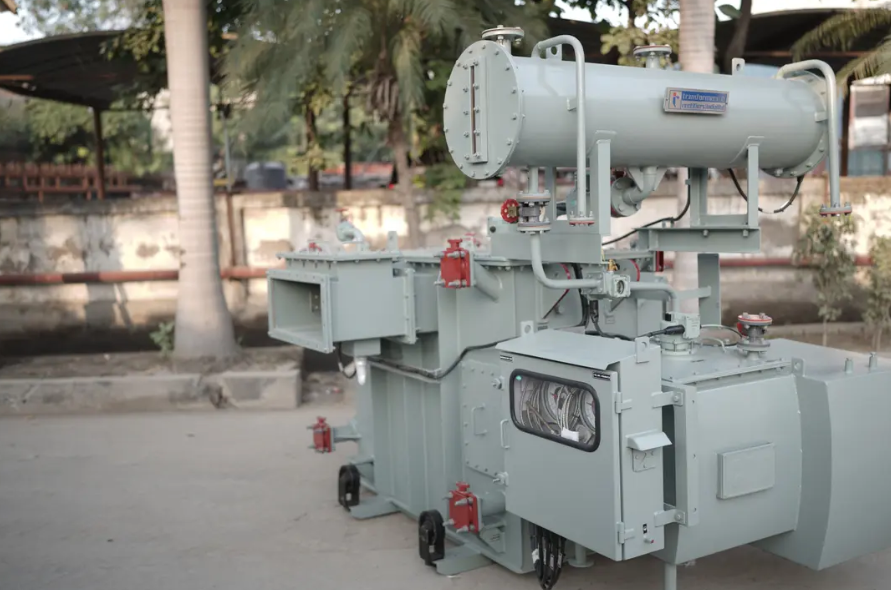
Oil-filled transformers use insulating oil (usually mineral oil or ester-based fluids) to cool and insulate internal components. The oil circulates within the tank, dissipating heat generated during operation.
These transformers have been the industry standard for decades, particularly in utility-scale and outdoor installations.
Oil-filled units are widely supplied by leading distribution transformer suppliers due to their proven efficiency and ability to handle high loads over extended periods.
What are dry-type distribution transformers?
Dry-type transformers, on the other hand, use air or resin-based insulation systems instead of liquid oil. The most common types include cast resin and vacuum pressure impregnated (VPI) transformers.
They are typically used in indoor environments where fire safety, environmental concerns, or space constraints are critical considerations.
Dry-type transformers are increasingly being adopted in modern infrastructure projects such as commercial complexes, hospitals, and metro systems.
How does Saudi Arabia’s climate affect transformer performance?
The climate in Saudi Arabia plays a decisive role in transformer selection.
Oil-filled transformers generally perform better in high-temperature outdoor environments. The oil provides superior heat dissipation, which helps maintain stable operation even when ambient temperatures rise significantly. This makes them ideal for desert conditions and utility networks.
Dry-type transformers, while improving in thermal performance, can face limitations in extreme heat if not properly ventilated. Dust accumulation can also affect cooling efficiency, especially in open or semi-protected installations.
However, in controlled indoor environments, dry-type transformers perform exceptionally well and require less maintenance compared to oil-filled units.
Which option is safer for urban and industrial use?
Safety is one of the key reasons why dry-type transformers are preferred in certain applications.
Since they do not contain flammable oil, dry-type transformers significantly reduce fire risks. This makes them ideal for use in high-rise buildings, shopping malls, airports, and underground installations.
Oil-filled transformers, while safe when properly maintained, carry a risk of oil leakage and fire in case of faults. Modern designs include protective features such as conservators, Buchholz relays, and fire barriers, but they still require careful handling and installation.
For densely populated urban areas in Saudi Arabia, dry-type transformers are often the preferred choice.
How do maintenance and lifecycle costs compare?
Oil-filled transformers generally have a longer service life and are more robust under heavy loads. However, they require regular maintenance, including oil testing, filtration, and leak inspections.
Dry-type transformers, in contrast, have lower maintenance requirements since there is no oil to monitor or replace. This can reduce operational costs over time, especially in indoor installations.
That said, the initial cost of dry-type transformers is usually higher than oil-filled units. For large-scale outdoor projects, oil-filled transformers often remain the more economical option.
What works best for different applications in Saudi Arabia?
There is no one-size-fits-all answer. The best choice depends on the specific project requirements.
Oil-filled transformers are typically preferred for utility networks, industrial plants, and outdoor installations where high efficiency and load capacity are critical. They are widely supplied by experienced distribution transformer suppliers catering to large infrastructure projects.
Dry-type transformers are better suited for commercial buildings, renewable energy installations, and locations where fire safety and environmental considerations are a priority.
Many Indian transformer manufacturers now offer both options, customized to meet GCC standards, ensuring compatibility with Saudi regulations and operating conditions.
Why are Indian manufacturers a preferred choice?
Indian transformer manufacturers have built a strong reputation in international markets, including Saudi Arabia. Their ability to deliver high-quality, cost-effective, and customized solutions makes them a reliable sourcing option.
Companies like the one referenced in your provided website have experience in manufacturing transformers that comply with global standards and are tested for harsh environments. Their export expertise, competitive pricing, and engineering capabilities make them a preferred partner for EPC contractors and utility companies.
Working with established distribution transformer suppliers from India also ensures access to technical support, customization, and timely delivery.
FAQs
1. Which transformer is more suitable for extreme heat conditions?
Oil-filled transformers are generally better suited for extreme heat as they offer superior cooling and can handle higher loads efficiently.
2. Are dry-type transformers completely maintenance-free?
Not entirely. While they require less maintenance than oil-filled transformers, periodic inspection and cleaning are still necessary, especially in dusty environments.
3. Why are dry-type transformers preferred in buildings?
They are safer because they do not use flammable oil, making them ideal for indoor applications where fire risk must be minimized.
4. Do oil-filled transformers last longer than dry-type?
In many cases, yes. Oil-filled transformers tend to have a longer lifespan when properly maintained, especially in outdoor and heavy-duty applications.
5. Can Indian transformer manufacturers meet Saudi standards?
Yes, many Indian transformer manufacturers design and supply transformers that comply with international and GCC standards, making them suitable for projects in Saudi Arabia.