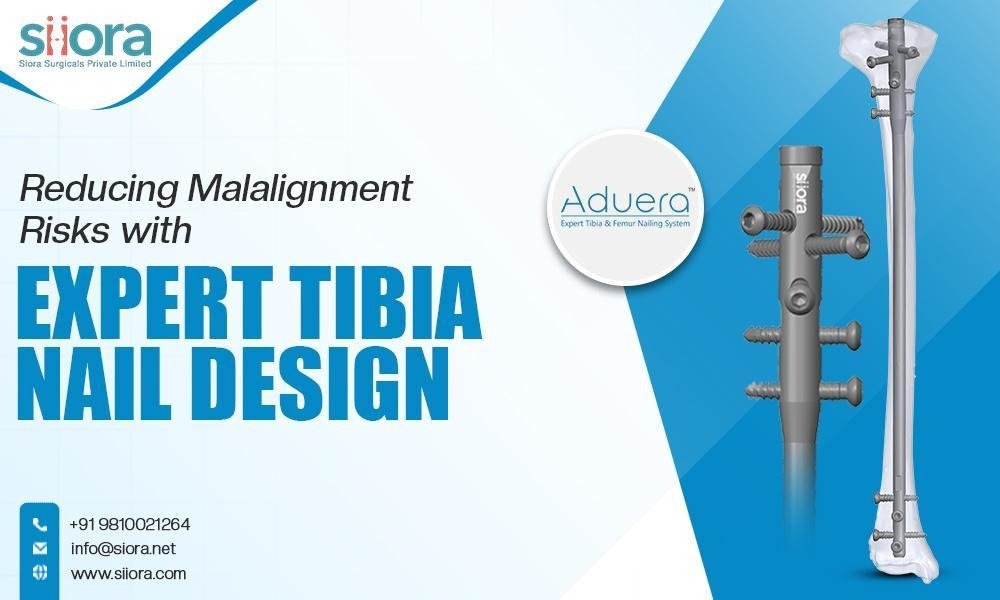

Expert nail design takes the headache out of malalignment risks in tibial fractures, especially the tricky proximal or comminuted ones, where things love to drift. By smart geometry and locking tricks, it keeps fragments lined up without forcing surgeons into endless tweaks or add-ons.
Why malalignment sneaks in so easy?
Tibial fractures—particularly midshaft or metaphyseal—get yanked by calf muscles and weightbearing forces into varus, valgus, procurvatum, or rotation messes. Standard nails fight back okay in simple breaks, but wide canals, short fragments, or bone loss let the nail wander, dragging alignment with it.
That’s where malalignment bites:
- Subtle procurvatum kills knee extension power.
- Varus tilt overloads the medial compartment long-term.
- Rotation throws off gait and stresses the ankle.
Plates can overkill with exposure, so nails stay popular—if they hold the line.
Nail geometry that fights drift
Expert tibia nails aren’t your grandpa’s straight rod. They curve to hug the tibia’s natural bow, starting straighter proximally then sweeping into that anterior-lateral distal arc. This match means less play in the canal—no more nail pistoning or toggling that shoves fragments off-axis.
Key shape smarts:
- Proximal flare fills the metaphysis snug, blocking early varus collapse.
- Distal bend tracks the ankle end true, dodging valgus kicks.
- Diameter steps (8-13mm options) let you pick a tight fit without over-reaming floppy bone.
Locking setups that lock in alignment
The real magic? Multi-plane, multi-hole locking. Forget two measly screws—Expert packs clusters of holes in AP, lateral, and oblique planes at both ends, giving surgeons “control points” like joystick grips.
How it crushes risks:
- Proximal cluster (4-6 holes) grabs short metaphyseal bits, resisting procurvatum from the tibial tubercle pull.
- Distal options nail rotation and valgus, with oblique screws adding torque resistance.
- Static for rigid jobs, dynamic for callus-friendly flex—pick per fracture.
See also: How Smart Technology Is Transforming Luxury Homes for Sale
Load-sharing that stays true
These nails load-share smart, not just bridge. Central canal perch spreads bending forces along the length, but refined stiffness prevents sag under early weight. In comminuted midshafts, that even distribution keeps ends from overriding while middles settle.
Perks in practice:
- Early toe-touch lets patients move without alignment crumbling.
- Less reoperation for malunion—studies peg Expert types under 5% drift vs. 15% basics.
- Fluoroscopy-friendly design speeds checks, catching wanders live.
Real-world wins in tough fractures
Proximal third fractures? Expert’s fat proximal end and angled locks hug the flare, beating straight nails that procurvatum into oblivion. Distal ones get multi-plane distal grip to fight ankle valgus. Segmentals or osteoporotics? Long span plus titanium flex handles it without fatigue snap.
Surgeons rave because:
- Fewer conversions to plates when primary alignment holds.
- Combo with minimal invasive cuts preserves biology for faster unions.
- Custom lengths/diameters dial in per patient, no compromises.
Tips to max the design edge
Even killer design needs sharp execution. Start with perfect reduction—traction, clamps, external aids—before the guidewire. Ream gently, 1mm over nail size, to grip without chatter. Fluoro obsessively: AP mechanical axis, lateral slope, full-leg views. Post-op, rehab ramps up weight slowly if the bone’s sketchy.
These trauma implant tibia nails shrink malalignment risks by blending anatomy-smart shape, versatile locks, and balanced mechanics into one package. They turn “watch that drift” tension into confident fixes, getting legs straight and strong quicker. For proximal woes, comminuted chaos, or distal dilemmas, this design shifts the odds heavily toward spot-on healing.