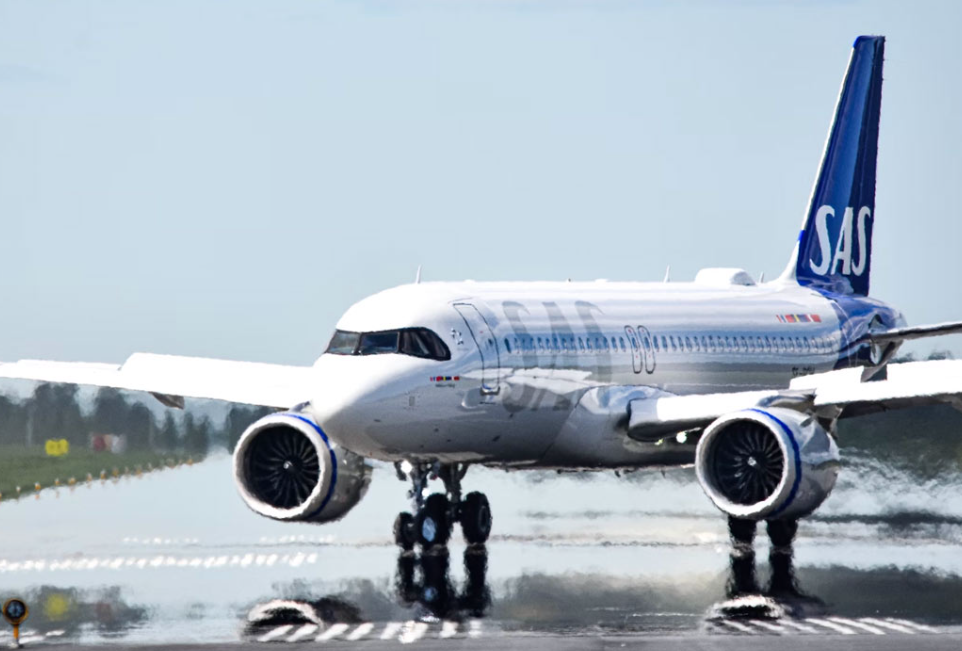

Scandinavian Airlines — better known as SAS — has gone through considerable turbulence in recent years, both operationally and financially. The carrier filed for bankruptcy protection in 2022, restructured, and emerged as a leaner operation under new ownership. For passengers, that period brought significant disruption: canceled routes, staff strikes, and delays that affected thousands of travelers across Europe and beyond. Many of those passengers never claimed the compensation they were owed.
But this guide isn’t only about that period. Whether your SAS delay happened during the restructuring years or on a routine flight last month, the same rules apply. EU261 covers SAS passengers on qualifying routes, and the amounts involved are worth pursuing.
SAS and EU261: The Basics
Scandinavian Airlines is headquartered in Stockholm and holds an EU operating license, which brings it fully within the scope of EC Regulation 261/2004. The regulation applies to all flights departing from EU airports regardless of airline, and to inbound EU flights operated by EU-licensed carriers. SAS routes out of Stockholm Arlanda, Copenhagen, and Oslo all qualify on the departure side. Inbound flights to those airports from non-EU destinations also fall within scope as long as SAS is the operating carrier.
The delay threshold that triggers compensation is three hours at the final destination. Not at the departure airport, not on the tarmac — the clock stops when the aircraft doors open at the destination gate. If you arrived more than three hours after your scheduled arrival time, and the cause was within SAS’s operational control, you have a valid claim.
Compensation amounts are fixed by the regulation and determined by flight distance. Routes under 1,500 kilometres are worth €250 per passenger. Flights between 1,500 and 3,500 kilometres qualify for €400. SAS operates transatlantic routes to New York, Chicago, Los Angeles, and Miami, as well as long-haul services to Asia — all of which fall in the over 3,500 kilometre bracket and pay out €600 per person.
See also: Exploring Alternatives to Listing Your Home on the Market
The SAS Strike History and What It Means for Claims
SAS has experienced significant industrial action in recent years, most notably a pilots’ strike in the summer of 2022 that grounded hundreds of flights and affected tens of thousands of passengers. This is relevant because strikes by an airline’s own employees occupy a specific and often misunderstood position in EU261 case law.
The European Court of Justice has ruled that strikes organized by an airline’s own staff — as opposed to strikes by air traffic controllers or other third parties — do not automatically constitute extraordinary circumstances. The reasoning is that labor relations are part of running an airline, and a carrier that fails to reach agreement with its own workforce cannot simply pass the cost of that failure onto passengers. Whether a specific SAS strike-related cancellation or delay qualifies for compensation depends on the particular circumstances, but the blanket rejection of such claims is not legally sound.
If your SAS flight was disrupted during a period of industrial action by SAS staff and your claim was rejected on extraordinary circumstances grounds, that rejection may be worth challenging.
Other Common Causes of SAS Delays
Beyond the strike period, SAS passengers encounter the same range of disruptions as any major European carrier. Technical faults are a recurring source of significant delays — an aircraft that requires an unscheduled inspection or a component replacement can sit on the ground for hours, pushing the arrival at the destination well past the three-hour threshold. European case law is consistent on this point: routine technical problems are an inherent part of airline operations and do not exempt SAS from compensation liability.
Late-arriving aircraft are another frequent cause. SAS operates a tight schedule across its Scandinavian hubs, and a delay on an inbound flight from one city ripples directly into the outbound flight using the same aircraft. Passengers on that outbound service end up absorbing a delay that originated several sectors earlier — and that delay remains within SAS’s operational responsibility.
Slot congestion at major airports — Copenhagen, Stockholm, and European hubs like Amsterdam or Frankfurt where SAS connects — also contributes to delays that are compensable. Congestion-related delays are operational in nature and don’t fall under extraordinary circumstances.
Missed Connections on SAS Itineraries
SAS operates both as a point-to-point carrier and as a connector through its Scandinavian hubs. Passengers transiting through Copenhagen or Stockholm on their way to final destinations elsewhere are exposed to missed connection scenarios when the first leg runs late.
Under EU261, what matters in these situations is the total delay at the final destination, not the delay on each individual flight. If a SAS flight from London to Copenhagen arrived 90 minutes late and you missed your connection to Tokyo, arriving there seven hours behind schedule, the full delay at Tokyo is the relevant figure — and on a route over 3,500 kilometres, that’s a €600 claim per passenger.
The key requirement is that both flights were on the same booking reference. Separately booked connections don’t benefit from this provision.
How Far Back Can You Claim?
The limitation period for EU261 claims is three years in most EU jurisdictions, including Sweden and Denmark. That means SAS delays from as far back as early 2022 — including those during the restructuring and strike period — may still be claimable. Passengers who experienced significant disruption during that period and never followed up should consider whether a valid claim remains open.
Old booking confirmation emails are usually sufficient to identify the relevant flight details. In many cases claims services can retrieve flight data independently if documentation is incomplete.
Filing Your SAS Delay Claim
Contacting SAS directly is one route. Their customer relations team accepts compensation requests, and some straightforward claims do get resolved through this channel. The practical reality is that the process tends to be slow and first responses frequently push back on liability — citing extraordinary circumstances, requesting additional documentation, or simply taking a long time to respond at all. Passengers who don’t know the regulation well enough to challenge a rejection often walk away without being paid.
Using a specialist compensation platform is a more reliable approach for most passengers. These services handle the complete process on a no win, no fee basis — eligibility assessment, claim submission, negotiation with SAS, and legal escalation if the airline refuses to pay or ignores the claim. There’s no upfront cost, and no fee is charged if the claim doesn’t succeed.
Voos operates this way. You submit your flight details in a few minutes, and from there the team manages everything with SAS directly — including pushing back on unjustified extraordinary circumstances rejections and escalating through legal channels when necessary. No further involvement is required from you while that process runs.
To start a SAS claim for delayed flight, you’ll need your flight number and date of travel at minimum. A booking confirmation or boarding pass helps, but isn’t always essential.
A Few Details That Matter
Compensation under EU261 is per passenger. Every person on the same disrupted flight and booking has an individual entitlement. Two passengers on a delayed transatlantic SAS route means a potential €1,200 combined. Four passengers, €2,400.
Accepting meals, accommodation, or transport at the airport during a delay doesn’t waive your right to cash compensation. These duty of care provisions are separate obligations under EU261 and exist independently of the compensation entitlement.
And if SAS offered you a travel voucher at any point — which was relatively common during the disruption-heavy period of 2022 and 2023 — accepting it doesn’t necessarily close the door on a separate cash compensation claim. The specific circumstances determine whether that remains possible, and it’s worth having your situation assessed rather than assuming the matter is settled.
The eligibility check costs nothing and the process, once started, requires very little from you.