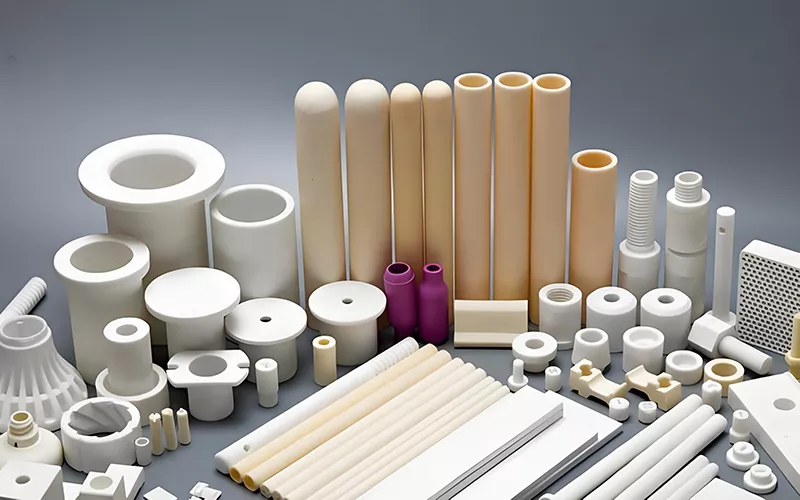

The guide explained that this fragile-looking beauty was made from the same family of materials that insulate space shuttles and line chemical reactors: silicate ceramics. In that moment, I understood something profound. Silicate ceramics are the quiet backbone of human civilization, ancient enough to be found in 20,000-year-old pottery shards and modern enough to protect satellites as they burn through the atmosphere.
In 2025, while the world chases flashy new nanomaterials and 3D-printed metals, silicate ceramics remain indispensable. They are in the cup you drink coffee from, the tiles under your feet, the spark plugs in your car, and the heat-resistant shields that bring spacecraft safely home. This guide will take you through everything you need to know about silicate ceramics: what they are, how they’re made, the different types, their remarkable properties, and why, after thousands of years, they’re still one of the most important material families on Earth.
What Exactly Are Silicate Ceramics?
Silicate ceramics are materials built around silicon and oxygen, the two most abundant elements in the Earth’s crust. These atoms link together to form a strong tetrahedral framework that can incorporate other elements like aluminum, magnesium, sodium, or potassium. The result is an incredibly diverse family of compounds that range from soft clay to diamond-hard quartz.
What makes silicate ceramics special is their atomic structure. The silicon-oxygen bonds are some of the strongest in nature, giving these materials excellent thermal stability, chemical resistance, and electrical insulation properties. Whether in the form of everyday porcelain or advanced technical ceramics, silicate ceramics share this fundamental building block that has served humanity for millennia.
A Brief History of Silicate Ceramics: From Prehistory to the Space Age
Humans discovered silicate ceramics by accident when ancient campfires heated clay-rich soil hot enough to harden it permanently. By 25,000 BCE, people were deliberately shaping and firing clay figurines. Fast forward to ancient China, and craftsmen had mastered porcelain, a refined silicate ceramic so prized it was worth more than gold in Europe.
The industrial revolution brought scientific understanding. Chemists learned to control composition and firing conditions, leading to stronger bricks, better insulators, and eventually the white spark-plug porcelain that made internal combustion engines reliable. In the 20th century, silicate ceramics went to space, protecting the Space Shuttle’s belly from 1,650-degree re-entry heat.
Today, silicate ceramics quietly enable modern life. They’re in your phone’s screen protector, the catalyst supports in your car’s exhaust system, and the fiber-optic cables carrying this article to your device.
The Main Types of Silicate Ceramics
Silicate ceramics come in several distinct families, each with unique characteristics.
Traditional ceramics include earthenware, stoneware, and porcelain. Earthenware is the oldest and most porous, stoneware is denser and stronger, while porcelain represents the pinnacle, translucent, white, and incredibly durable when thin.
Glass is technically a non-crystalline silicate ceramic. By cooling molten silica quickly, we prevent crystal formation, creating the transparent material we use for windows, bottles, and smartphone screens.
Advanced or technical silicate ceramics include materials like mullite, cordierite, and steatite. These are engineered for specific high-performance applications, from kiln furniture that withstands repeated 1,400-degree cycles to low-expansion ceramics used in telescope mirrors.
Clay-based construction materials like bricks and tiles are silicate ceramics too. Modern versions incorporate additives for better frost resistance and strength, but the fundamental chemistry remains unchanged from ancient times.
How Silicate Ceramics Are Made
The journey from raw earth to finished silicate ceramic is both art and science.
It begins with mining clay, kaolin, feldspar, and quartz, natural silicate minerals found worldwide. These are ground to fine powder, mixed with water to form a workable paste, then shaped by hand, wheel, or industrial pressing.
The magic happens during firing. At around 600 degrees Celsius, water and organic material burn away. Between 900 and 1,400 degrees, the particles begin to fuse through sintering, and at the highest temperatures, glassy phases form that bind everything together. Porcelain achieves its translucency when feldspar melts to create a glass that fills spaces between clay particles.
Modern factories control atmosphere, temperature ramps, and cooling rates with incredible precision, producing consistent, high-quality silicate ceramics at massive scale.
The Remarkable Properties That Make Silicate Ceramics Essential
Silicate ceramics possess a unique combination of properties that few materials can match.
They excel at heat resistance. Many can operate continuously above 1,000 degrees Celsius where metals would melt and plastics would vaporize.
Chemical inertness is another superpower. Silicate ceramics resist attack from acids, alkalis, and molten metals, making them ideal for chemical processing equipment and laboratory ware.
Electrical insulation is crucial in modern technology. From spark plugs to circuit board substrates, silicate ceramics prevent unwanted current flow while handling high voltages.
Their hardness and wear resistance make them perfect for cutting tools and grinding media. Even diamond, the hardest natural material, is used to cut advanced silicate ceramics.
Low thermal expansion means they don’t crack when heated and cooled rapidly, essential for cookware that goes from freezer to oven and telescope mirrors that must maintain shape across temperature swings.
Everyday and Industrial Applications of Silicate Ceramics
You encounter silicate ceramics constantly, often without realizing it.
In the kitchen, your ceramic knives, non-stick cookware coatings, and bone china plates are all silicate-based. The glass in your windows and the enamel on your stove are too.
Construction relies heavily on silicate ceramics. Bricks, roof tiles, sanitary ware, and floor tiles protect and beautify buildings worldwide.
Transportation depends on them. Spark plugs, catalytic converter supports, brake components, and oxygen sensors all use specialized silicate ceramics.
Electronics would be impossible without them. Capacitors, insulators, and substrates for integrated circuits rely on their electrical properties.
The energy sector uses silicate ceramics in everything from solar panel components to nuclear fuel containment and wind turbine bearings.
Even healthcare benefits. Dental crowns, hip replacements, and bone grafts often incorporate biocompatible silicate ceramics.
Read Also: Exploring the Latest in Gaming PC Australia: Trends and Tech
The Environmental Advantage of Silicate Ceramics
Unlike plastics that never fully degrade or metals that require energy-intensive mining and refining, silicate ceramics have a remarkably light environmental footprint.
Their raw materials are abundant and often locally sourced. Manufacturing, while energy-intensive due to high firing temperatures, has become much more efficient, with many factories now using renewable energy and heat recovery systems.
Most importantly, silicate ceramics last. A well-made brick can endure centuries. Porcelain doesn’t corrode or rot. When structures are eventually demolished, crushed ceramic waste becomes clean fill material or aggregate for new concrete.
In a world increasingly concerned with sustainability, silicate ceramics offer durability without environmental guilt.
Challenges and Limitations
Silicate ceramics aren’t perfect. Their brittleness means they can shatter under sudden impact, though modern toughened versions have reduced this problem significantly.
Manufacturing requires high temperatures and precise control, making it more energy-intensive than plastic production. The firing process also produces some emissions, though much less than cement or metal production.
Complex shapes can be difficult and expensive to produce, which is why many advanced silicate ceramics are limited to simple forms or require expensive machining after firing.
The Future of Silicate Ceramics
Research continues to push silicate ceramics into new territory.
Self-healing ceramics that repair their own cracks, ultra-low-expansion materials for next-generation telescopes, and bioactive glass-ceramics that encourage bone growth are all in development.
Additive manufacturing is beginning to work with silicate ceramics, promising complex shapes previously impossible.
Energy-efficient kilns and alternative raw materials from industrial waste streams are making production greener.
As we face climate challenges and resource constraints, the ancient reliability and modern versatility of silicate ceramics position them perfectly for the future.
Conclusion
Silicate ceramics represent one of humanity’s oldest and most successful technologies, continuously evolving to meet new challenges. From the first fired clay pots that allowed food storage and cooking to the heat shields that bring astronauts home, these materials have served us faithfully for tens of thousands of years.
In 2025, while newer materials grab headlines, silicate ceramics quietly continue their essential work, proving that sometimes the oldest solutions are still the best. Their combination of abundance, durability, and performance ensures they’ll remain crucial for centuries to come.
FAQs
What is the difference between silicate and non-silicate ceramics?
Silicate ceramics contain silicon and oxygen as their primary components, while non-silicate ceramics (like alumina or zirconia) are based on other elements.
Why is porcelain considered the highest quality silicate ceramic?
Porcelain combines clay, feldspar, and quartz fired at very high temperatures to create a dense, translucent, non-porous material with exceptional strength and beauty.
Are silicate ceramics environmentally friendly?
Yes, they’re made from abundant natural materials, last for centuries, and can often be recycled as clean fill or aggregate.
Can silicate ceramics conduct electricity?
Most are excellent electrical insulators, though some specialized types can be made semi-conducting.
How long do silicate ceramics last?
Properly made silicate ceramics can last thousands of years, ancient pottery and Chinese porcelain from centuries ago remain intact today.
Are glass and ceramic the same thing?
Glass is a type of non-crystalline silicate ceramic with the same basic chemistry but different atomic structure due to rapid cooling.
Why don’t silicate ceramics melt in kilns?
Different types have different melting points, carefully controlled firing temperatures cause sintering and glass formation without fully melting the piece.
Final Words
The next time you drink from a ceramic mug, walk across tiled floors, or marvel at a delicate porcelain vase that has survived centuries, remember you’re experiencing one of humanity’s greatest achievements. Silicate ceramics connect us to our ancient ancestors who first harnessed fire to transform mud into something permanent, while simultaneously enabling the most advanced technologies of our modern age. In a world of planned obsolescence and disposable culture, silicate ceramics remind us that some things are worth making to last, beautifully, usefully, and sustainably, forever.