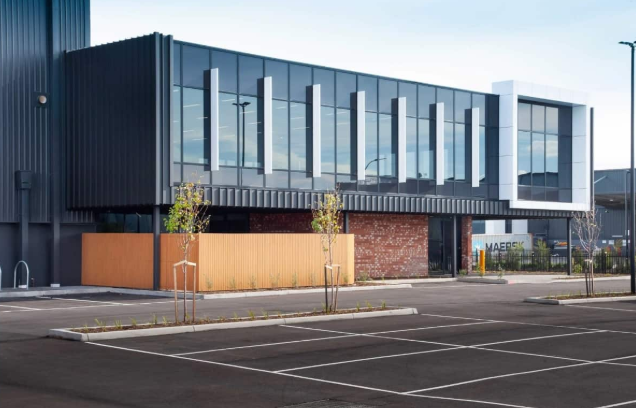

Walk past enough building sites around Melbourne and you start noticing patterns. Not the loud stuff. The quieter details. Clean lines. Panels that sit tight. Facades that look intentional, not patched together over time.
A lot of that comes down to Colorbond Interlocking Cladding. Not because it is trendy. More because it solves a few stubborn problems at once.
This is not a material people usually get excited about at first. But once you see how it behaves on real buildings, over real years, it starts to make sense.
Interlocking Sounds Technical. It Is. But Also Practical
Interlocking systems do exactly what they say. Each panel connects to the next. Locked in. Minimal movement. Controlled expansion.
With Colorbond Interlocking Cladding, that matters more than it sounds. Melbourne buildings deal with wind loads, heat shifts, rain that arrives sideways, and long sun exposure. Panels that overlap loosely tend to show it. Over time. Gaps appear. Lines drift. Water finds its way in.
Interlocking profiles reduce those risks. They sit firm. They move together. Not perfectly rigid, but coordinated. That difference becomes obvious a few years down the track.
Not immediately. Later. Which is usually when people start caring.
Why Melbourne Conditions Push This System Forward
Melbourne is not extreme in one direction. It is persistent.
Persistent UV. Persistent wind. Persistent temperature changes across seasons and sometimes across a single day.
Colorbond Interlocking Cladding holds up well in that environment because the steel substrate and coating system are designed for exposure, not shelter. Add the interlocking profile and suddenly the facade behaves more like a single surface rather than a collection of parts.
That matters for warehouses near the coast. It matters for commercial buildings in open industrial estates. It even matters in residential settings where weather hits one elevation harder than the rest.
The material does not fight the environment. It accepts it and stays in place.
Retrofitting Without Starting Over
Here is where things get interesting.
A lot of Melbourne buildings are not ready for demolition. Structurally, they are fine. Functionally, they work. Visually and compliance-wise, they feel tired.
This is where Colorbond Interlocking Cladding fits neatly. It allows building owners to upgrade the exterior without pulling the whole structure apart. Existing walls stay. The new skin goes over the top. Clean. Controlled. Efficient.
For businesses, that means less downtime. For property owners, it means lower disruption. For councils, it often means smoother approvals compared to full rebuilds.
It is a practical middle ground. And Melbourne tends to like those.
Aesthetic Control Without Overdesign
Some facade systems push too hard. Too many textures. Too much contrast.
Colorbond Interlocking Cladding sits at the other end. Strong lines. Repetition. Order.
Designers use it to create rhythm rather than decoration. Vertical profiles for height. Horizontal layouts for length. Deep colours for presence. Neutral tones for restraint.
It does not scream for attention. It holds its shape. Which, honestly, is what many commercial and industrial buildings need.
You notice it more when it is done badly elsewhere.
See also: Accounting Bachelor Degree: Launching Your Career in Finance and Business
Fire Compliance Is Part of the Conversation Now
Nobody skips this anymore. And they should not.
Colorbond Interlocking Cladding systems are often specified with fire performance in mind, supported by testing and certification that aligns with Australian standards.
That does not mean compliance happens automatically. Installation still matters. Fixings matter. System design matters.
But having a material that is already familiar to certifiers and regulators removes friction. Less explaining. Less back-and-forth. Fewer uncomfortable surprises late in the project.
That alone is enough reason some builders choose it.
The Maintenance Question Comes Up Fast
Every property owner eventually asks it.
How often does it need fixing. Cleaning. Repainting. Replacing.
Colorbond Interlocking Cladding keeps that answer fairly calm. The coated steel resists corrosion. The interlocking design reduces panel movement and edge exposure. Dirt washes off more easily than textured surfaces.
Is it maintenance-free. No. Nothing is.
But it is predictable. And predictability is underrated.
Especially when managing multiple sites.
Industrial Buildings Are Setting the Pace
Residential projects get the photos. Industrial projects test performance.
Warehouses, factories, logistics hubs across Melbourne are using Colorbond Interlocking Cladding because it performs at scale. Large wall spans. Repetitive installation. Consistent finish.
And there is something else happening quietly.
Industrial operators care more about how their buildings look now. Brand perception. Client confidence. Workforce pride.
A clean, sharp facade signals investment. Stability. Long-term thinking. Interlocking cladding helps achieve that without adding unnecessary complexity.
Installation Is Where Projects Win or Lose
The material itself only does part of the work.
With Colorbond Interlocking Cladding, installers need to understand alignment, drainage paths, expansion allowances, and fixing sequences. Miss those and the system still looks fine on day one.
Day one is not the test.
The test is after the first winter. Then the second summer. Then a few years of wind pressure.
Experienced installers think about those moments in advance. They plan for water movement. They check tolerances. They avoid rushing corners.
It is not glamorous work. It is careful work.
Sustainability Without Making Big Claims
Steel is recyclable. Colorbond products are designed for long service life.
That gives Colorbond Interlocking Cladding a quieter sustainability story. Not dramatic. Not exaggerated. Just durable. Long-lasting. Replace less often. Waste less over time.
Sometimes sustainability is about staying put rather than being replaced every decade.
That idea resonates more now than it used to.
Why This System Keeps Showing Up
It is not about trends. It is about reliability.
Colorbond Interlocking Cladding shows up on projects where owners want something that holds together, looks composed, meets compliance expectations, and does not demand constant attention afterward.
It suits Melbourne’s building stock. Old and new. Industrial and commercial. Even selective residential projects where clean lines matter more than ornamentation.
It does the job. And keeps doing it.
Final Thoughts
No facade system solves everything. Site conditions differ. Budgets shift. Designs evolve mid-project.
But when buildings need a surface that locks in place, handles the weather, and ages without drama, Colorbond Interlocking Cladding from Metal Klädding tends to earn its spot.
You might not notice it straight away. That is part of the point.
It sits there. Holds together. And lets the building get on with its job.
Which, in Melbourne, feels like the right approach.