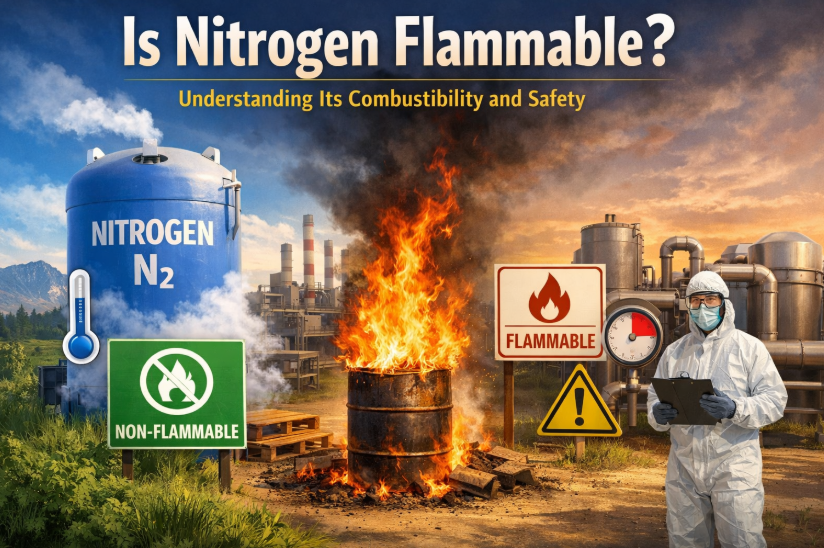

Nitrogen is one of the most abundant elements in the Earth’s atmosphere, making up about 78 percent of the air we breathe. Despite being so common, many people are curious about its properties, particularly whether it is flammable. Questions like is nitrogen flamable often arise because nitrogen is essential in processes involving combustion, fertilizers, and industrial applications. Understanding its behavior can help clarify misconceptions and ensure safe handling in various settings.
What Nitrogen Is and Where It Comes From
Nitrogen is a colorless, odorless, and tasteless gas that exists naturally in the air. It is a non-metal element represented by the symbol N and atomic number 7. In its diatomic form, N2, nitrogen is relatively inert, meaning it does not easily react with other substances. This stability makes it a vital component in the chemical industry, where it is used to create ammonia, explosives, and other chemical compounds.
Nitrogen can also be found in organic matter, such as proteins and nucleic acids, which are essential for all living organisms. In the industrial context, nitrogen is produced through fractional distillation of liquid air or via specialized chemical processes.
Understanding Flammability and Combustion
Flammability is a measure of how easily a substance can catch fire and sustain combustion. For a substance to be flammable, it must react with oxygen under certain conditions to release heat and light. Common flammable gases include hydrogen, methane, and propane. These gases readily mix with oxygen and ignite at relatively low temperatures.
When we ask if nitrogen is flamable, it is essential to consider that nitrogen in its natural diatomic form is highly stable and does not easily support combustion. Unlike flammable gases, nitrogen does not ignite or burn on its own.
Why Some People Think Nitrogen Might Be Flammable
The confusion about nitrogen’s flammability often arises from its use in various industrial reactions. For instance, nitrogen is a key component in the production of nitric oxide and explosives, which involve reactions that release energy. However, these processes rely on other reactive substances, not nitrogen itself. Nitrogen is simply a participant or stabilizing agent in these reactions, which can make people mistakenly think that nitrogen is flammable.
Additionally, nitrogen is used in controlled environments to prevent fires. In industries like electronics or metallurgy, nitrogen gas is introduced to reduce oxygen levels, which minimizes the risk of combustion. Its role as an inert gas in fire prevention sometimes leads to misunderstandings about its flammability.
The Role of Nitrogen in Combustion Reactions
Nitrogen is chemically stable because of the strong triple bond between its atoms. Breaking this bond requires high energy, which is not easily achieved under normal conditions. This property explains why nitrogen is often used as an inert gas to prevent unwanted reactions.
While nitrogen itself does not burn, it can participate indirectly in combustion. In high-temperature reactions, nitrogen can combine with oxygen to form nitrogen oxides, commonly known as NOx. These compounds are significant in atmospheric chemistry and pollution but are not a result of nitrogen being flammable. Understanding this distinction is important when asking questions like is nitrogen flamable.
Nitrogen in Everyday Life
You encounter nitrogen in everyday life more than you might realize. It is present in the air, which makes up most of our atmosphere, and in common household items such as fertilizers and some processed foods. Nitrogen is also used in packaging to preserve freshness and prevent spoilage by displacing oxygen that could promote bacterial growth.
In the medical field, nitrogen is used in cryogenic applications to store biological samples at extremely low temperatures. Its stability and non-reactive nature make it safe for these uses, reinforcing the idea that nitrogen is not flammable.
Safety Precautions When Handling Nitrogen
Even though nitrogen is not flammable, it is not entirely risk-free. Because it can displace oxygen in enclosed spaces, it poses a suffocation hazard. Industrial accidents involving nitrogen often occur due to asphyxiation rather than fire. Workers handling liquid nitrogen or compressed nitrogen gas must use protective equipment and ensure proper ventilation.
Nitrogen is also extremely cold when in liquid form, which can cause severe frostbite or cryogenic burns if it comes into direct contact with skin. Therefore, while questions about is nitrogen flamable are common, the real safety concerns revolve around its physical properties and ability to displace oxygen.
Misconceptions About Nitrogen and Fire
Many myths surround nitrogen and its supposed flammability. Some sources claim that because nitrogen is involved in explosives, it must be flammable. In reality, nitrogen in explosives is bound in chemical compounds like ammonium nitrate or TNT, which release energy when decomposed. The explosive reaction is due to the chemical structure of these compounds, not because nitrogen itself burns.
Another misconception is that nitrogen can accelerate fires. While nitrogen can be used to create reactive nitrogen species under extreme conditions, ordinary nitrogen gas will not contribute to fire and often acts as a fire suppressant.
Environmental Impact and Nitrogen Safety
Nitrogen’s role in the environment is critical. It cycles through the atmosphere, soil, and living organisms in what is called the nitrogen cycle. Industrial nitrogen compounds, however, can contribute to pollution if not managed properly. Nitrogen oxides produced during combustion reactions can lead to smog and acid rain.
Understanding that nitrogen itself is not flammable helps clarify environmental strategies. Reducing nitrogen oxide emissions requires controlling the combustion of fuels and industrial processes, not the nitrogen gas itself.
Practical Applications of Nitrogen’s Non-Flammability
The fact that nitrogen is not flammable makes it valuable in various practical applications. Industries use nitrogen to create inert atmospheres for welding, electronics manufacturing, and chemical storage. By displacing oxygen, nitrogen helps prevent fires and explosions, enhancing safety in potentially hazardous environments.
Nitrogen is also used in food packaging to prolong shelf life by limiting oxidation. Its non-reactive nature ensures that packaged products remain safe and fresh without the risk of combustion.
Exploring the Question Further
For anyone still curious about is nitrogen flamable, the answer is clear: nitrogen in its diatomic form is not flammable under normal conditions. Its chemical stability and lack of reactivity make it safe to use in environments where fire prevention is essential. Misunderstandings typically arise from nitrogen’s presence in reactive compounds or its use in high-energy industrial reactions, but these are separate from its inherent properties as a gas.
Understanding nitrogen’s behavior not only answers this question but also highlights the importance of proper handling and awareness of its other hazards, such as asphyxiation and cryogenic burns.
See also: How IPTV in USA Is Changing the Technology Behind Television
Final Thoughts on Nitrogen Safety and Usage
Nitrogen is a unique and versatile element. While it is sometimes misunderstood due to its involvement in chemical reactions and explosives, nitrogen itself is not flammable. Its role as an inert gas makes it essential for safety in industrial processes, food preservation, and scientific applications.
Being aware of nitrogen’s properties and potential hazards helps ensure safe use in any setting. Knowing that nitrogen will not ignite allows us to leverage its stability for practical applications while maintaining respect for its other risks. Understanding the true nature of nitrogen contributes to both safety and innovation in science and industry.