
Key Takeaways
- Routine maintenance is critical to avoid disruptive heating issues and extend system life.
- Spotting early warning signs helps prevent small problems from turning into major repairs.
- Some heating repairs can be DIY, but complex ones need the expertise of HVAC professionals.
Ensuring your home stays warm throughout the winter is a top priority for comfort and safety. However, heating systems are complex and can develop a range of issues, from simple to more complicated repairs. For residents wanting to avoid the chill, understanding the most frequent heating problems can help you act quickly and efficiently, whether you’re tackling a straightforward fix or seeking reliable furnace repair and replacement in Boulder, CO.
Heating repairs aren’t always complicated, but letting small problems fester can lead to expensive breakdowns. By recognizing early warning signs and choosing practical solutions for homeowners, you can boost system efficiency, extend its lifespan, and potentially save money in the long run.
Many homeowners overlook regular heating maintenance until problems arise. By staying proactive with care and knowing when to seek expert help, you’ll be ready to handle the most common heating issues before they escalate.
Understanding your system, from thermostat to ductwork, is vital for year-round comfort. Preventive measures and rapid troubleshooting not only keep your home warm but also improve indoor air quality and reduce utility bills.
Dirty or Clogged Air Filters
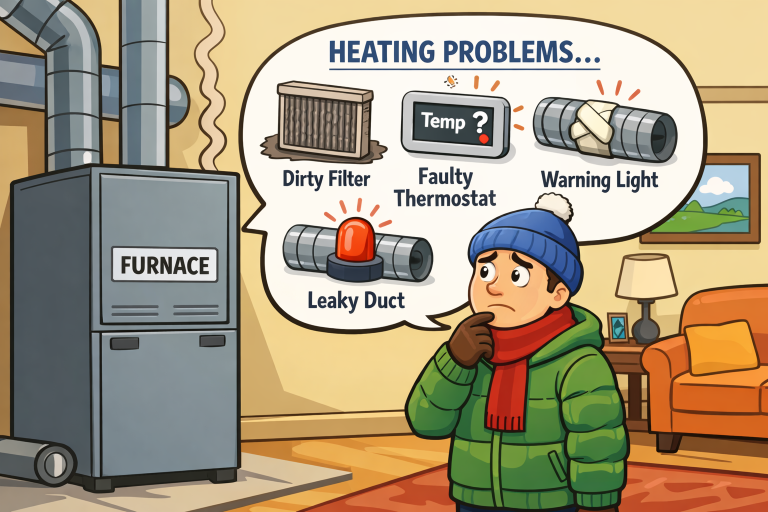
Every heating system depends on clean air filters to function well. These filters trap dust, pet dander, and airborne particles, protecting internal components from buildup. As filters fill up, airflow is restricted, making your system work harder and possibly leading to overheating or premature breakdowns. Swapping out or cleaning air filters at least every three months, more frequently in homes with pets or allergies, can restore efficiency and even lower your energy bill.
Thermostat Malfunctions
The thermostat acts as the command center for your heating system. Faulty thermostats can cause rooms to feel uncomfortably warm or too cold. This issue often stems from dead batteries, incorrect calibration, or poor placement (such as mounting too close to a heat source or draft). Double-check that yours is programmed accurately for the season, and if it shows erratic behavior, consider replacing it with a programmable or smart thermostat.
Pilot Light or Ignition Problems
Many furnaces rely on a pilot light or an electronic ignition system to kickstart heating. If the pilot light sputters out or won’t stay lit, common causes include a dirty thermocouple, a clogged burner, or electrical faults. Attempting to relight a stubborn pilot is sometimes safe, but repeated failures or persistent ignition problems demand a professional’s inspection to ensure safety and prevent gas leaks.
Wear and Tear on Mechanical Components
Moving parts such as blower belts, bearings, and motors are prone to wear, especially in older systems. Worn-out components can cause rattling, airflow issues, or sudden shutdowns. Regular inspections can spot trouble before it spreads: lubricate moving parts as recommended, and replace belts or bearings at the first sign of damage to avoid surprise breakdowns during a cold snap.
Blocked or Leaky Ductwork
Ducts are a critical, if often overlooked, part of every heating system. Blockages from dust, pet hair, or mold can restrict airflow, while leaks may cause uneven heating or higher utility costs. Periodically check vents for obstructions and assess accessible ductwork for holes or gaps. Sealing leaks and clearing blockages helps maintain consistent temperatures and cuts energy waste.
Frequent Cycling
If your heater turns on and off more rapidly than usual, it could indicate a dirty filter, a misconfigured thermostat, or restricted airflow. This frequent cycling strains the equipment and can drive up your heating bills. Addressing air filter cleanliness, checking thermostat settings, and ensuring all vents are open and unobstructed will typically resolve the issue.
Unusual Noises
Banging, squealing, or grinding sounds coming from the furnace aren’t just annoying—they usually indicate a problem. Rattling may mean loose components, while grinding might suggest a failing motor or worn-out bearings. Acting quickly to diagnose and correct the noise can save costly repairs down the line, as ignored issues often result in significant damage to the heating system.
Carbon Monoxide Leaks
Cracked heat exchangers are rare but represent a serious safety hazard. A crack can allow carbon monoxide (CO) to seep into your home, which is odorless, colorless, and deadly. Install CO detectors on every floor and schedule annual furnace inspections to reduce danger. If a detector ever triggers an alarm, evacuate immediately and contact emergency services.
When to Seek Professional Help
While changing filters or adjusting the thermostat are safe for DIY, persistent problems should always be left to qualified HVAC technicians. Unusual odors, leaks, repeated pilot light outages, and strange noises all call for professional intervention. Schedule annual maintenance appointments to prevent many issues entirely and keep your heating system running smoothly throughout the cold months.
Being informed about common heating repairs gives you peace of mind and ensures your home remains safe and cozy all winter long.