
Death Note has a reputation that can make new readers hesitate, partly because the premise is so blunt: write a name, cause a death, watch the fallout spread like a stain through every chapter. That premise sounds extreme, yet the manga does not rely on graphic spectacle in the way some darker action series do. Its tension is built through silence, strategy, facial expressions, surveillance, guilt, power, and the feeling that every page moves one step closer to disaster. That distinction matters. A reader asking whether Death Note is violent is often not asking only about blood. They are asking whether the story feels harsh, oppressive, cruel, frightening, or emotionally draining. In that sense, the manga deserves an honest answer. It is violent in theme, violent in consequence, violent in moral tone. At the same time, it is not constantly explicit in visual detail. The experience is closer to a pressure chamber than a battlefield, which is why some people who avoid gore still manage to read it, while others who can tolerate action violence find this series more disturbing than expected.
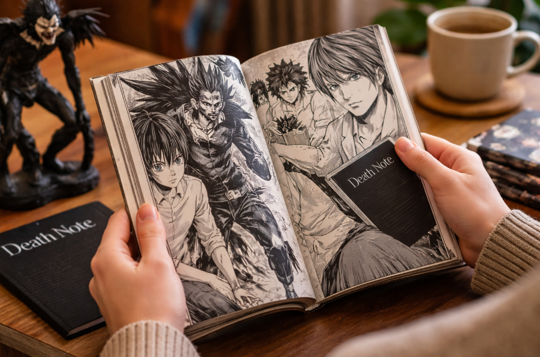
A lot of that curiosity grows once readers move beyond the anime and start exploring the wider world around the title, from collector culture to character design. Someone browsing manga merchandise on anime figures store may notice how often Light, L, Ryuk, and the notebook itself are presented with a dark, elegant, almost ceremonial aesthetic rather than a brutal one. That visual identity says a lot about the series. Death Note is not known for relentless action panels or body horror. It is known for dread, obsession, intellect, and the cold theatricality of death being treated like a system. The manga places murder inside a calculated structure, which can feel more unsettling than spontaneous violence because it removes chaos and replaces it with intention. Readers are not only watching people die. They are watching someone decide who deserves to die, justify it, refine the process, and adapt when challenged. That moral machinery gives the series its bite. It can feel severe even in scenes where very little is shown on the page, because the weight of the act hangs over every conversation and every decision.
That is also why character imagery and collectibles tied to the franchise, including pieces centered on a Death Note figure, often emphasize posture, expression, symbolism, apples, shadows, chains, or the notebook itself rather than overt brutality. The identity of the manga is psychological before it is graphic. Still, that does not make it harmless. The story normalizes discussion of death from the opening chapters, introduces repeated killings, explores fear among criminals and investigators, and creates a world where human life becomes a tool inside an ideological game. A younger or more sensitive reader may not be shocked by what is drawn, yet may feel disturbed by the emotional climate. Death Note invites the reader into a mind that becomes colder over time. That transformation is one of the darkest parts of the series. The violence lives in the concept, in the abuse of power, in the emotional detachment, in the collapse of empathy. Anyone asking whether the manga is violent should measure those elements as carefully as the visible content on the page.
What kind of violence appears in Death Note?
When people hear the word violent, they often picture punches, blades, blood, shattered bodies, or long battle scenes. Death Note works differently. Its core violence is built around death as an act of control. The main mechanism of harm is the notebook itself, which allows a person to kill from a distance. That means many of the most important violent acts do not look traditionally violent at all. A character writes a name. Someone collapses elsewhere. Panic spreads. News reports follow. Suspicion grows. The visual page may be restrained, though the meaning is severe. That gap between appearance and consequence is essential to how the manga affects readers. Violence in Death Note is often procedural. It is planned, tested, refined, hidden. The story returns again and again to the fact that lives are being ended deliberately for strategy, revenge, fear, ideology, or self-protection. That repeated exposure creates a dark atmosphere even when the art does not linger on anatomy or gore.
There are also moments of direct menace, physical danger, and implied suffering. Characters are surveilled, cornered, manipulated, threatened, and placed under intense psychological pressure. Some scenes involve visible injury or frightening expressions, though the manga usually prefers implication over graphic overload. Its harshest content often comes from context. A criminal dies because someone decided he should. An innocent person becomes collateral inside a larger plan. A family member is drawn into suspicion. A detective risks everything in pursuit of truth. The result is a form of violence that feels mature because it is tied to ethics and consequence. It does not ask only, “What happened?” It asks, “Who chose this, why did they choose it, and what does that choice do to the human soul?” That is why the manga can feel heavier than an action series with more fights. The body count matters, though the moral corrosion matters even more.
The manga also uses fear as a weapon. Fear changes public behavior, changes law enforcement behavior, changes personal relationships, changes how justice is discussed, changes how power is imagined. Once the idea of Kira spreads, society begins to react to violence even when violence is not physically present in the scene. That enlarges the emotional reach of every death. In a conventional thriller, one murder may affect one street, one household, one investigation. In Death Note, one killing can reshape public consciousness. The series turns violence into a system of belief. That is where its intensity sharpens. The reader is not watching isolated incidents. The reader is watching a worldview built on repeated deaths. The notebook becomes a symbol of absolute punishment, almost like a judge with no courtroom and no appeal. That symbolism gives the series its dark magnetism, though it is also what makes many readers describe it as unsettling, intense, or morally violent even when the drawings themselves remain relatively controlled.
Is Death Note graphic or mostly psychological?
The most accurate answer is that Death Note is far more psychological than graphic. That distinction helps many readers decide whether the manga fits their comfort level. If someone avoids stories because they cannot handle explicit gore, severed limbs, or pages packed with blood, Death Note may be more manageable than its premise suggests. It does include death, disturbing scenes, shinigami designs, and a dark emotional tone, though it is not primarily a gore-driven reading experience. The artwork is expressive, sharp, tense, and sometimes eerie. It aims to create pressure, suspicion, and dread. That pressure is what keeps readers turning pages. The series wants you to think about the logic behind a death, the reaction to a death, the strategy connected to a death. It does not constantly stop to display ruined bodies in detail.
That said, “not highly graphic” does not mean “light” or “easy.” Psychological intensity can cut deeper than visual brutality because it lingers in the mind. Death Note is full of characters under extreme stress, ethical lines being crossed, and conversations that carry the weight of life and death. The manga asks the reader to sit with manipulation, arrogance, obsession, surveillance, false innocence, and the thrill of secret power. For many people, that is more disturbing than seeing blood on a page. The emotional violence is steady. Light Yagami’s mindset, in particular, is one of the reasons the series feels severe. He does not stumble into darkness and regret it. He gradually shapes himself around it, becoming more comfortable with control, deception, and sacrifice. Watching that change is like watching a room lose oxygen. Nothing explodes, though the danger grows with every chapter.
A useful way to frame it is this: Death Note is a dark cat-and-mouse thriller that uses death as a constant background force. If a reader expects a horror manga, the series may feel cleaner and less graphic than expected. If a reader expects a school manga with occasional mystery elements, it may feel much darker than expected. Its tone sits in a very specific space. The fear comes from intelligence used without empathy. The violence comes from the normalization of death. The suspense comes from knowing that one small mistake could destroy multiple lives. Those qualities make the manga highly intense, though not in the same way as a brutal action or horror title. For readers who value nuance, that is the key point: Death Note’s violence is mostly psychological, concept-driven, and morally corrosive, with selective visual harshness rather than nonstop graphic display.
Which scenes or themes make readers call it disturbing?
Readers often describe Death Note as disturbing because the story treats killing as a method, a philosophy, and a temptation. One death might shock. Repeated deaths, rationalized with increasing confidence, create something more troubling. The series spends time inside the logic of punishment. It explores what happens when someone gains power that bypasses law, trial, doubt, and mercy. That concept alone is enough to unsettle many readers. The disturbing quality grows because the manga never frames the notebook as a simple cursed object that automatically destroys everyone equally. It shows how appealing that power can feel to someone intelligent, proud, impatient, and convinced of his own righteousness. That is where the story becomes sharp. It is not only about murder. It is about how easily murder can be dressed in the language of justice.
Another major factor is the treatment of identity and secrecy. Characters are forced to hide, perform, lie, test one another, and live under a microscope. Trust becomes fragile. Everyday interactions feel loaded. A family conversation can carry suspicion. A polite exchange can conceal a trap. This atmosphere turns the manga into a sustained emotional strain. Readers who are sensitive to paranoia may find this as distressing as any physical violence. Death Note rarely lets the tension breathe for long. It has the rhythm of a tightening knot. Once the game between Light and L begins, the story feeds on observation, deduction, ego, and fear of exposure. That mental warfare can be exhausting in the best way for thriller fans, though it can also feel oppressive for people who prefer warmer, more emotionally safe narratives.
Some disturbing elements are visual, though they are not always explicit in the gore-heavy sense. Ryuk and the other shinigami contribute a supernatural unease that colors the series from the opening chapters. Their designs, expressions, posture, and detached attitude toward human death give the manga a grim undertone. The world of Death Note feels morally colder because death is never far away, never sacred for everyone involved, never entirely abstract. Even when a scene is calm, the notebook sits in the background like a loaded device. The manga knows how to make an object feel dangerous without drawing violence in every frame. That tension is one of its strengths. It is also why readers who usually separate “graphic” from “disturbing” often place Death Note firmly in the disturbing category. The story does not need to scream. It whispers with precision, which can be even harder to shake off.
Who may find Death Note too intense?
Not every reader reacts to the same material in the same way, so the question is less about a universal threshold and more about what kind of intensity bothers you. Someone who is comfortable with detective fiction, crime thrillers, moral ambiguity, and dark supernatural concepts may find Death Note gripping rather than overwhelming. Someone who dislikes stories centered on murder, divine judgment, manipulation, or emotional coldness may find it harsh even if the visuals do not cross into extreme gore. The manga can also be difficult for readers who prefer characters with clear moral warmth. Death Note is intentionally interested in power, ego, punishment, and intellectual dominance. Compassion exists, though it is not the engine driving most of the central conflict. That tonal choice can make the series feel severe from the start.
Younger teen readers and first-time manga fans
Younger teen readers often handle the art more easily than the themes. A thirteen- or fourteen-year-old may not be frightened by the lack of graphic dismemberment, though the idea of writing names to kill people can still land with real force. The manga asks readers to engage with death as a repeated act, not as a one-time tragedy. It also introduces legal, ethical, and philosophical questions that may not feel heavy to every teen, though they can be emotionally confusing or unsettling depending on maturity level. First-time manga fans sometimes enter Death Note because it is famous, stylish, and easy to recognize in pop culture. That visibility can create the false impression that it is a standard gateway title for everyone. In truth, it is an excellent entry point for readers who enjoy suspense and ethical gray zones, though not for readers who want emotional comfort, gentle humor, or a simple hero to trust.
A practical concern for parents or cautious readers is that Death Note makes killing intellectually seductive before it fully exposes the cost. That is part of what makes the story compelling. It is also why some readers need guidance or at least a clear expectation before starting. The series does not celebrate violence in a shallow way, though it spends a lot of time inside a mindset that rationalizes it. A mature teen may find that fascinating. A more impressionable or sensitive reader may feel disturbed by how confidently harm is discussed and planned. That does not make the manga inappropriate by default. It simply means the emotional challenge is real, even when the artwork remains controlled.
Sensitive readers who dislike moral darkness
Readers who struggle with stories about cruelty, domination, fear, or emotional detachment may have a harder time with Death Note than readers who only worry about gore. This is where many people misjudge the manga. They expect visual violence to be the main issue, though the more difficult element is moral darkness. Death Note spends a long time in a space where people become tools, where justice is distorted by ego, where truth is pursued under immense pressure, and where human value is debated by people who believe they have earned the right to decide everything. For a sensitive reader, that can feel draining. It can create a sense of contamination, as if every scene is touched by the same cold philosophy.
There is also the emotional discomfort of watching intelligence used in cruel ways. Many thrillers present smart characters solving problems. Death Note often presents smart characters escalating danger. That reversal is thrilling for some readers, though deeply unpleasant for others. If you dislike narratives where manipulation is constant, where innocence is fragile, or where the central tension depends on deception rather than emotional connection, the manga may feel too intense. On the other hand, readers who enjoy chess-like storytelling, layered suspicion, and ethical confrontation often find that this very darkness is what makes Death Note memorable. The right question, then, is not simply “Is it violent?” It is “Am I comfortable reading a story where death, control, and moral corruption sit at the center of nearly every major decision?”
How does Death Note compare with other dark manga?
Compared with many dark manga, Death Note is intense without being relentlessly graphic. That is one reason it has reached such a broad audience. It sits in a middle zone where the premise is mature, the themes are serious, the emotional pressure is high, though the visual presentation remains more accessible than extreme horror or brutal seinen titles. A reader who has already read violent survival stories, body horror, war manga, or grim fantasy series may see Death Note as comparatively restrained. A reader coming from lighter shonen titles may experience it as a major tonal leap. The manga’s darkness is concentrated in moral design rather than visual excess. That design gives it a long shelf life because readers keep arguing over justice, power, guilt, and the limits of punishment long after they finish the final volume.
It also differs from many action-heavy dark series because physical combat is not the main language of conflict. There are dangerous confrontations, urgent situations, and high-stakes decisions, though the engine is deduction. Strategy replaces spectacle. Surveillance replaces sword fights. Facial expressions and timing replace explosive violence. That makes Death Note feel sophisticated to readers who want tension without endless battles. It also means the series can sneak past expectations. Someone may think, “There is not much blood here, so this should feel light,” only to realize that the story is emotionally harsher than a louder manga full of visible injuries. In Death Note, a calm conversation may be more dangerous than a punch. A name on paper may hit harder than a drawn weapon. That is part of its brilliance.
In terms of content warnings, the manga usually lands below the most graphic titles in explicit visual violence, though above many mainstream series in death-related themes, dread, manipulation, and emotional coldness. A simple content snapshot can help readers decide:
- Death
- Murder
- Fear
- Manipulation
- Justice
- Obsession
- Surveillance
- Shinigami
That list captures the texture of the series better than the word “violent” alone. Death Note is dark because it asks what happens when human judgment becomes absolute. It is disturbing because it makes that question feel seductive before it reveals its corrosion. It is memorable because it never stops testing the reader’s idea of who deserves power. Readers who understand that balance usually know very quickly whether the manga matches their taste.
Is Death Note suitable if you dislike gore but enjoy thrillers?
For many readers, the answer is yes, with caution. If you enjoy thrillers, mysteries, criminal psychology, tense rivalries, and layered mind games, Death Note is often a strong fit even if you do not enjoy heavy gore. Its biggest strengths are structure, pacing, atmosphere, and ideological conflict. The manga knows how to hook a reader through escalating tension rather than visual brutality alone. That makes it especially attractive to people who like smart stories with stakes. You are not reading only to see what happens. You are reading to understand how each decision shifts the board. That chessboard quality is one of the reasons Death Note remains widely recommended. It delivers momentum without requiring constant action scenes.
Still, readers who dislike gore should not assume the series will feel gentle. The emotional material is dark. Murder is central. Punishment is central. Fear is constant. Several scenes are meant to unsettle rather than comfort. The manga can feel like standing under storm clouds that never fully move away. If you are comfortable with crime fiction, true-crime style ethics, courtroom debates about justice, or detective stories where lives hang in the balance, you will probably be able to handle Death Note. If your discomfort comes from seeing bodies torn apart, the series is less likely to push that limit. If your discomfort comes from cruelty, manipulation, loss of innocence, or the repeated discussion of death, the manga may still hit hard.
The safest summary is this: Death Note is more likely to trouble your mind than your stomach. It is sharp, morally tense, suspenseful, stylish, and often brilliant in how it builds dread. It is not the most graphic manga in its category. It is one of the most psychologically absorbing. That is exactly why the question “Is Death Note violent?” needs a careful answer. Yes, it is violent in premise, consequence, and moral atmosphere. No, it is not mainly built on graphic gore. Readers who know that difference can approach the manga with the right expectations and enjoy what it actually offers rather than what the title alone seems to promise.
See also: Future Focused Commercial Building Trends Transforming Modern Business Spaces
What to keep in mind before starting the manga?
Before starting Death Note, it helps to set aside two misleading assumptions. The first is that it will be a nonstop horror experience. The second is that it will be a simple battle between good and evil. The manga is more layered than both of those ideas. It uses a supernatural object to open a debate about justice, ego, law, social fear, and the human temptation to control what should never be controlled. That makes it richer than a basic crime story, though also heavier than many readers expect. If you are reading for atmosphere, tension, and intelligent conflict, there is a strong chance the series will work for you. If you need emotional warmth, easy moral stability, or low-stress entertainment, it may not be the right match at that moment.
It is also worth remembering that Death Note became famous partly because it balances accessibility with darkness. The art is polished. The concept is immediately understandable. The central rivalry is gripping. The deeper themes are strong enough to spark debate. That balance is rare. It allows the manga to reach casual readers, thriller fans, anime newcomers, and long-time collectors at the same time. Yet that same accessibility can make people underestimate the emotional intensity. Death Note is not empty shock. It is controlled, deliberate, and intellectually cruel in places. It invites you to admire cleverness while questioning the morality behind it. That tension is the series’ heartbeat.
If you are still unsure, ask yourself one practical question: Am I comfortable with a story where death is frequent, justice is distorted, and the main thrill comes from psychological warfare? If the answer is yes, the manga will probably feel intense but rewarding. If the answer is no, there are many other manga that offer mystery or suspense with a softer emotional edge. Either reaction is valid. Death Note is not “too violent” for everyone, though it is certainly dark enough that readers should know what kind of darkness it delivers before opening the first volume.
Why many readers still recommend it?
Death Note remains easy to recommend because it does something rare: it feels dangerous without relying on endless gore, and it stays intellectually gripping from the first chapters onward. For many readers, the violence is not what defines the manga most. The defining feature is the way it turns power, justice, and fear into a suspense machine that keeps the mind fully engaged. If you were wondering whether Death Note is violent, the fairest answer is yes, though its sharpest edge is psychological rather than graphic. That nuance matters. It can help you decide whether the series matches your taste, your sensitivity, and the kind of darkness you are willing to explore. If you enjoy thrillers with real moral weight, Death Note may be exactly the kind of manga that stays with you long after the last page.