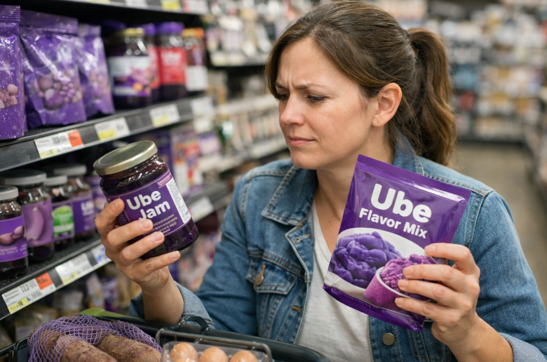

Ube has become increasingly visible in drinks, desserts, powders, spreads, flavourings, and packaged snacks. Its vivid purple tone catches the eye like a shop window lit too brightly, which is exactly why the market can attract confusion, exaggeration, and low-quality imitations. Many people think the hardest part is finding ube. In reality, the harder part is knowing whether the product in front of you contains real ube, a small amount of ube mixed with fillers, artificial colouring designed to imitate it, or vague flavouring that trades on the name without delivering much authenticity. That distinction matters for taste, texture, transparency, and value for money. Someone searching for information on this topic usually wants practical answers: what real ube is, why fake products exist, how brands can make a product look more authentic than it is, and what details should be checked before placing an order. That is the focus here. You will find clear explanations, concrete warning signs, label-reading tips, packaging clues, price logic, ingredient checks, and buying habits that reduce the risk of disappointment. The goal is not to create suspicion around every purple product on the market. The goal is to help you separate genuine ube items from misleading ones with a calmer, more informed eye.
Why fake ube products are becoming easier to find?
Fake or misleading ube products are not always obvious counterfeits in the strict legal sense. Very often, the problem is softer and more frustrating: a product uses the word ube on the front label, though the actual formulation relies mainly on artificial flavouring, colour additives, sweeteners, starches, or cheaper purple ingredients that create a similar visual effect. That matters because shoppers do not usually read packaging like investigators. They glance at the front, notice the colour, spot a trendy ingredient name, then assume the contents match the promise. When demand rises, this gap between appearance and reality becomes wider. Ube has strong visual appeal, social media visibility, and a flavour profile people associate with novelty and indulgence. That creates fertile ground for products that borrow the image without delivering the substance.
The problem also grows because ube appears in many forms. Fresh ube, frozen grated ube, ube jam, ube extract, ube powder, ube syrup, ube bakery fillings, snack coatings, and beverage mixes do not follow one universal standard in the eyes of everyday consumers. A buyer may know what fresh produce should look like, though many packaged foods remain harder to assess. A powder can be diluted. A syrup can be mostly sugar and colouring. A spread can highlight ube on the front while listing it far down the ingredient panel. In that kind of market, branding can behave like stage makeup: the presentation looks convincing from a distance, though the details tell another story.
Another point deserves attention. Many shoppers assume that “purple” means “ube.” That is not a safe shortcut. Purple sweet potato, taro-based products with colouring, yam flavour blends, and dessert bases with synthetic purple pigments may all be sold in ways that blur distinctions. Some are not fraudulent in a legal sense if the label technically discloses the contents. Still, they can feel misleading when the front-of-pack message creates one expectation and the ingredient list tells a different one. This is why the safest approach is not emotional, it is methodical: check the ingredients, understand the product type, compare claims against composition, and avoid trusting colour alone.
What real ube is supposed to look like on a label?
Reading a label is the fastest way to lower your risk. A genuine ube product should give you a reasonably clear indication of what form of ube it contains and how prominent that ingredient is in the formula. The wording may vary depending on the category, though transparency still leaves clues. If you are buying ube powder, you should expect wording that points to actual dehydrated ube or purple yam content rather than a vague “natural and artificial flavour.” If you are buying a spread or halaya-style preparation, you should be able to identify a credible list that reflects the type of product being sold. If you are buying extract or concentrate, the label should explain the format clearly instead of leaning only on attractive imagery.
Ingredient order is essential because ingredients are generally listed by weight in descending order. If real ube appears far down the list, the product may contain only a limited amount. That does not always make it bad, though it changes what the front label means in practice. A shopper expecting a strongly ube-based product may end up paying premium pricing for something driven mainly by sugar, dairy solids, starch, or flavour compounds. This is one of the most common points of disappointment in packaged foods marketed around trendy ingredients.
You should also pay attention to specificity. Labels that say purple yam, ube powder, ube puree, or grated ube are generally more informative than labels built around broad, cloudy terms. A vague phrase such as “ube style,” “ube inspired,” or “purple dessert flavour” can signal that the marketing is stronger than the formulation. Colour additives deserve attention as well. The presence of colour does not automatically make a product fake, since some processed foods use colour for consistency. Still, when a product depends heavily on colouring while actual ube content is minimal, the balance becomes revealing.
Label details that build trust
Some signals make a product easier to trust. A brand that names the ingredient form, gives a full ingredient list, identifies allergens clearly, states net quantity accurately, and avoids exaggerated front-label shortcuts usually deserves a closer look. Country of origin can also help, especially when the seller is transparent about sourcing and processing. Storage instructions matter more than many shoppers realize. Honest packaging often explains whether the item should be refrigerated, frozen, or kept in a cool dry place, which suggests the brand expects the product to be handled properly rather than sold as a purple novelty with minimal detail.
Lot numbers, expiration or best-before dates, importer information, manufacturer details, and sealed packaging also matter. These features do not prove excellence on their own, though they show a more serious commercial process. When several of these basics are missing, caution becomes reasonable. A reliable label is rarely flashy for the sake of being flashy. It tends to answer practical questions before the customer has to ask them.
Label details that deserve caution
Warning signs usually appear in clusters. One red flag alone may not mean much. Several together should slow you down. Be cautious if the package pushes the word ube heavily on the front while the ingredients bury it deep in the list. Be cautious if the label relies on purple graphics and dessert imagery yet gives no meaningful explanation of composition. Be cautious when the ingredient list looks incomplete, oddly translated, poorly printed, or inconsistent across the package. A mismatch between the front claims and the back panel is often the clearest clue that a product is trading on the name more than the ingredient itself.
Watch for spelling inconsistencies, suspicious health-style claims unrelated to the product category, and marketing language that feels inflated. A dessert powder sold as though it were a miracle pantry item is already stepping away from credibility. Another issue appears with imported products sold through informal channels. Some may be perfectly legitimate. Others arrive with relabelled packaging, partial stickers, or absent traceability. When key information looks improvised rather than printed as part of a normal retail process, the safest choice is restraint.
How colour, flavour, and texture can mislead buyers?
Colour is probably the most deceptive element in the ube market. Many shoppers expect a bold violet shade because that is what they see online. Real ube can indeed have a beautiful purple tone, though colour intensity varies depending on the variety, preparation method, oxidation, added ingredients, and processing conditions. A product that is extremely bright, almost electric in appearance, may rely more on added colouring than on the ingredient itself. At the same time, a more muted product is not automatically superior. The point is simple: colour intensity is not proof of authenticity.
Flavour can mislead in a similar way. People often describe ube as gently sweet, nutty, earthy, vanilla-like, or softly creamy depending on the preparation. That profile is not easy to capture with shortcuts. Products overloaded with sugar or artificial aroma may flatten the flavour into something one-dimensional. The package may still promise an authentic experience, though the taste can feel blunt or overly perfumed. A genuine ube product does not need to taste loud to taste right. Sometimes the most believable profile is more balanced, less theatrical, and closer to a natural dessert ingredient than to candy.
Texture is another clue shoppers overlook. Powders that clump oddly, spreads that look glossy in an artificial way, syrups that seem thin despite dramatic claims, or frozen products with uneven colouring can all indicate quality issues. Texture alone will not prove a product is fake, though it can support what the ingredient list and packaging already suggest. Processed ube items should still make sense for their category. A jam-like product should not resemble dyed gel. A powder should not feel like flavoured starch dressed up as something more premium.
The smartest way to interpret these sensory clues is not in isolation, though in combination. If the product is unnaturally bright, vaguely labelled, suspiciously cheap, and sold by a seller with weak product information, the pattern becomes hard to ignore. When several details line up, the product usually tells on itself.
Where shoppers most often get caught out?
Most disappointing purchases happen because buyers trust the wrong signals. Marketplaces with third-party sellers can be risky when listings are copied, incomplete, or inconsistent. Product images may show one label while the shipped item carries another. Descriptions may repeat the word ube many times without clarifying the actual ingredient format. Reviews can also mislead because some buyers evaluate packaging speed or sweetness rather than authenticity. A product may receive praise from customers who never expected much real ube in the first place.
Impulse buying is another common trap. A dramatic discount can make a product feel like an opportunity, though very low pricing sometimes reflects diluted formulation, older stock, questionable storage, or low oversight. This does not mean authentic ube products must always be expensive. It means the price should make sense for the category, the import chain, and the ingredient form. Fresh or carefully processed products have costs attached to sourcing, handling, and distribution. When a listing feels far cheaper than comparable options without a clear explanation, it deserves scrutiny.
Another weak point appears in “giftable” or trend-led products. Seasonal snack boxes, novelty drink powders, dessert kits, and highly stylized packaging may place more effort into appearance than ingredient quality. The customer receives something visually pleasing, though the product may have only token ube content. This kind of item is built for first impressions. A careful buyer has to look one layer deeper.
- Ingredients
- Origin
- Seller
- Dates
- Seal
- Colour
- Price
- Claims
One more issue deserves emphasis: informal resale. Products sold without proper storage information, with damaged seals, with translated stickers covering original text, or through accounts that provide little business identity carry added risk. Food products, especially imported ones, should not feel mysterious. If basic traceability is missing, that is reason enough to step back. A trustworthy purchase should feel solid, not foggy.
See also: Future Focused Commercial Building Trends Transforming Modern Business Spaces
How to check a ube product before buying?
The best defence is a short pre-purchase routine. Start with the product category. Ask what you are actually buying: powder, extract, spread, frozen ingredient, snack, syrup, or dessert mix. Each category has different expectations. After that, read the ingredient list from top to bottom. Look for actual ube or purple yam wording that matches the product type. Check whether the front label promise fits the back label reality. Review the seller’s photos to see whether the packaging is shown clearly from multiple sides. If only the front is visible, important details may be missing for a reason.
Check business credibility as well. A serious seller usually provides storage details, quantity, product form, country information, and a complete description. Watch how the seller answers customer questions, if that information is available. Evasive responses, generic text, or copy-pasted descriptions often signal low product familiarity. Packaging quality also matters. Professional printing, legible lot information, intact seals, and coherent branding do not guarantee authenticity, though poor execution often correlates with weaker oversight.
Compare several listings rather than trusting the first result. When one product claims premium authenticity yet provides less detail than its competitors, the silence becomes meaningful. Read the reviews carefully, though filter them. Useful reviews describe flavour realism, ingredient expectations, packaging condition, and consistency across repeat purchases. Less useful reviews focus only on sweetness, delivery speed, or the colour looking “pretty.”
You should also think about use case. If you want real flavour for baking, filling, or dessert preparation, the formulation matters more than eye-catching packaging. If you only want a novelty snack, you may tolerate a more playful product. The mistake happens when a buyer expects authenticity from an item designed mainly for colour impact and shelf appeal. Setting the right expectation before purchase saves both money and frustration. That is especially true in a category where purple can act like a spotlight, drawing attention away from the fine print.
What to do when a product feels misleading?
If a ube product seems misleading after purchase, document the issue calmly. Keep photos of the front label, back label, lot code, seal condition, and the product itself once opened. Compare the listing description against the package you received. If the wording, ingredients, weight, or visual presentation differ in a significant way, contact the seller with a direct summary of the mismatch. A factual complaint works better than a vague expression of disappointment. State what you expected, what arrived, and which details appear inconsistent.
Where refunds are possible, a clear explanation supported by photos gives you the best chance of resolution. If the item appears unsafe, improperly labelled, or sold without essential food information, do not consume it just to test the claim. Storage or traceability issues deserve caution on their own. If the problem is more about authenticity than safety, your evidence still matters because misleading presentation can affect future buyers too.
This step also helps sharpen your buying instincts. Many shoppers only realize what they missed after holding the product in their hands. That experience is useful. The next time, you will notice the missing details sooner. A disappointing purchase can still teach you how to read the market more effectively. In categories built on visual charm, disciplined buying becomes a real advantage.
A sharper way to buy ube with confidence
Ube can be a genuinely enjoyable ingredient, though the market around it rewards careful shoppers more than casual ones. The safest path is simple: look past the purple colour, read the label closely, compare the promise with the ingredient list, and favour sellers who provide complete, coherent information. A product does not need to be perfect to be worth buying, though it should be honest about what it is. When you learn to spot inflated branding, vague wording, unusual pricing, and weak traceability, fake or misleading ube products become much easier to avoid. If a listing feels polished on the surface yet thin on facts, that impression is worth respecting. In a category where appearance can sparkle like neon, a patient buyer usually makes the better choice.