
Laser cutting has become an important technology in modern manufacturing because it allows businesses to produce accurate shapes with repeatable results. Among the different laser technologies available, CO2 laser systems have been used for many years in industrial and fabrication applications.
Understanding how these machines work, what materials they can process, and what factors should be considered before purchasing one can help manufacturers make more informed equipment decisions.
Companies comparing equipment may also benefit from working with an experienced co2 laser cutting machine manufacturer that understands different production requirements.
What Is a CO2 Laser Cutting Machine?
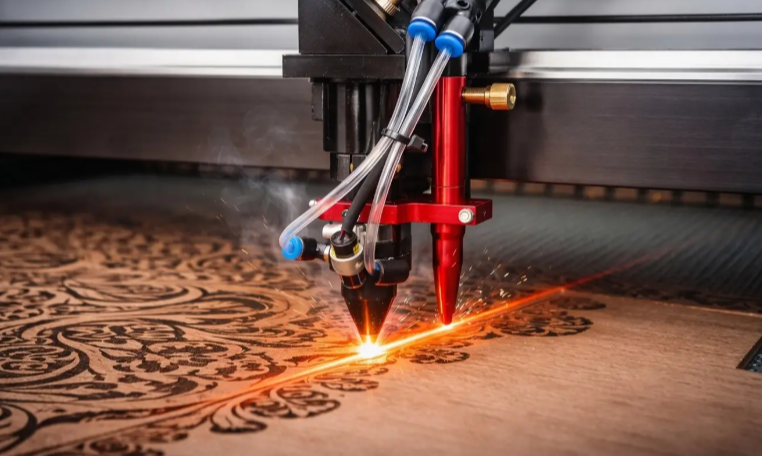
A CO2 laser cutting machine uses a gas laser system to generate a concentrated beam of energy. The beam is directed toward the material and focused into a small area, allowing the machine to cut or engrave according to programmed instructions.
CO2 laser systems are commonly associated with non-metal materials, although their capabilities depend on machine configuration and power.
Common Materials
CO2 lasers can be used with various materials, including certain plastics, acrylic, wood, paper-based products, textiles, and other suitable materials.
The exact materials that can be processed depend on the machine’s specifications and the manufacturer’s recommendations.
Before cutting a new material, operators should verify that it is appropriate for the equipment and safe for laser processing.
Cutting Accuracy
One major reason manufacturers use laser cutting is the ability to create detailed and repeatable designs.
The focused beam can produce relatively narrow cuts, allowing manufacturers to create intricate patterns and precise shapes.
Actual cutting accuracy depends on many factors, including machine construction, optics, material characteristics, settings, and operator experience.
Industrial Applications
CO2 laser cutting is used in many industries.
Examples include:
- Sign production
- Packaging
- Decorative products
- Textile processing
- Furniture components
- Acrylic fabrication
- Product prototyping
- Industrial parts
- Custom manufacturing
The technology is particularly useful where digital designs need to be converted into physical components.
Prototyping and Custom Work
Laser cutting can be useful for businesses that produce customized or small-batch products.
A digital design can be adjusted relatively quickly, allowing manufacturers to produce different versions without creating a completely new mechanical cutting tool for every design.
This flexibility can be valuable during product development and prototyping.
Productivity Benefits
The speed of laser processing depends on material type, thickness, cutting pattern, machine power, and other settings.
For suitable materials, laser systems can process designs efficiently while maintaining repeatability.
Manufacturers should evaluate production requirements rather than focusing only on maximum advertised cutting speed.
Software and Digital Workflow
Modern laser systems rely heavily on digital design software.
Operators can prepare a drawing or cutting file and convert it into instructions for the machine.
Good software can help with positioning, layout, cutting order, and parameter management.
An efficient digital workflow can reduce setup time and improve consistency.
Choosing the Right Machine
Machine selection should begin with the materials and products the business actually manufactures.
Consider:
- Material types
- Maximum material thickness
- Required cutting area
- Production volume
- Required precision
- Software compatibility
- Cooling requirements
- Maintenance needs
- Automation options
- Technical support
A machine that is suitable for prototyping may not be sufficient for continuous industrial production.
Maintenance Requirements
Regular maintenance is important for reliable laser performance.
Operators should follow the manufacturer’s recommendations for cleaning, optical components, cooling systems, ventilation, and other machine parts.
Dust and residue can affect equipment performance, particularly in environments where materials generate significant debris.
A planned maintenance schedule can help reduce unexpected downtime.
Safety Considerations
Laser cutting equipment requires proper safety procedures.
Operators should receive appropriate training and follow the machine manufacturer’s instructions. Ventilation is also important because some materials can generate smoke or fumes during cutting.
Manufacturers should determine whether a particular material is suitable for laser processing before placing it into production.
Working With a Manufacturer
Selecting a reliable supplier involves more than comparing machine prices.
An experienced co2 laser cutting machine manufacturer can provide technical specifications, application guidance, configuration information, and support for installation and maintenance.
Businesses should explain their production requirements clearly so that equipment recommendations can be matched to actual use.
Planning for Future Production
A machine should ideally support the company’s expected production needs over the coming years.
Businesses may expand their product range, increase order volumes, or begin working with thicker or different materials.
Considering these possibilities before purchasing equipment can help avoid the need for an early replacement.
Final Thoughts
CO2 laser cutting remains a useful technology for many manufacturing and fabrication applications. Its digital workflow, precision, flexibility, and ability to process suitable materials make it valuable for both customized and repeated production.
Before purchasing equipment, businesses should evaluate their materials, production volume, required cutting area, accuracy, maintenance needs, and safety requirements.
Working with an experienced co2 laser cutting machine manufacturer can also help businesses identify equipment that matches their specific production environment.