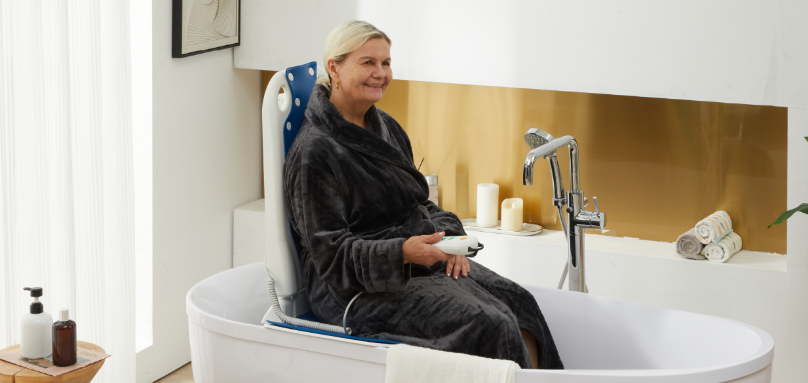

Most people don’t wake up one morning and decide they need help in the bathroom.
It creeps in.
A hand stays on the wall a little longer. Knees hesitate before bending. You plan how you’ll get back up before you’ve even sat down. Bathing becomes something you think through instead of something you just do.
That’s usually the point where a bath lift chair enters the conversation. Quietly. Almost reluctantly.
Not as a solution. More like a question.
The Moment Confidence Slips Is Rarely Dramatic
Nothing actually goes wrong at first. No fall. No injury. No emergency call.
Just a subtle sense that things feel less certain than they used to.
The bathroom becomes the most mentally demanding room in the house without changing at all. Same tiles. Same taps. Same bath. Different body.
For many people, a bath lift chair isn’t about comfort. It’s about reducing that background noise. The constant, low-level calculation running in the back of the mind while trying to relax.
That mental effort adds up.
Why People Wait Longer Than They Should
There’s pride involved. Habit too. And a strong desire not to overreact.
People adapt instead. They bathe less often. They rush. They avoid soaking. They shower standing up even when it’s uncomfortable. They ask for help only on bad days.
All of it framed as temporary.
By the time a bath lift chair is considered, confidence has usually already taken a hit. Not because anyone ignored the signs, but because accepting help in private spaces feels heavier than it looks on paper.
Independence Isn’t Always About Strength
There’s a stubborn idea that independence means doing everything without assistance. As if help automatically cancels autonomy.
In reality, independence is about control.
Choosing when to bathe. Closing the door. Taking your time. Deciding whether today is a long soak or a quick wash. Not having to coordinate schedules or explain yourself.
A bath lift chair supports that kind of independence. The quiet, ordinary kind that lets routines stay personal instead of becoming shared tasks.
Carers Feel The Shift Almost Immediately
Bathing support is one of the most physically demanding parts of care. Even when everyone is careful. Especially when fatigue sets in.
There’s lifting. Balancing. Anticipating slips. Staying alert in a small, wet space.
When a bath lift chair is introduced, movements slow down. Transfers feel safer. There’s less bracing, less holding breath, less rushing through the task just to get it done.
Care becomes calmer. And calm changes the tone of everything, even if nobody says it out loud.
Confidence Returns, But Not All At Once
People often expect a clear turning point. A moment where things suddenly feel “fixed”.
That’s not usually how it happens.
Confidence comes back sideways.
Someone bathes without announcing it first.
Someone stops asking if they should wait.
Someone takes longer, because they can.
Using a bath lift chair doesn’t restore confidence in one go. It just removes pressure. And when pressure lifts, confidence finds space to grow again, unevenly and quietly.
Short-Term Support Still Deserves Respect
Not everyone needs long-term equipment. Some people use a bath lift chair after surgery. After illness. After a fall. During a stretch where strength hasn’t returned yet.
Temporary support is still real support.
Short-term use can prevent setbacks. It can stop a cautious phase from turning into a serious injury. It can protect dignity while the body catches up.
That matters, even if the equipment isn’t permanent.
See also: The Raw Honey Revolution: Why London’s Health Conscious Shoppers Are Making the Switch
The Bathroom Doesn’t Need To Feel Clinical
One common worry is that safety aids will take over the space. Make it feel medical. Permanent. Like a signal something has gone wrong.
In practice, most modern bath lift chair designs are fairly unobtrusive. Neutral colours. Simple controls. Easy to remove or store.
When support blends into the background, people stop seeing it as a symbol and start seeing it as a tool. That shift makes acceptance easier.
Professionals Look At Routines, Not Gadgets
When an occupational therapist suggests a bath lift chair, they’re rarely focused on the product itself.
They’re watching how someone moves. How long transfers take. Where fatigue shows up. What happens on difficult days. How the bathroom fits into the rest of the home routine.
The chair is just one piece of a bigger picture. It works best when it supports existing habits instead of forcing new ones.
Resistance Often Fades Without A Conversation
Most people aren’t enthusiastic at first. That’s normal.
But after a few uses of a bath lift chair, relief usually outweighs reluctance. The body relaxes. The mind stops racing. The routine becomes familiar again.
Acceptance doesn’t arrive with excitement. It arrives with ease.
And ease is powerful.
Prevention Is Quieter Than Recovery
Bathroom injuries tend to happen suddenly. One slip. One tired moment. One misjudged movement.
A bath lift chair works earlier than that. It reduces risky movements before something goes wrong. That preventative role doesn’t make headlines, but it changes outcomes.
Often invisibly.
When Bathing Stops Being A Topic At All
The real success isn’t how the chair looks or how smoothly it operates.
It’s when bathing stops being discussed.
No planning. No negotiating. No second-guessing. No quiet dread before turning on the tap.
At that point, the bath lift chair from CHS Healthcare fades into the background. Which is exactly where good support belongs.
Not centre stage.
Just there, doing its job, and letting life feel ordinary again.