Broken Braces And Orthodontic Emergencies: Who To Call First When Something Snaps

You might be feeling that familiar mix of panic and frustration right now. One moment the braces were routine, part of everyday life. Then a wire snapped, a bracket popped off, or something sharp started digging into your cheek, and suddenly you are wondering if this is an emergency, who to call, and how worried you should be. In times like this, having a Chattanooga dentist for the whole family you trust can make all the difference.
If you are caring for a child or teen, the worry can feel even heavier. You might be thinking about pain, the cost of extra visits, and whether this will delay their treatment. At the same time, you do not want to overreact and rush to the wrong place, or underreact and ignore something that could get worse.
Here is the short version. Most problems with broken braces and orthodontic emergencies are uncomfortable but not truly dangerous. You usually have a bit of time to breathe, protect the mouth, and contact the right professional. A true medical emergency is rare, but when it happens, you skip the orthodontist and get urgent medical help first. Everything else fits somewhere in between, and that is what you need help sorting out.
So where does that leave you when something breaks and you are staring at a mouth full of metal, feeling stuck between your orthodontist, a general and emergency dentist, and urgent care.
Is This Really An Orthodontic Emergency Or Just An Annoying Problem?
When something goes wrong with braces, your mind often jumps to worst case scenarios. Will teeth move back. Will this ruin months of progress. Is this going to cost a lot. These thoughts are normal, and they can make every loose wire feel like a crisis.
In reality, orthodontic problems fall into three broad groups. Mild issues that you can manage at home for a short time. Urgent orthodontic problems that need timely attention from your orthodontist. And true medical emergencies where the braces are only part of a bigger problem.
Here are some common situations and what they usually mean.
1. Poking or loose wire
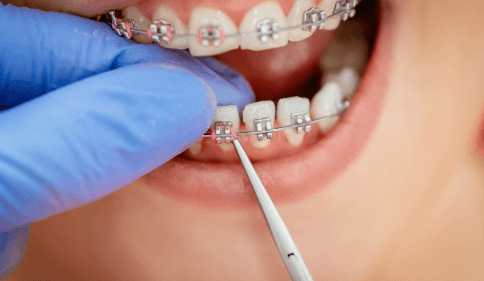
A wire that has slipped out of place and is poking the cheek or gum is one of the most common issues. It can be very irritating. It can cause small cuts or sores. It seldom threatens your overall health. Often, you can cover it with orthodontic wax, trim a tiny end with clean nail clippers if your orthodontist has taught you how, and then arrange a repair visit. You can see clear professional guidance on this kind of problem in this orthodontic emergency guide for families.
2. Loose bracket or band
A bracket that has come loose from the tooth, or a band around a back tooth that is not fixed anymore, often looks dramatic. The good news is that treatment usually does not collapse overnight. The bad news is that the loose piece can rub the inside of the mouth and may let the tooth start drifting if ignored for too long. This is usually handled by your orthodontist, not an emergency room.
3. Missing elastic or broken elastic chain
If an elastic breaks or falls off and there is no pain or sharp edge, this is rarely urgent. Treatment might slow slightly if it is left for too long, but a phone call and a scheduled repair is usually enough.
4. Swelling, fever, or strong pain
This is where things change. If there is facial swelling, trouble opening the mouth, warmth, or fever, you may be dealing with an infection or another dental problem under or around the braces. In that case you might need a general and emergency dentist or medical help quickly. Braces do not stop infections. They also do not treat them.
5. Trauma to the face or teeth
A fall, sports injury, or accident that hits the mouth can cause broken teeth, cuts, or even jaw injury. If teeth are knocked out, bleeding will not stop, or the person is dizzy, confused, or in severe pain, that is not just an orthodontic problem. That is a medical emergency. You seek urgent medical or dental trauma care first, then let the orthodontist repair the braces later. You can see how professionals prioritize these situations in this clinical overview of orthodontic emergencies.
Because of this range, it is easy to feel torn. You do not want to call every number in your contact list, but you also do not want to make the wrong choice. So who exactly should you call first.
Who Should You Call First For Broken Braces, And When Does A Dentist Step In
Think of your support team as having different roles. The orthodontist designs and adjusts the braces. A general and emergency dentist protects the teeth and gums and handles infections, broken teeth, and pain that comes from more than the appliance itself. Urgent care or an emergency room steps in when there is risk to general health.
As a simple guide for most braces emergencies without major injury, your first call is usually the orthodontic office. They know your treatment plan, they know what is attached where, and they can often talk you through a temporary fix by phone or telehealth. Many orthodontic practices have after hours instructions or an on call number for this reason.
You consider contacting a general or emergency dentist first if:
- There is strong, throbbing pain that feels deep in a tooth, not just from a sharp wire.
- You see swelling, pus, or a pimple on the gum near a tooth.
- A tooth has cracked, chipped deeply, or changed color after an injury.
- You do not currently have an orthodontist, for example if treatment was started elsewhere and you have moved.
You seek urgent medical care first if:
- There is heavy, uncontrolled bleeding.
- You suspect a broken jaw or serious facial injury.
- There is loss of consciousness, dizziness, vomiting, or confusion after a blow to the head or face.
- Breathing or swallowing is affected in any way.
Once the immediate risk is handled, the orthodontist can repair or adjust the braces as needed. The key is to think about what is being threatened right now. Comfort and minor irritation can usually wait for an orthodontic visit. Teeth and gum health may need a dentist. Life and basic safety always come first.
Should You Try To Fix It Yourself Or Wait For A Professional
When you are staring at a sharp wire or dangling bracket, it is tempting to grab scissors or pliers and try to fix everything at home. Sometimes a small, careful step is exactly what your orthodontist will suggest. Other times, home repairs can create more work and more pain.
The table below compares common home comfort steps with professional care for orthodontic emergencies. This can help you decide what to do while you wait for an appointment.
| Situation | Safe Short Term Home Step | When You Need Professional Help |
| Poking wire | Cover with orthodontic wax. Use clean cotton or sugar free gum if wax is not available. Use a clean blunt object, like a pencil eraser, to gently push the wire toward the tooth. | Wire is deeply embedded in the gum or cheek. Pain is strong or worsening. You cannot eat or speak comfortably even with wax. |
| Loose bracket on front tooth | If still on the wire, gently slide it back toward the center of the tooth and secure with wax to keep it from spinning. | Bracket has come off completely. You risk swallowing it, or it keeps cutting the inside of the mouth. |
| Loose band on back tooth | Rinse gently with warm salt water. Avoid sticky or hard foods. Keep the area clean. | Food is getting trapped under the band. There is a bad taste, swelling, or pain. This can increase the risk of decay. |
| Mouth sores from rubbing | Use wax on rough spots. Rinse with warm salt water. Use over the counter pain gel if advised by your dental team. | Sores are large, do not improve within a few days, or come with fever or feeling unwell. |
| Trauma to teeth with braces | Cold compress against the cheek. Over the counter pain relief if safe for you. Keep any knocked out tooth moist in milk or saliva. | Tooth is loose, broken, or missing. There is heavy bleeding or suspected jaw injury. Seek urgent dental or medical care first. |
The pattern is simple. Use home steps to protect soft tissues and reduce irritation for a short time. Do not try to bend thick wires, remove bands, or cut metal unless your orthodontist clearly guides you. If something feels beyond a small comfort measure, you are usually better off waiting for professional help.
Three Immediate Steps You Can Take When Braces Break
1. Calm the situation and protect the mouth
First, pause. Take a breath. Pain and worry can make everything feel worse. Gently examine the area in good light. If there is bleeding, apply clean gauze with gentle pressure. If a wire or bracket is sharp, cover it with orthodontic wax if you have it. A small piece of cotton or sugar free gum can work in a pinch. Rinse with warm salt water to soothe the tissues and clear away debris.
2. Decide who to contact based on symptoms
Use the simple filter. Is there strong pain, swelling, fever, or trauma. If yes, contact a general and emergency dentist, urgent dental clinic, or emergency medical service as needed. If the problem is mainly a loose or poking part, and overall health feels stable, call the orthodontist. If you are unsure, you can call whichever office you can reach first and describe what you see. Dental teams are used to sorting these situations out and will guide you.
3. Protect progress until the appliance is repaired
Until you are seen, treat the braces gently. Avoid hard, sticky, or chewy foods that might pull on loose parts. Cut food into small pieces. Keep brushing carefully around the brackets and along the gumline, even if it feels awkward. Good cleaning reduces the risk of cavities or gum problems while you are waiting. If an elastic or small accessory is missing, do not try to improvise your own. Wait for your orthodontist to replace it correctly.
Finding Your Balance Between Caution And Calm
Broken braces can turn an ordinary day into a stressful one very quickly. You worry about pain, about treatment delays, and about cost. That worry is understandable. At the same time, most problems with braces emergencies are fixable, often with simple steps and a timely call to the right professional.
Remember the basic order. Life and safety first. Teeth and gum health next. Comfort and appliance repair after that. Use home measures to protect the mouth, reach out to your orthodontist or dentist, and give yourself permission to breathe. You are not expected to solve this alone. Dental teams handle these situations every day, and they would rather hear from you early than have you sit at home in pain, wondering what to do.