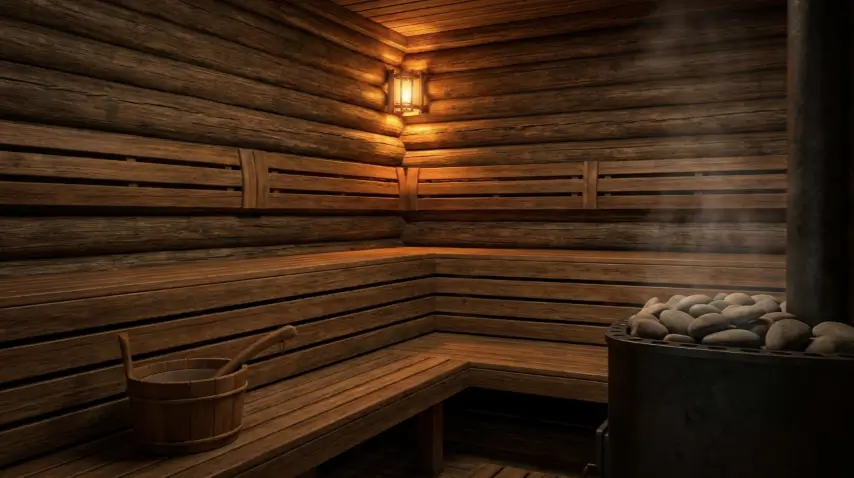

A traditional sauna heats slower in freezing weather, often 40 to 60 minutes instead of 30, and the exterior wood, roof, and door hardware all take more seasonal wear from freeze-thaw cycles than they would in a milder climate. None of this rules out a traditional cabin in a cold region; it is one of the settings the design has always handled well, but a few specifics change how it should be built, placed, and maintained.
Does Cold Weather Change How Long the Cabin Takes to Heat?
Yes, meaningfully. A stove that reaches full temperature in about 30 minutes when the outdoor air is 50 degrees can take 40 to 60 minutes when it is below freezing, since more of the heater’s output goes toward warming the cold wood and trapped air mass before the cabin can hold a stable temperature. Preheating on a timer or starting the stove before the household is ready to use it becomes more useful in winter than in warmer months.
Does the Exterior Wood Need Different Care in Winter?
Freeze-thaw cycling, where wood repeatedly absorbs moisture and then freezes, is harder on exterior sealant than steady cold or steady heat alone, so cabins in a genuinely cold-winter climate often need resealing every one to two years rather than the two to three years common in milder regions. Kiln-dried spruce and heat-treated hemlock both handle this reasonably well, but skipping the more frequent reseal schedule is the most common way cold-climate owners end up with premature graying or checking on the exterior shell.
What Happens to the Stove and Wiring in Sub-Zero Temperatures?
Electric heater elements and dedicated 240-volt wiring are rated to handle cold ambient temperatures without issue, since the components sit inside the insulated cabin where surrounding air warms quickly once the stove is running. The main practical consideration is making sure any exterior conduit or outdoor-rated junction boxes are properly sealed against moisture intrusion, which matters more where repeated freezing and thawing can work water into small gaps over a season.
Does Snow Load Affect Roof and Placement Choices?
In regions with sustained winter snowfall, the cabin roof should be rated for local snow load requirements, and placement should account for where snow will drift or where roof runoff will land once it melts. Positioning the door away from the prevailing wind direction and clearing a path to the entrance after storms are small habits that make a real difference in how usable the cabin stays through a full winter rather than just the first snow.
Is the Cool-Down Walk Back to the House a Real Consideration in Winter?
Stepping from a 180-degree cabin into freezing outdoor air is a bigger temperature swing than most other seasons present, and most cold-climate owners find toweling off before heading back indoors, or having a short, sheltered path to a mudroom or changing area, more practical than lingering outside. This is more a comfort and convenience issue than a safety one for most healthy adults, but it is worth planning the layout around rather than discovering it the first cold night.
How Should the Stove Be Run During Extended Cold Snaps?
During a multi-day stretch of especially harsh cold, running the stove for a slightly longer preheat and keeping the cabin’s interior door closed between uses, rather than propping it open the way summer routines suggest, helps the space hold residual warmth and cuts down on how hard the heater has to work for the next session. Extended power outages during winter storms are also worth planning for if the region sees them regularly, since an electric heater is unusable without power in a way a wood-burning stove is not, which is one more reason some cold-climate buyers lean toward wood heat despite the extra hands-on maintenance it demands.
What Should Winter Buyers Ask Before Ordering?
Before ordering a cabin for a cold-winter property, it is worth asking the manufacturer directly about the insulation rating of the wall panels, whether the door seal is rated for sub-freezing use, and what heater wattage they recommend specifically for the local climate zone rather than a general national average. A supplier used to shipping to genuinely cold regions will usually have a straightforward answer to all three questions, and a vague response is worth treating as a signal to keep comparing options.
Does Melting Snow Create a Drainage Problem Around the Base?
A cabin base that handles normal rain runoff fine can still struggle with the volume of water that comes from several feet of accumulated snow melting over a few warm days in early spring. A gravel pad or paver base with a slope away from the structure, the same setup recommended in any climate, matters even more here, and it is worth checking after the first spring thaw that water is not pooling against the floor framing or door threshold. Clearing snow away from the base periodically through winter, rather than letting it build up against the walls, reduces how much meltwater the drainage system has to handle at once.
See also: Accurate Bookkeeping: The Cornerstone of Small Business Success
Should a Cold Climate Change Which Cabin Size or Features You Buy?
A slightly higher-output heater and a well-insulated cabin with a tighter door seal both pay off more in a cold climate than in a mild one, since they shorten the longer winter heat-up time and hold temperature better against wind. Buyers in colder regions comparing wattage and insulation specs across models can browse the collection of traditional cabins built for exactly this kind of climate before settling on a heater size.
Does Winter Sauna Use Line Up With the Cardiovascular Research?
The Finnish cohort data behind the reported cardiovascular associations, including findings published in JAMA Internal Medicine and Annals of Medicine, comes from a country with long, cold winters, where sauna use has historically been a year-round habit rather than a fair-weather one. A cabin that is genuinely comfortable and reliable to use through winter supports the kind of consistent, multi-season habit that pattern reflects, more than one that only gets used when the weather cooperates.
Frequently Asked Questions
How much longer does a traditional sauna take to heat up in winter? A cabin that heats in 30 minutes in mild weather can take 40 to 60 minutes in freezing temperatures, since the stove works against a much colder starting point.
Do wood exterior panels need extra protection in a cold climate? Yes. Freeze-thaw cycles stress exterior sealant more, so cold-climate cabins often need resealing closer to every one to two years.
Is it safe to walk from a hot sauna into freezing outdoor air? Most people find a short, sheltered path or toweling off before stepping outside more practical than lingering in freezing air right after a session.
Does snow load affect where a traditional sauna should be placed? Yes. A roof rated for local snow load and placement that avoids heavy runoff or drift against the door both matter in regions with sustained snowfall.
References
- Association between sauna bathing and fatal cardiovascular and all-cause mortality events, JAMA Internal Medicine, 2015
- Joint associations of sauna bathing and cardiorespiratory fitness on cardiovascular and all-cause mortality risk: a long-term prospective cohort study, Annals of Medicine, 2018
- Short-term effects of Finnish sauna bathing on blood-based markers of cardiovascular function in non-naive sauna users, Heart and Vessels, 2018
By Derek Voss