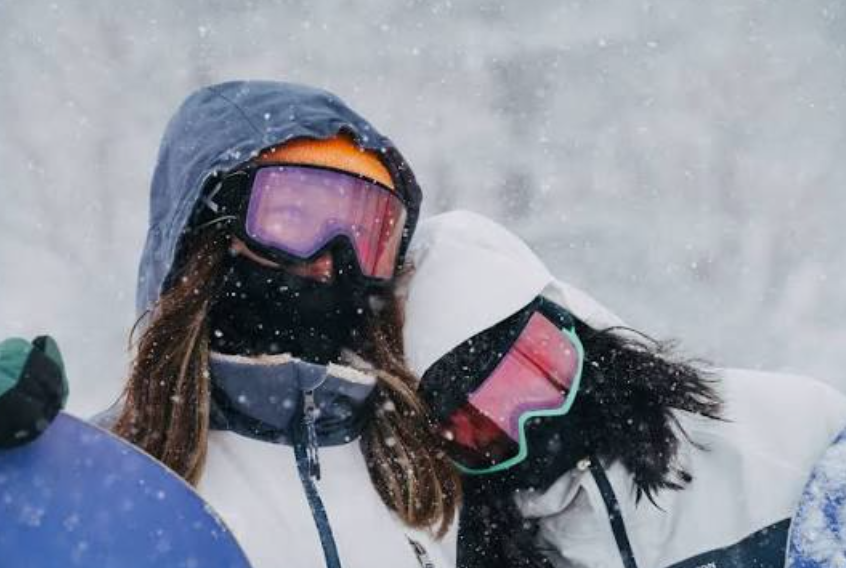

A mountain can look completely different at 9 a.m. than it does after lunch. A clear morning can turn cloudy, snowfall can reduce contrast, and a run through open terrain can suddenly disappear into shadow beneath the trees. For skiers and snowboarders, these changes make visibility an important part of choosing equipment.
Goggles are not simply there to block wind and snow. Lens tint, light transmission, contrast, ventilation, and the ability to change lenses can all influence how clearly a rider sees the terrain ahead. Learning how these features work can help you build a goggle setup that is useful throughout more of the season.
Mountain Light Is Constantly Changing
Unlike many outdoor activities, skiing and snowboarding take place in an environment where light can change dramatically in a short distance.
Snow itself reflects a significant amount of available light. On a clear day, the combination of direct sunlight and reflected brightness can make conditions feel intense. When clouds arrive, the opposite problem can occur. Shadows become less defined, contrast decreases, and bumps or changes in the snow surface may become harder to distinguish.
Terrain also plays a role.
A skier might begin a run on a sunny ridge, enter a shaded tree section, and finish beneath cloud cover. The same lens has to deal with all three environments unless the rider has another option available.
This is why lens selection deserves more thought than simply choosing the color that looks best with a helmet or jacket.
See also: How Is Technology Helping Businesses Reduce Their Carbon Footprint?
Understanding Lens Tint and Light Transmission
Different goggle lenses allow different amounts of visible light to reach the eyes. This is commonly discussed in terms of visible light transmission, often abbreviated as VLT.
A lens intended for bright conditions generally allows less visible light through. A lens designed for overcast, snowy, or low-light conditions typically allows more.
Neither approach is inherently better. They solve different problems.
Dark lenses can be comfortable on a bright blue-sky afternoon but may make an already dim environment unnecessarily difficult to see. A very light lens can improve visibility in flat conditions but may feel too bright when the sun comes out.
Rather than assuming one lens will be perfect for everything, think about the conditions you encounter most frequently.
For example:
- Bright, sunny days: Lower-light-transmission lenses can help manage intense brightness.
- Mixed conditions: Mid-range lenses can provide useful versatility when weather changes throughout the day.
- Cloudy or snowy weather: Higher-light-transmission lenses can be useful when natural light is limited.
- Very low light: Clear or lightly tinted lenses may be appropriate when maximum available light is important.
- Changing forecasts: A swappable-lens system can provide more flexibility than relying on one fixed lens.
Understanding these basic categories makes it easier to choose goggles according to function instead of appearance alone.
Why Swappable Lenses Can Be Useful
Few riders want to carry several complete pairs of goggles around the mountain. Interchangeable lenses provide another approach.
Instead of replacing the entire goggle, the rider can change the lens to better suit current conditions. Modern magnetic systems can make the process considerably faster than older designs that required users to work a lens carefully into the frame.
When evaluating ski and snowboard goggles, features such as interchangeable lenses, magnetic locking systems, multiple lens colors, varying VLT options, ventilation, and anti-fog construction are worth considering together. A customizable system can be particularly practical for riders who regularly encounter everything from flat-light mornings to bright afternoon conditions.
The advantage is not necessarily that riders should constantly change lenses. Instead, having the option can make one goggle frame useful across a broader range of weather.
For a full day on the mountain, a rider might start with a low-light lens during an overcast morning and switch to a darker lens if the clouds clear.
Contrast Can Matter as Much as Brightness
Managing brightness is only one part of snow visibility.
Terrain definition is also important. On a perfectly clear day, natural shadows can make bumps, tracks, and surface changes relatively easy to recognize. Under heavy cloud cover, those shadows can become much less pronounced.
This is often described as flat light.
When contrast decreases, the snow ahead can appear more uniform. Small variations in the terrain may become harder to distinguish until the rider gets closer.
Some snow-goggle lenses are therefore designed to increase perceived contrast rather than simply make everything darker. The objective is to help the rider distinguish details in the terrain under a wider variety of lighting conditions.
For recreational skiers and snowboarders, this is a useful reminder that lens performance cannot always be judged by how dark a lens appears from the outside.
Fog Can Undermine Even a Great Lens
An excellent lens is not particularly useful when its interior surface is covered in fog.
Fogging occurs when warm, moist air interacts with a colder lens surface and condensation develops. Skiing and snowboarding create plenty of opportunities for that to happen. Riders generate body heat, face coverings can redirect warm breath upward, and weather conditions can change throughout the day.
Goggle design can help manage the problem.
Ventilation allows air to circulate rather than trapping excessive moisture inside the frame. Anti-fog lens treatments or construction can provide another layer of protection.
Riders can also improve performance through their habits.
- Avoid covering goggle vents with a hat or other equipment.
- Try not to place wet goggles directly into an enclosed space immediately after a run.
- When possible, allow equipment to dry properly at the end of the day.
It is also wise to avoid unnecessarily rubbing the inside of a wet lens. Aggressive wiping can damage certain anti-fog treatments or scratch the lens surface.
Goggle and Helmet Fit Should Work Together
Lens technology gets plenty of attention, but fit can have just as much influence on the experience.
Goggles need to sit comfortably against the face while integrating properly with a helmet. Large gaps can expose skin to cold air and may affect how the setup feels. An awkward overlap between the helmet and goggles can create pressure points or interfere with ventilation.
The strap should provide enough adjustment to remain secure without forcing the frame painfully against the face.
When trying a new setup, it helps to test the goggles with the helmet you actually intend to wear. A pair that feels excellent by itself may sit differently once a helmet is added.
Face shape also matters. Foam should make reasonably consistent contact rather than leaving obvious gaps, particularly around the nose and sides of the face.
Build a Simple Two-Lens Setup
For many recreational riders, there is no need to build an enormous collection of lenses.
A practical starting point is often a two-lens approach: one lens suited to brighter conditions and another intended for lower-light days.
That combination can cover a large percentage of situations encountered during a typical season. Riders who frequently ski at night or in particularly variable climates may eventually add another specialized option.
The important thing is to choose lenses that complement one another. Owning two nearly identical tints provides much less flexibility than having lenses designed for noticeably different conditions.
Storage also deserves attention. Spare lenses should be protected from scratches while being carried and allowed to dry before long-term storage.
Conclusion
Good mountain visibility depends on more than simply wearing a dark lens. Snow conditions, cloud cover, terrain, time of day, ventilation, contrast, and helmet compatibility can all affect how well a goggle setup performs.
Instead of searching for one lens that claims to handle every possible situation, think in terms of adaptability. Identify the conditions you encounter most often, understand how lens tint and visible light transmission relate to those conditions, and consider whether interchangeable lenses would make your setup more versatile.
The mountain will continue changing whether you are prepared for it or not. A thoughtful goggle setup gives you a practical way to adapt, helping you spend less time worrying about your equipment and more time focusing on the terrain ahead.