
The biggest games are not always the most enjoyable.
Large studios can produce impressive graphics, huge worlds, cinematic stories, and complex online systems. But size does not guarantee personality. Sometimes a smaller game built around one clear idea can be more memorable than a major release with hundreds of features.
That is why players are paying more attention to games made by independent creators, solo developers, and small teams.
These games often feel different because they are not trying to satisfy everyone at once. They may focus on one unusual mechanic, one creative visual style, or one simple idea that would be too risky for a larger production.
The result can be rough around the edges, but it can also feel more personal, experimental, and surprising.
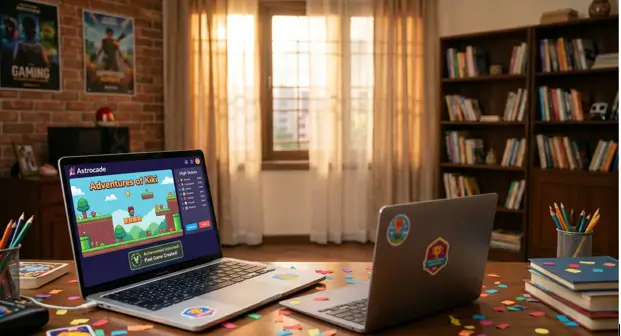
Astrocade supports this type of discovery by giving players a place to browse free Online Games through sections such as Players’ Choice, Trending, My Arcade, and Profile. These areas make it easier to explore different experiences instead of staying with only the biggest or most familiar titles.
Key Takeaways
- Games from regular people can feel more personal because they often follow one clear creative direction.
- Smaller projects are more willing to experiment with unusual mechanics and unexpected themes.
- A focused game can be more satisfying than a large game overloaded with features.
- Independent games may have rough edges, but those imperfections can be balanced by originality.
- Players should judge each game by its controls, progression, replay value, and overall experience.
- Not every small game is automatically better, but many offer ideas that larger studios may avoid.
Why Smaller Games Feel More Personal
A large commercial game usually passes through many stages of planning, testing, marketing, and approval.
That process can improve quality and reduce problems, but it can also make the final product feel carefully controlled. The game may be designed to appeal to the widest possible audience, which often leads to familiar mechanics and safer decisions.
Smaller games usually have fewer layers between the original idea and the final experience.
The person or small team behind the game may have a much clearer creative voice. Their preferences can shape the controls, visuals, pacing, humor, and difficulty without being changed to satisfy a large number of departments.
This can make the game feel more direct.
Players may notice:
- A stronger visual identity
- More unusual mechanics
- A clearer sense of humor
- Less unnecessary content
- More focused progression
- Unexpected combinations of genres
- A stronger connection between the idea and the gameplay
The game may not be perfect, but it often feels like someone had a specific idea and followed it through.
More Freedom to Experiment
Large studios have more to lose when a new idea fails.
A major release may require a large budget, a wide marketing campaign, and years of development. Because of that investment, unusual ideas can be risky. Familiar systems are easier to explain, advertise, and sell.
Smaller creators can take different risks.
They may combine mechanics that do not normally appear together, use unusual physics, create strange characters, or design a game around a very specific joke or concept.
Some experiments work brilliantly. Others do not. That is part of the appeal.
Players who explore independent Online Games may discover:
- Physics that create unpredictable moments
- Strange but memorable characters
- Simple mechanics used in unusual ways
- Short games with strong replay loops
- Creative visual styles
- Unexpected challenges
- Fresh approaches to familiar genres
The willingness to experiment is one of the main reasons smaller games can feel more exciting than heavily standardized releases.
See also: The Impact Of Cp As On Business Longevity And Stability
One Strong Idea Can Be Enough
A game does not need dozens of systems to be enjoyable.
Sometimes the entire experience can be built around one strong mechanic. The player may need to swing, launch, dodge, grow stronger, claim space, race, or survive. If that mechanic feels satisfying, the game can remain interesting even without a massive amount of content.
This focused design has several advantages.
The controls are easier to understand
Players can usually learn the main action quickly because the game is not trying to teach too many systems at once.
The objective stays clear
A focused game often makes it obvious what the player is trying to accomplish.
Improvement becomes visible
When there are fewer mechanics, players can recognize how their timing, movement, or decisions are improving.
Replay value comes from mastery
Players return because they want to perform better, reach farther, or discover a more effective strategy.
This is especially useful for casual games. A casual game can be simple to begin while still offering enough challenge to reward repeated play.
Why Imperfections Can Make Games More Interesting
Small games may contain rough edges.
You might notice an animation that feels unusual, a level that is not perfectly balanced, or a menu that could be clearer. These issues should not be ignored, but they do not automatically make the game worthless.
Sometimes imperfections make a game feel less manufactured.
A perfectly polished game can be impressive, but a slightly unusual game may be more memorable. Players may remember an unexpected physics reaction, a strange sound effect, or a mechanic that behaves differently from what they expected.
The important difference is whether the imperfections damage the experience.
A minor visual issue may be easy to overlook if the controls are fun. A small balance problem may be acceptable if the game offers an original idea. However, serious bugs, broken controls, or unfair progression can still make a game frustrating.
The right approach is to judge the whole experience rather than expecting every small project to have the same production level as a major commercial release.
A Chaotic Physics Example
Ragdoll Slingshots is described as a physics-based multiplayer battle game where featureless ragdoll characters fight using slingshots. Physically accurate ragdoll movement makes every hit and launch unpredictable, while the free-for-all deathmatch format gives players one clear objective: be the last ragdoll standing. Its short competitive structure is suited to quick sessions, and the official page identifies it as a free online game on Astrocade.
Smaller Games Often Feel Less Predictable
Predictability can reduce excitement.
When players have seen the same mission structure, reward system, and enemy pattern many times, a new game may feel familiar before it has even begun.
Smaller projects often avoid this feeling because they do not always follow the usual design formula.
A game might introduce:
- A different way to move
- A surprising reward system
- Unusual failure conditions
- A strange combination of genres
- A world that does not follow expected rules
- A mechanic that changes as you play
This unpredictability is valuable because players do not know exactly what the next moment will bring.
It can also create better stories. A strange mistake, accidental victory, or unexpected interaction may become the part of the game you remember most.
Why Players Enjoy Discovering Games Early
Finding a game before it becomes widely known gives players a different experience.
You are not entering with a complete guide, a list of recommended strategies, or an established opinion formed by thousands of comments. You can explore naturally and decide what you think.
Early discovery also makes it easier to:
- Learn the mechanics before the crowd
- Experiment without pressure
- Share the game with friends
- Develop your own strategies
- Notice changes as the experience grows
- Support a smaller project through attention
This does not mean every new or lesser-known game will become one of the next Viral games. It simply means players have a chance to discover ideas before they become familiar.
A hidden gem can be valuable even if it never becomes widely popular.
How to Find Games Built by Independent Creators
Finding smaller games requires looking beyond the most visible titles.
You can begin with platform sections such as Players’ Choice and Trending, but do not stop with the first few results. Browse different categories and pay attention to games with specific descriptions rather than vague marketing language.
Look for titles that explain:
- What the player actually does
- What makes the mechanic different
- How progression works
- Whether sessions are short or long
- What type of player may enjoy the experience
You can also try games from names you have not seen before. A familiar creator may already have a following, but unfamiliar creators are more likely to lead you toward discoveries.
The homepage of Astrocade currently includes both player-focused discovery areas and personal navigation sections such as My Arcade and Profile, which can help players explore and return to different experiences.
How to Judge Quality Before You Play
A good description is useful, but it is not enough to guarantee quality.
After starting a game, focus on the first few minutes.
Are the controls responsive?
A creative idea will struggle if movement or actions feel delayed.
Is the objective clear?
Players should understand what they are trying to accomplish without reading a long guide.
Does the game offer feedback?
Successful actions, mistakes, rewards, and progress should be easy to recognize.
Is there a reason to continue?
Look for increasing difficulty, unlocks, score goals, new situations, or a mechanic that develops over time.
Does the game have personality?
A memorable style, unusual sound, clever design, or unexpected detail can make a small game stand out.
These questions help you distinguish a genuinely promising experience from a game that simply has an interesting title.
See also: What Makes a Good Bonsai Supplier for Retail Businesses?
Are Games From Regular People Always Better?
No.
The appeal of smaller games does not mean every independent project is automatically better than a major release. Large studios can produce excellent games with deep systems, high production quality, strong accessibility, and reliable support.
Smaller games may also have weaknesses, including:
- Limited content
- Balance problems
- Technical bugs
- Less accessibility support
- Fewer settings
- Unclear tutorials
- Inconsistent performance
The point is not that bigger studios are bad or smaller projects are perfect.
The point is that smaller games often take creative risks that larger productions may avoid. Players benefit when both types of games exist because variety gives people more ways to enjoy gaming.
Why Originality Matters More Than Size
A game can feel valuable because of what it makes you feel, not because of how much content it contains.
A short game can be worth your time if it makes you laugh, challenges your timing, gives you a new idea, or creates a memorable moment.
Large games often measure value through scale. Smaller games may measure value through personality.
Neither approach is automatically correct. The best choice depends on what you want from the session.
If you want a huge world and long-term progression, choose a game designed for that. If you want an unusual idea and a focused loop, a smaller game may be more satisfying.
Why This Matters for Players
Players now have access to more games than ever, but more choice does not always lead to better discovery.
Many people repeatedly return to the same popular titles because they do not know where else to look. Exploring independent games can make gaming feel fresh again.
You may find:
- A new favorite genre
- A mechanic you have never seen before
- A short game perfect for breaks
- A multiplayer experience for quick sessions
- A creative game to recommend
- A challenge that rewards practice
The benefit is not only finding something popular early. It is finding something that feels personally relevant.
Final Thoughts
Games built by regular people are becoming more important because they bring variety, personality, and experimentation into gaming.
They may not always have the largest budgets or the most polished presentation, but they can offer something just as valuable: a clear idea that feels personal.
The best way to appreciate these games is to explore with realistic expectations. Look for strong mechanics, responsive controls, meaningful progression, and a reason to return. Accept that some projects may have rough edges, but do not confuse small scale with low quality.
Astrocade gives players a place to browse different Online Free Games and discover experiences that may not look familiar at first. Sometimes the most enjoyable game is not the one with the biggest name. It is the one with the most interesting idea.