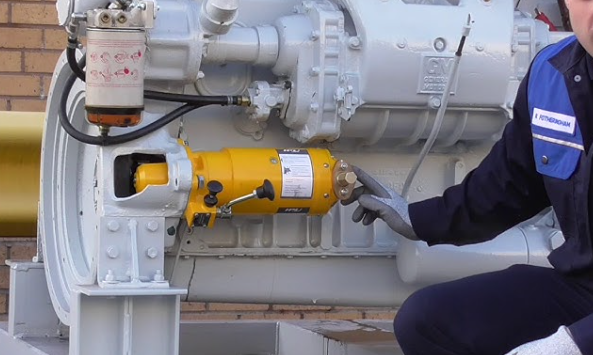

The philosophy behind the 1-series mechanical starter design embraces a principle that experienced engineers understand well: simplicity is the ultimate sophistication. By eliminating electrical dependencies and unnecessary complexity from the starting system, the 1-series delivers reliable engine starting through elegant mechanical design that has been proven in demanding applications worldwide.
The Case for Mechanical Simplicity
Modern industrial equipment has become increasingly complex, with digital controls, networked sensors, and sophisticated management systems. This complexity delivers real operational benefits in many areas, but it also introduces new failure modes. Every additional component is a potential point of failure; every electrical connection is a potential source of corrosion, vibration-induced failure, or water ingress.
The mechanical starter takes the opposite approach. By relying on fundamental mechanical principles—spring compression, ratchet mechanisms, gear drives—it minimizes the number of components that can fail. The result is a device that continues working in conditions that would defeat more complex starting systems.
1-Series Mechanical Design Highlights
Robust Spring Assembly
The 1-series spring assembly uses premium spring steel sized for the torque requirements of compact diesel engines. The spring housing is designed to contain the spring safely under full tension, preventing damage to the installation or injury to operators in the unlikely event of spring failure.
Positive Engagement Design
The drive engagement mechanism is designed to ensure complete mesh with the flywheel ring gear before energy release begins. This positive engagement approach prevents the partial mesh conditions that can cause ring gear damage and failed start attempts.
Robust Ratchet Mechanism
The winding ratchet is designed to hold full spring tension securely against vibration and shock loads. The pawl spring design maintains positive engagement throughout the winding range, preventing spring unwinding between incremental winding steps.
Comparative Analysis: Mechanical vs. Electric Starting
Comparing mechanical and electric starting for compact diesel applications reveals clear patterns:
- Cold start reliability: mechanical starter wins decisively at temperatures below -10°C
- Maintenance simplicity: mechanical starter requires minimal tools and expertise
- Battery dependency: mechanical starter eliminates this failure mode entirely
- Remote installation suitability: mechanical starter needs no charging infrastructure
- Initial cost: electric starter typically lower; spring starter wins on total cost of ownership
- Hazardous area certification: mechanical starter available in certified versions
Maintenance Simplicity in Practice
The 1-series mechanical starter’s maintenance requirements are deliberately minimal. Site technicians without specialized training can perform all routine maintenance tasks. The quarterly inspection consists of a visual check of all visible components for wear, corrosion, or damage. Annual maintenance adds internal lubrication and a functional test of the release mechanism. This simplicity reduces maintenance labor costs and minimizes the risk of maintenance-induced failures.
Cost Analysis Over Time
While the upfront cost of a mechanical spring starter typically exceeds that of an equivalent electric starter, a multi-year cost analysis often favors the mechanical approach. Battery replacement cycles add substantial ongoing cost to electric starting systems. Maintenance labor for both systems must be factored in. Most importantly, the cost of starting failures—including emergency response, lost production, and potential safety consequences—must be quantified. In applications where these costs are significant, the spring starter’s superior reliability delivers clear economic advantages.
See also: SEO for Seasonal Businesses: How to Capture Demand at the Right Time
Installation in Common 1-Series Applications
For typical 1-series applications such as small generators and agricultural equipment, installation is straightforward. The compact dimensions of the 1-series allow mounting in spaces where larger units would not fit. Standard mounting hardware and alignment tools simplify the installation process, and the manufacturer’s installation guide provides step-by-step instructions for common engine configurations.
Frequently Asked Questions
Can the 1-series handle frequent starting cycles?
Yes, the 1-series is designed for the starting frequency typical of industrial applications. If your application requires very frequent starting—multiple starts per hour—consult the manufacturer to verify that the duty cycle falls within the design parameters.
How difficult is it to wind a 1-series spring starter?
The 1-series winding force is calibrated for the spring size, resulting in a manageable winding effort for most adults. The ergonomic winding handle design maximizes mechanical advantage to make winding comfortable.
What if I need to start the engine without pre-winding the spring?
Spring starters require pre-winding before use. For applications where this may be impractical, consider a configuration with automatic winding or a complementary electric starting system. Discuss your specific operational constraints with the manufacturer.
Conclusion
The 1-series mechanical starter embodies the principle that the best engineering solution is often the simplest one. By eliminating electrical complexity and focusing on robust mechanical design, it achieves the reliability that complex systems struggle to match. For compact diesel engine applications where simplicity, reliability, and low maintenance are valued, the 1-series mechanical starter is the answer.