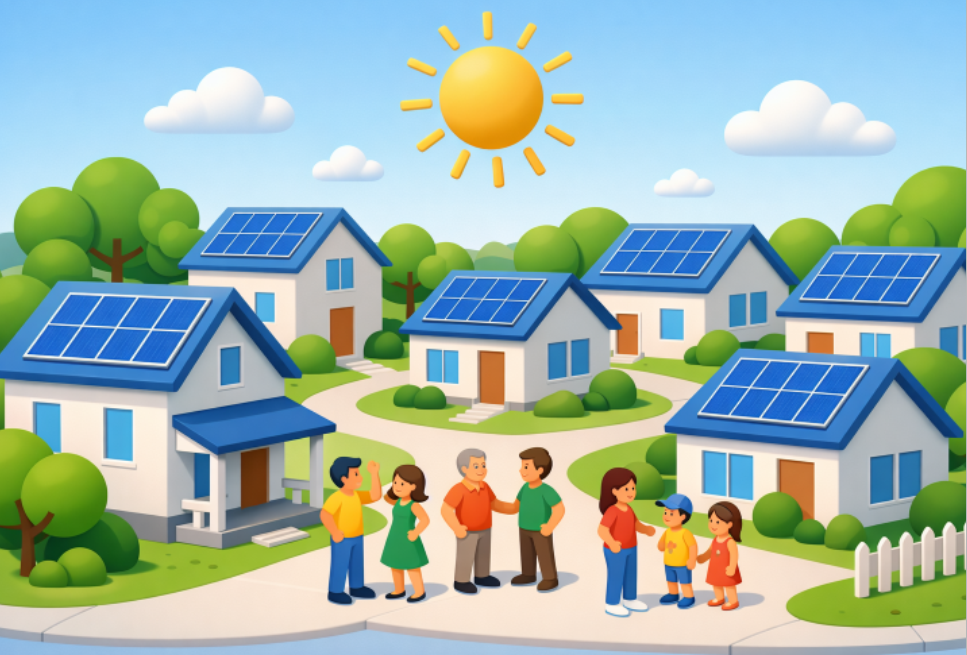
How Residential Solar Panels Are Reshaping Communities Across the United States

Key Takeaways
- Residential solar panels help sustain the environment and often increase property values.
- Community solar programs are making renewable energy more accessible to a wider range of people.
- Fair access to solar energy is essential for maximizing both social and environmental benefits across communities.
Table of Contents
- Introduction
- Environmental and Economic Benefits
- Community Solar Initiatives
- Equity in Solar Adoption
- Case Study: Detroit’s Solar Neighborhoods
- Challenges and Considerations
- Future Outlook
Across the nation, the adoption of residential solar panels is driving notable changes in communities, both for the environment and for local economies. As homeowners search for solutions to rising energy costs and growing environmental concerns, more are turning to solar energy. Local solar roofing companies are helping neighborhoods progress toward a greener and more resilient future through innovative residential and community-scale installations.
Solar energy not only powers individual homes but also fosters increased collaboration among neighbors and boosts local property values. Communities that embrace solar power develop a culture of shared responsibility and benefit from reduced energy costs, all while contributing to a healthier planet. As renewable energy options expand, neighborhoods are becoming important pillars of national sustainability efforts.
Broadening access to solar installations through community initiatives and targeted policies ensures that the advantages of clean energy reach more Americans. This collective movement toward solar power is revitalizing cities and towns, offering new opportunities for job growth and social development. In this article, we explore how residential solar adoption is shaping communities, focusing on environmental impacts, economic benefits, and equitable access to renewable energy.
Environmental and Economic Benefits
When residential properties are equipped with solar panels, reliance on fossil fuels declines, thereby reducing harmful greenhouse gas emissions. This shift supports environmental sustainability and aids in the collective fight against climate change. For homeowners, solar installations offer an immediate economic advantage. Lower monthly utility bills and federal or state tax incentives make the investment far more attractive. A well-installed solar energy system can also boost a house’s resale value.
Jobs in solar installation and maintenance are growing rapidly, creating new employment opportunities and supporting local economies. As solar becomes more popular, these economic and environmental advantages are amplified across entire neighborhoods.
See also: The Art of Building High-Impact Business Relationships
Moreover, the indirect benefits of residential solar adoption ripple through communities. For example, the increased demand for solar panels and related equipment boosts the manufacturing and distribution sectors. Local businesses often experience upticks in activity due to greater economic stability and discretionary income, as residents save money on energy costs. Many municipalities have also begun developing incentive programs to encourage solar adoption, thereby increasing civic engagement as neighbors share information about rebates, tax credits, and other savings opportunities. These programs not only spark more interest in solar adoption but also cultivate a sense of shared achievement when entire blocks or neighborhoods make the transition together.
Community Solar Initiatives
Not every homeowner has the option or resources to install solar panels on their property, but community solar programs provide an inclusive alternative. These initiatives involve shared solar arrays where multiple households benefit from a single system, allowing renters, those with shaded roofs, and others to access clean energy. As noted by the U.S. Department of Energy, community solar projects also encourage collaboration and foster stronger neighborhood ties.
As these programs grow, they are frequently supported by local governments and utility companies looking to improve grid reliability while expanding renewable capacity. Community solar initiatives can spark educational programs that teach residents about energy efficiency, further embedding sustainability into local cultures. These projects are especially valuable in urban or densely populated areas where individual solar installations are less feasible. By pooling resources and expertise, neighborhoods can overcome barriers that might otherwise exclude certain groups from participating in renewable energy transitions.
Equity in Solar Adoption
To realize the full benefits of solar energy, equitable access for all communities is essential. Historically, solar installations have been concentrated in higher-income neighborhoods, often leaving lower-income areas that could benefit the most from reduced energy costs behind. Bridging this gap requires intentional policy measures and community outreach efforts. Creating accessible financing options, subsidizing installations, and prioritizing underserved neighborhoods can help ensure the advantages of solar are distributed more fairly.
Efforts to improve equity in solar adoption are also leading to partnerships with local non-profits and advocacy groups. These organizations can facilitate outreach, provide education on navigating solar incentives, and assist with applications for government grants. Addressing linguistic, cultural, and financial barriers remains critical for ensuring participation from diverse communities. When these efforts succeed, solar power becomes a tool for broad-based empowerment and prosperity.
Case Study: Detroit’s Solar Neighborhoods
Detroit has emerged as an example of innovative urban solar adoption by transforming vacant lots into solar fields. These “solar neighborhoods” provide renewable power to public buildings and offer programs for residents to upgrade their homes with energy-efficient solutions. These efforts not only supply clean electricity but also rejuvenate unused land and promote community pride. This project illustrates how urban solar solutions can combine city revitalization with climate action.
Community organizations in Detroit have played a crucial role in coordinating partnerships between private investors, the city government, and local residents. By hiring from within the community, they ensure workforce development opportunities and directly stimulate the local economy. The resulting network of solar-supportive policies and residents has set an example for other cities seeking to replicate Detroit’s success, making solar power a driver of local transformation and resilience.
Challenges and Considerations
The path to widespread residential solar adoption is not without obstacles. The initial cost of system installation can be prohibitive, particularly for families without access to subsidies or affordable loans. Furthermore, not every building is suitable for solar panels due to structural limitations or excessive shading from trees or neighboring structures. On a broader scale, grid integration of solar-generated electricity requires careful management to ensure system reliability and resilience. Policymakers, utilities, and industry professionals must collaborate closely to overcome these hurdles and extend the benefits of solar to all residents.
There are also ongoing discussions about end-of-life management for solar panels, emphasizing recycling and safe disposal. Continued research and updates to building codes can help minimize future challenges. Finally, community engagement remains crucial. Inviting feedback and learning from past installations encourages further improvements and innovation in solar deployment, leading to better long-term results for everyone.
Future Outlook
The momentum behind residential solar adoption is set to accelerate in the coming years. Rapid advancements in solar technology are making installations more affordable and efficient, while new policies and incentives are being introduced to promote widespread adoption. Emerging trends such as battery storage and smart grid integration will further boost solar energy’s appeal to homeowners and communities seeking to enhance their resilience against grid failures and extreme weather events. As more neighborhoods embrace the advantages of residential solar, the collective impact on environmental sustainability, economic vitality, and community resilience will continue to grow.
The future could also see more integration of solar with other clean energy technologies, such as electric vehicle charging, community microgrids, and demand response programs. These innovations will help communities become more energy-independent and better prepared for the uncertainties of climate change. The ongoing evolution of financing mechanisms, like power purchase agreements and third-party ownership, will likely expand options and appeal to homeowners. Ultimately, as solar becomes a familiar feature in neighborhoods across the country, its transformative influence on society, the environment, and the economy will serve as a lasting legacy for future generations.