
There is no universally wrong time to visit Niagara Falls. The falls run year-round, the main attractions are largely operational across all seasons, and each time of year offers something the others do not. What changes is the experience surrounding the falls rather than the falls themselves, and understanding those differences is what allows visitors to choose a time that fits what they actually want from the trip.
This guide breaks down each season honestly, including what is genuinely better or worse about each window, and finishes with a clear recommendation for different types of visitor.
Summer: Late June Through August
Summer is when Niagara Falls operates at full capacity in every sense. Every attraction is open, the boat cruise runs daily, the fireworks schedule is at its most frequent, and the falls are illuminated every evening. It is also when the destination is at its busiest, most expensive, and most logistically demanding.
Walk-up queues for the Niagara City Cruises boat tour can exceed 90 minutes on summer Saturdays. Parking lots near the main attractions fill before 10 AM on peak days. Accommodation prices in the falls area reach their annual high. Clifton Hill and the surrounding tourist zone are at their most crowded, which some visitors find energising and others find exhausting.
The weather is the genuine advantage. Daytime temperatures regularly reach 25 to 30 degrees Celsius, evenings are warm enough to stand at the falls viewpoints comfortably after dark, and the fireworks season is running at its fullest schedule from June through to October.
Summer is the right choice for visitors with fixed school holiday dates and families travelling with children who need the full attraction lineup to be operational. It is not the right choice for visitors who want a relaxed, uncrowded experience of the falls themselves.
If summer is when you are going, the most important preparation is advance booking. The boat cruise, Journey Behind the Falls, and guided tours from Toronto should all be secured before the trip rather than on the day. Walk-up availability on a peak July Saturday cannot be relied upon.
Fall: September Through November
Fall is the season most consistently recommended by people who have visited Niagara Falls multiple times. The combination of factors that make it strong are difficult to replicate in any other season.
Crowds drop noticeably after Labour Day in early September, even as the weather remains warm and the full summer attraction lineup stays operational through to the boat cruise closure in late November. September and early October temperatures are comparable to summer in the afternoons, cooling pleasantly in the evenings. The boat cruise, Journey Behind the Falls, and the evening illumination are all available.
The Niagara Parkway in October is one of the most visually striking stretches of road in Ontario. The trees along the gorge turn gold, red, and orange against the constant backdrop of the river and the mist from the falls. Visiting the falls in fall foliage is a genuinely different visual experience from summer, and it is one that photographers in particular respond to strongly.
The fireworks schedule continues through October, which means fall evening visits can still include the full combination of illumination and fireworks. By November the schedule reduces and the boat cruise approaches its seasonal closure, but early-to-mid October is arguably the strongest overall window of the entire year for a Niagara Falls visit.
Fall is the recommendation for visitors with flexibility in their timing who want the best balance of good weather, full attraction availability, and manageable crowds. It is also the best season for photography and for visitors who find summer crowds a deterrent rather than an accepted trade-off.
Winter: December Through March
Winter at Niagara Falls is the season that surprises visitors most, and the surprise is almost always positive for those who arrive properly prepared. The falls do not freeze, but the mist from Horseshoe Falls freezes on contact with the surrounding trees, railings, and cliffs, creating ice formations that transform the landscape into something unlike any other season.
The crowds in winter are minimal. Table Rock on a January morning has a fraction of the visitors that the same viewpoint sees in July, and the experience of the falls in near-silence, without the background noise of a thousand tourists, is qualitatively different from peak season. Journey Behind the Falls remains open year-round, and the observation deck behind the curtain of water in winter, surrounded by ice formations and with the falls still crashing through the curtain above, is one of the more unusual experiences available anywhere in Ontario.
The boat cruise is closed from late November through late April. In its place, Niagara Takes Flight offers an indoor aerocar experience above the gorge and whirlpool. It is a different kind of experience rather than a direct substitute, but it is worth doing on a winter visit for the perspective it provides on the gorge that is impossible to get from the surface.
The illumination runs year-round, which means winter evening visits still include the falls lit up after dark. The fireworks do not run in winter, but the combination of illuminated falls, ice formations, and the quiet of a winter evening is compelling in its own right.
Clothing is the non-negotiable element of a winter visit. The temperature near the falls in January regularly drops to -10 or -15 degrees Celsius, and the wind chill at the water’s edge makes it feel colder. Waterproof insulated boots, a proper winter jacket, and warm gloves are not optional. Visitors who underdress for winter at the falls cut their time short.
Winter is the right choice for visitors who want an unusual and uncrowded version of Niagara Falls, who have already seen it in summer, or who find the combination of ice formations and the falls genuinely interesting. It is not the right choice for visitors who need the boat cruise, who are travelling with young children, or who are not comfortable in serious cold.
Spring: April and May
Spring is the most underrated season at Niagara Falls and the one most worth reconsidering if your default assumption is that summer is the obvious choice.
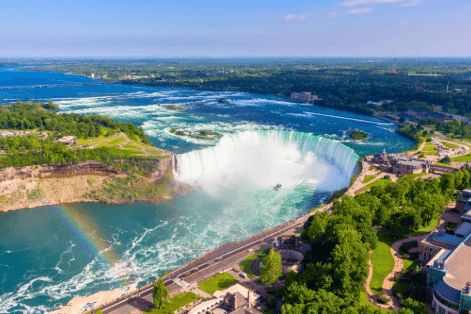
The water volume over Horseshoe Falls is at its highest in spring, fed by snowmelt from across the Great Lakes watershed. The falls in May are noticeably more powerful than the same falls in August. The sound carries further, the mist reaches wider, and the sheer force of the water at Table Rock in spring is a step above what summer delivers on a typical day.
The boat cruise reopens in late April, weather permitting. By May it is reliably operational, and the combination of peak water volume and lighter-than-summer crowds means the spring boat experience is the strongest version of that attraction available across the year. The fireworks and illumination season also begins in May, which means May visits can include the full evening experience alongside the daytime one.
The Niagara Parkway in late April and early May has cherry blossoms along sections of the route and the general return of colour along the riverbank after winter. Walking the parkway in spring has a freshness that summer, with its full canopy already established, does not quite replicate.
April is variable in terms of weather. Temperatures can swing between cold rain and warm sunshine within the same week. A waterproof jacket and layers are essential. May is more reliable, with temperatures typically reaching 15 to 18 degrees on most days by mid-month.
Spring is the recommendation for visitors who want the most powerful version of the falls, lighter crowds than summer, and the full attraction lineup operational. It is the strongest season from a pure falls-experience perspective, even if it requires more flexibility with clothing than summer does.
The Clearest Recommendation by Visitor Type
For first-time visitors with flexibility in timing, late September to mid-October is the single strongest window. Full attraction availability, fall foliage on the parkway, warm-enough weather, and meaningfully lighter crowds than summer combine in a way that no other season matches.
For visitors with fixed summer dates, plan the trip for a weekday rather than a weekend if possible. Crowds on a Tuesday in July are substantially more manageable than the same date on a Saturday, and the attraction lineup is identical.
For visitors interested in the most dramatic version of the falls themselves rather than the surrounding tourist infrastructure, May offers the highest water volume and good conditions without the summer crowds.
For visitors who want something genuinely different from the standard Niagara Falls experience, January or February delivers a winter version of the destination that most people who visit in summer never see and consistently find worth the cold.
Evening vs. Daytime: A Note on Timing Within the Day
Beyond which season to choose, the time of day shapes the experience significantly. The falls in the morning have the best light from the east for photography from the Canadian side and the shortest queues at the main attractions. Midday is the most crowded window. Late afternoon offers some of the best natural light on the falls as the sun moves to the west, and staying into the evening opens the illumination and, in season, the fireworks.
Visitors who want to cover the daytime attractions and stay for the evening illumination should plan for a longer day than a standard afternoon return to Toronto. An afternoon and evening tour to Niagara Falls is structured specifically around this combination, arriving at the falls in the mid-afternoon and staying through the illumination before returning to the city.
Practical Booking Notes by Season
Summer requires the most advance planning. Book the boat cruise, Journey Behind the Falls, and any guided tour from Toronto several days to a week in advance for July and August visits.
Fall requires moderate advance planning. September and October are popular enough that leaving everything to the last minute carries some risk, particularly for weekend visits and evening tour departures.
Winter requires the least advance planning from a crowds perspective, but clothing preparation is more important than in any other season.
Spring requires advance checking of the boat cruise reopening date if an April visit specifically depends on the water experience. May is reliable for all major attractions.
Regardless of season, the clearest starting point for planning a visit is to look at what is available for your specific dates. Niagara Falls tours from Toronto operate year-round across all seasons and cover the full range of what the falls offer at each time of year.
Frequently Asked Questions
What month is best to visit Niagara Falls?
October is the single strongest month overall, combining fall foliage on the Niagara Parkway, full attraction availability including the boat cruise, warm enough daytime temperatures, and noticeably lighter crowds than the summer peak. May is the strongest month for the falls themselves in terms of water volume and power.
What is the least crowded time to visit Niagara Falls?
January and February are the least crowded months by a significant margin. Within the main season, weekday visits in September and early October offer the best combination of low crowds and full attraction availability.
Is Niagara Falls worth visiting in winter?
Yes, for visitors who dress appropriately and are not specifically there for the boat cruise. The ice formations around the falls, the near-absence of crowds, and the year-round illumination make a winter visit a genuinely worthwhile experience rather than a compromise.
When does the boat cruise open and close?
The Niagara City Cruises boat tour typically opens in late April and closes in late November. Exact dates vary year to year depending on conditions. May through October is the reliable operating window.
Is it better to visit Niagara Falls on a weekday or weekend?
Weekday visits are consistently less crowded than weekend visits at every time of year. In summer the difference is particularly significant, with Friday and Saturday being the two busiest days of the week. If you have flexibility, a Tuesday or Wednesday visit in July is meaningfully more manageable than the same visit on a Saturday. A guided tour to Niagara Falls on a weekday in shoulder season represents the best combination of low crowds, full attraction availability, and comfortable conditions available.