
Table of Contents
- Understanding Next-Generation Firewalls
- Key Features of NGFWs
- Integration with Zero Trust Architecture
- AI and Machine Learning Enhancements
- Addressing Encrypted Traffic Challenges
- The Rise of Hybrid Mesh Firewalls
- Future Trends in NGFW Development
- Conclusion
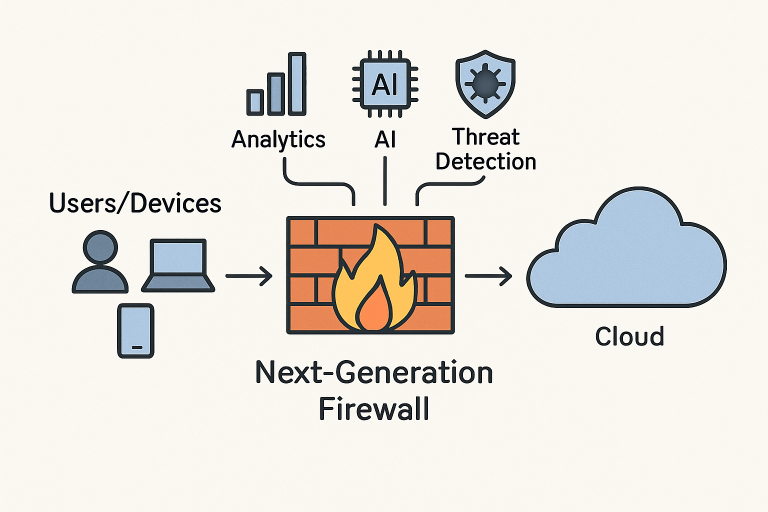
As organizations across the globe accelerate their digital transformation, they face an increasingly complex landscape of cybersecurity threats. Simply relying on conventional firewalls is no longer sufficient to protect valuable data and ensure network integrity. In this context, Next-Generation Firewall (NGFW) solutions have emerged as vital tools for defending against today’s sophisticated cyber risks. Companies must look beyond basic filtering to embrace a multi-layered, adaptive approach to safeguarding their digital infrastructure. Modern networks demand solutions capable of addressing everything from targeted malware attacks to encrypted threats that traditional security technologies cannot detect. By evolving the concept of perimeter defense, Next-Generation Firewalls (NGFWs) deliver granular visibility, advanced threat detection, and dynamic policy enforcement. This makes them not only a technological upgrade but a strategic requirement in robust cybersecurity frameworks.
With advanced capabilities that harness automation, analytics, and seamless integration, NGFWs support businesses as they navigate new environments, such as cloud infrastructure and remote work. The digital world is shifting rapidly, and organizations must be prepared to counter both external attackers and internal vulnerabilities. The expanding regulatory climate also adds urgency to implement firewalls that provide holistic monitoring, proactive threat intelligence, and fast incident response. As privacy regulations and compliance mandates evolve, organizations turn to next-generation solutions to gain better visibility and control over the movement of sensitive data across complex environments.
Understanding Next-Generation Firewalls
Next-Generation Firewalls go beyond the capabilities of their predecessors. Instead of merely filtering traffic based on IP addresses or ports, NGFWs deploy deep packet inspection to analyze the contents of every data packet passing through the network. By inspecting applications and user behavior, NGFWs can identify abnormal activity and quickly isolate threats that traditional setups would otherwise miss. As attackers become more creative in bypassing outdated tools, the granular controls and real-time event monitoring of NGFWs prove essential for comprehensive defense strategies.
Key Features of NGFWs
- Application Awareness: NGFWs do not just see traffic as packets; they identify which applications are transmitting data, allowing administrators to control usage regardless of port or protocol.
- Intrusion Prevention: These systems actively detect and block both known and unknown threats in real time, reducing the window of exposure from exploitation attempts.
- Deep Packet Inspection: NGFWs examine the data within each packet, providing the context and visibility necessary to block complex malware and advanced persistent threats.
- Integrated Threat Intelligence: Constantly updated with global threat feeds, NGFWs augment their detection powers, making it harder for criminals to exploit previously unknown vulnerabilities.
Integration with Zero Trust Architecture
Zero Trust is a security philosophy that refuses to grant implicit trust to any device or user, whether they are inside or outside the corporate network. Instead, it emphasizes continuous verification, least-privilege access, and segmentation. NGFWs enforce these principles by enabling granular access controls based on user identity, device compliance, and contextual risk factors. In a Zero Trust model, NGFWs monitor east-west traffic within the network, limiting lateral movement and quickly containing potential breaches. This aligns technology with the modern reality of distributed teams and cloud environments, reducing the risk from insider threats and compromised credentials.
AI and Machine Learning Enhancements
AI and machine learning are transforming how firewalls detect and respond to threats. By analyzing network behavior, these technologies uncover malicious actions that human administrators or static rules might overlook. AI-driven NGFWs learn from evolving attack patterns, automatically adapt security policies, and streamline the investigation process. This leads to faster, more precise threat neutralization and allows security teams to focus on high-level strategy rather than manual alert triage.
Addressing Encrypted Traffic Challenges
As encrypted traffic now dominates internet communications, firewalls must inspect data without introducing unacceptable latency or performance drops. NGFWs equipped with advanced SSL/TLS inspection capabilities efficiently decrypt, analyze, and re-encrypt traffic. This process allows organizations to secure sensitive information while preventing encrypted sessions from becoming conduits for malware or data exfiltration. Implementing robust SSL inspection is key to a comprehensive network defense, but it must be handled with privacy and compliance in mind to avoid violating end-user trust.
The Rise of Hybrid Mesh Firewalls
With businesses operating across on-premises data centers, cloud services, and edge locations, maintaining a unified security posture can be challenging. Hybrid Mesh Firewalls address this need by delivering consistent protection across all network segments. These solutions unify policy management, threat detection, and traffic visibility, regardless of where data flows originate or terminate. By consolidating security controls into a mesh architecture, organizations simplify administration and ensure their policies adapt to changing business needs and distributed infrastructure models.
Future Trends in NGFW Development
- Quantum-Ready Security: Anticipating the evolution of quantum computing, NGFW vendors are exploring encryption techniques that can withstand attacks from ultra-powerful quantum machines.
- Enhanced AI Capabilities: Ongoing advancements in AI will improve the accuracy and autonomy of threat detection, allowing for fully automated remediation and policy updates.
- Cloud-Native Architectures: To protect assets in the cloud, NGFWs are being re-architected to run natively in virtualized and containerized environments, providing agility and scalability for fast-paced businesses.
Conclusion
Next-Generation Firewalls have evolved beyond their original purpose to become an integral part of modern cybersecurity. As businesses embrace cloud, mobility, and data-centric strategies, the ability to rapidly identify, contextualize, and neutralize threats becomes critical. By leveraging deeper inspection, rich analytics, artificial intelligence, and seamless integration with modern security architectures, NGFWs deliver the comprehensive defense needed to protect against today’s advanced threats. Staying informed about NGFW advances ensures organizations are prepared to face whatever challenges the digital era brings.