Block Paving, Gravel or Poured Surfaces: A Practical Comparison for Homeowners

Choosing a driveway surface should be simple.
No, it doesn’t. Three quotes drop onto the kitchen table for the same area of the front garden. Each one of them suggests a completely different solution. One quote for block paving. One for gravel. One for a poured surface. And they all sound like a good idea.
Here’s the problem:
Most homeowners select their driveway from a picture book. They see a driveway they like on some neighbour’s road, find out who installed it and sign on the dotted line. After six winters the blocks are heaving, weeds are growing through, and there’s a pond by the front door.
The good news?
Very few driveway decisions lend themselves to a clearly correct answer. But when it comes to driveways, the right choice is genuinely knowledgeable. It just comes down to comparing the three surface options based on the stuff that matters.
In this guide, you’ll uncover:
- Why Driveway Surfaces Are Under More Pressure Than Ever
- Block Paving: The Traditional Workhorse
- Gravel: Cheap, Cheerful And Underrated
- Poured Surfaces: The Seamless Option
- How To Choose (And Who To Trust With The Job)
Why Driveway Surfaces Are Under More Pressure Than Ever
Front gardens have been creeping under hard surfacing for the past 20 years or so. RHS studies revealed that 55% of front garden area is now covered by paving, with far-reaching consequences beyond curb appeal.
Rain has to go somewhere.
If it can’t soak in, it runs off. The RHS also note that impermeable hard landscaping can increase rainwater run-off by up to 50%. Apply that to a whole street and the drains aren’t coping with what they were designed for.
That’s why the rules were changed. If you want to lay a new driveway in England that covers more than five square metres, it either has to be permeable; it has to soak through to the soil below, it has to channel into a lawn or border or you have to apply for planning permission first. It is not a loophole and it is not optional.
This is also where quotes begin to diverge. An appropriately porous surface will have a thicker sub-base and an actual drainage plan. That’s why the cost of a resin driveway installation can vary by thousands depending on what’s underneath. Quality resin driveway installers quote the excavation, the base and the edging restraints. Inexpensive ones will quote the top layer and hope for the best.
Keep that in mind while going through the three options.
Block Paving: The Traditional Workhorse
Block paving is still the default choice for a reason.
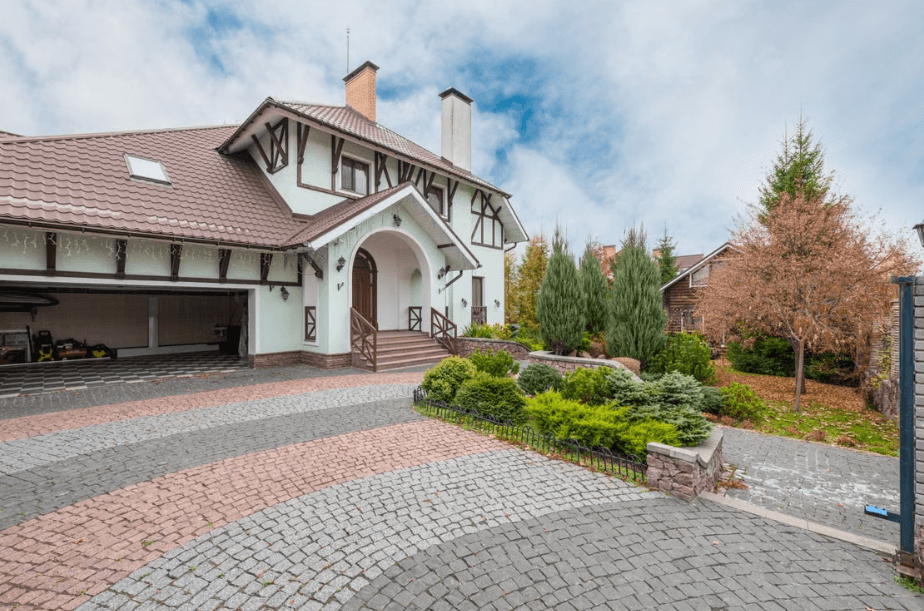
Small concrete or clay blocks are laid onto sharp sand atop a compacted sub-base and kiln-dried sand is pressed into the joints locking them together. Nothing is glued or mortared. Each block sits under pressure from the blocks around it. That’s also why a well laid drive will flex through frost rather than crack.
Where block paving wins:
- It handles heavy vehicles and turning wheels without damage
- Individual blocks can be lifted and reset if a pipe needs digging up
- Permeable versions meet drainage rules without a soakaway
- Damaged blocks are replaced one at a time, not resurfaced
The downside is maintenance. Every joint is an area where sand washes out and weeds sprout, so you’ll be topping up joining sand and spraying weeds every year or two. Block paving will also record tyre tracks and oil stains, and a poorly compacted base will betray itself with rutting and settling after three or four winters.
This is ideal for period properties, conservation areas, traditional streets and anyone who desires a surface that can be repaired rather than replaced.
Gravel: Cheap, Cheerful And Underrated
Gravel gets dismissed far too quickly.
It’s by far the cheapest driveway surface. It’s also porous by nature, and can be laid in a couple of days. There’s no cure time, no special kit, and no waiting for dry spells. Simply lay a membrane to suppress weeds, add edging to hold everything in, then lay the stone on top.
Gravel also brings two benefits nobody mentions:
Loose stone is crunchy underfoot. This crunch makes it a subtle but effective way to warn of anyone approaching your house at night. It also drains well, so puddles and standing water become much less of an issue.
Now the honest part.
Gravel moves. It finds its way onto the pavement, into the lawn and into car footwells. It has to be raked level and topped up every couple of years, does poorly on any slope and trying to push a pram or wheelchair across it is effort. Weeds will slowly invade if the membrane beneath gets holes in or is badly laid.
If you want cottages, country homes and flat plots on a budget you can’t beat it.
Poured Surfaces: The Seamless Option
Poured surfaces include resin bound, concrete and tarmac. The thing they all have in common is that when finished, your driveway is one continuous area with no joints for weeds to take hold in.
Resin bound is at the high end of the spectrum. The aggregate is blended with an invisible resin and spread over a hard sub-base to a depth of around 15-18mm. The stone remains porous so it allows water to drain through and meet permeability requirements without the need for additional drainage. It’s smooth to walk on, quiet, wheelchair accessible and pretty much weed-proof for years to come.
Two issues to look out for. Resin bound is only as good as the sub-base it’s laid on top of, and cheap UV-unstable resin will go yellow if in strong sunlight. Good resin driveway installers are worth it for these reasons, more than the actual material.
Concrete will last longer than anything besides the two above, but it cannot breathe at all, will crack if the joints are incorrect, and cannot be repaired invisibly.
Tarmac is fast and cheap. That’s why it’s everywhere. It softens in intense heat, bruises from turning wheels and otherwise looks weary long before other surfaces.
See also: How to Choose Fitted Kitchens That Work for Your Home
How To Choose (And Who To Trust With The Job)
Forget the photos for a moment and answer four questions honestly:
- How much maintenance will realistically be completed? Don’t get carried away. Gravel paths require raking. Block paving has weeds.
- What’s the slope? Anything steep rules out gravel immediately.
- Who uses it? Prams, wheelchairs and heels all favour a smooth poured surface.
- Where does the water go? This decides whether planning permission is needed.
Then check them thoroughly. If you use block pavers or resin driveway fitters ask for written info on sub-base thickness. (No “we’ll dig a bit out where needed”) Get a written quote with itemised costs. Beware of deposits >25%, cash only prices and “someone just happened to have leftover materials” doorstep sellers.
The surface gets all the attention. The base decides how long it lasts.
The Bottom Line
There is no perfect driveway surface, only the perfect surface for your plot, budget and family.
Block paving is your repairable, all-rounder that will complement traditional properties. Gravel is your cost-effective permeable choice for flat gardens that won’t mind a rake now and then. Poured surfaces allow you to have the smooth, easy to maintain finish you want with resin bound outperforming the rest on aesthetics and drainage.
Win or lose, spend the money below ground. An inexpensive surface laid over a deep, well-compacted sub-base will last longer than a pricey surface installed on loose soil every time.