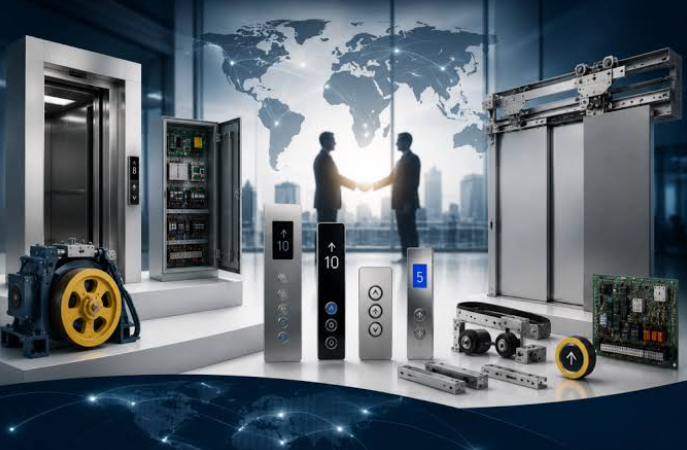

Elevators have become essential in multi-story buildings, allowing people and goods to move safely and efficiently between different levels. Whether the project involves an apartment building, office tower, hotel, hospital, factory, or commercial property, elevator selection can have a long-term impact on building operations.
Choosing an experienced elevator manufacturer is therefore an important part of the planning process. Beyond the elevator itself, project owners should consider engineering, customization, installation, safety, maintenance, and technical support.
Understand the Project Requirements
Every building has different elevator requirements.
Before contacting manufacturers, project teams should identify the number of floors, expected passenger volume, shaft dimensions, available space, desired speed, and intended elevator use.
For example, a residential building may prioritize quiet operation and passenger comfort, while an industrial facility may require elevators designed for heavier loads.
Passenger and Load Capacity
Capacity is one of the most important technical specifications.
Passenger elevators are typically selected based on the expected number of users and the building’s traffic patterns. Freight or industrial elevators may require significantly higher load capacities.
Choosing an appropriate capacity helps prevent overcrowding and supports efficient building operations.
Elevator Type
Different elevator technologies are available for different applications.
Depending on the building and design requirements, project teams may consider traction elevators, hydraulic systems, machine-room-less designs, and other configurations.
Each system has different installation and maintenance characteristics.
Safety Standards
Elevator safety should be considered from the earliest stage of a project.
The selected system should meet applicable local codes and safety requirements. Manufacturers should provide relevant technical documentation and information about the safety systems incorporated into their equipment.
Building owners should also work with qualified installation and inspection professionals.
Energy Efficiency
Energy consumption can become significant over the lifetime of an elevator.
Manufacturers may offer systems designed to reduce energy use through efficient motors, control systems, standby modes, and regenerative technology.
The potential energy savings depend on the building’s traffic and elevator usage.
Custom Design
Not every building can use a standard elevator configuration.
Architectural restrictions, shaft dimensions, cabin size, door arrangement, and interior design may require customized solutions.
A capable elevator manufacturer should be able to discuss available configurations and determine whether the proposed system can be adapted to the building.
Installation and Integration
Elevator installation involves coordination between the manufacturer, contractor, architect, electrician, and other project participants.
The elevator system needs to integrate with the building’s structure and electrical infrastructure.
Early communication can help prevent conflicts between elevator requirements and other construction work.
Maintenance Requirements
Regular maintenance is essential for elevator reliability and safety.
Project owners should understand which components require routine inspection and servicing.
They should also ask about maintenance schedules, replacement parts, technical support, and service availability before selecting a manufacturer.
Spare Parts Availability
An elevator may remain in operation for many years, so spare parts availability is an important long-term consideration.
Before purchasing, businesses should ask how replacement components are supplied and whether technical documentation will remain available throughout the system’s service life.
Monitoring and Diagnostics
Modern elevator systems can include monitoring and diagnostic technologies.
These systems may help maintenance teams identify unusual operating conditions and address problems before they result in extended downtime.
The available features vary by manufacturer and elevator model.
Comparing Manufacturers
When evaluating an elevator manufacturer, project owners should consider:
- Product quality
- Safety compliance
- Engineering capabilities
- Customization options
- Installation support
- Maintenance services
- Spare parts availability
- Warranty terms
- Technical assistance
- Experience with similar projects
A complete evaluation is more useful than comparing purchase prices alone.
Final Thoughts
Selecting an elevator manufacturer is a long-term decision. The right system needs to match the building’s capacity, design, safety requirements, operating conditions, and maintenance capabilities.
Project teams should gather detailed technical information and compare manufacturers based on both the initial installation and long-term service requirements.
An experienced elevator manufacturer can provide guidance throughout the process, from initial specifications through installation and ongoing support.