
Key Takeaways
- A pool deck should be evaluated for traction, comfort, drainage, maintenance needs, and appearance.
- Color and texture can affect how the surface feels under bare feet, especially in direct sun or when wet.
- Resurfacing may suit stable concrete with surface-level wear, while significant movement or base problems may require more extensive repair.
- Surface preparation, crack evaluation, and drainage review are essential before any new finish is installed.
- A sample area can help homeowners assess color, texture, and barefoot comfort before making a final choice.
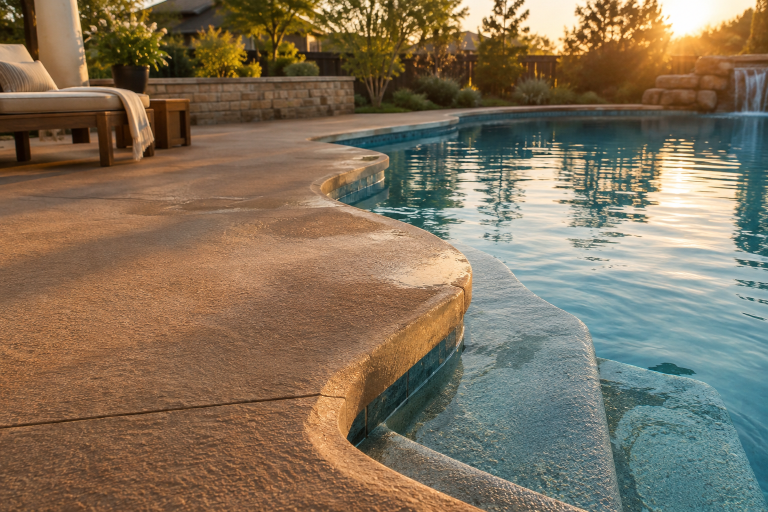
A pool deck is more than a decorative border around the water. It carries wet feet, lounge furniture, cleaning equipment, children at play, and constant exposure to sun, rain, and pool chemicals. When planning an upgrade, homeowners should consider whether the surface drains correctly, remains comfortable in summer heat, and provides dependable footing around entries and steps.
For homeowners assessing worn concrete, pool deck resurfacing from Mid-America Pool Renovation offers an example of a service focused on restoring aging pool surfaces with textured cement-based toppings, stamped overlays, and exposed aggregate finishes. The company works on residential, commercial, and municipal pool projects and lists service areas including Kansas City, Denver, Chicago, and Des Moines, making its deck restoration experience particularly relevant for owners comparing renovation approaches.
Why Poolside Planning Matters
A thoughtful plan begins with how the space is actually used. A family that spends long afternoons near the pool may prioritize a cooler-feeling finish and easy cleanup. A community pool may need a durable surface that handles frequent traffic and clear transitions at gates, ladders, and accessible routes. In either setting, the deck should be treated as part of the overall pool environment rather than as an afterthought.
Drainage deserves early attention. Water that repeatedly settles in low areas can leave slippery spots, collect debris, and make cleaning more difficult. Reviewing slopes, drains, joints, and nearby landscaping before choosing a finish can prevent a cosmetic update from covering an existing water-management issue.
Signs The Surface Needs Attention
Not every faded deck needs replacement, but visible wear is worth investigating before the swimming season begins. Look for these common warning signs:
- Hairline cracks that grow longer, wider, or more numerous over time.
- Peeling, flaking, spalling, or crumbling concrete.
- Low spots that retain water after rain, rinsing, or normal pool use.
- Worn texture, faded color, stains, or exposed aggregate.
- Areas that feel especially slick when wet.
- Patch repairs that contrast sharply with the surrounding deck.
- Uneven edges near coping, stairs, drains, and connecting walkways.
For example, repeatedly repainting one cracked corner may improve the appearance briefly, but new cracking nearby can indicate that the original issue has not been addressed. A closer inspection can distinguish a superficial finish problem from movement in the slab or a drainage concern.
Balancing Safety And Barefoot Comfort
A poolside finish should offer controlled traction without becoming unpleasantly rough. Smooth coatings, worn sealers, sunscreen residue, algae, and standing water can all reduce grip. At the same time, an aggressively textured surface may be uncomfortable for bare feet, especially for children and older adults.
Focus on the places where people naturally change direction or carry water onto the deck, including ladders, steps, shallow-end entries, gates, and outdoor showers. Surface traction is only one part of pool safety. Families should also incorporate the supervision, barriers, drain awareness, and emergency-preparedness practices described in pool safety guidance from the U.S. Consumer Product Safety Commission.
Factors To Compare
- Wet traction near high-use access points.
- Comfort during extended barefoot use.
- Heat absorption in full sun.
- Ease of removing leaves, dirt, and sunscreen residue.
- Compatibility with outdoor furniture and routine pool maintenance.
- Safe transitions where the deck meets stairs, walkways, or coping.
Comparing Surface And Finish Options
The best finish depends on the slab’s condition, the desired appearance, local weather, and how much maintenance the owner is willing to perform. Viewing physical samples is especially helpful because color, texture, and feel can be difficult to judge from photographs.
Textured Overlays
Textured overlays can refresh sound concrete while adding a new color and more intentional grip. Proper preparation is critical because the overlay must bond to a clean, stable substrate. Ask to walk on a sample when it is dry and when it is damp.
Stamped Finishes
Stamped finishes can create the appearance of stone, brick, tile, or wood. They offer design flexibility, but deeper pattern lines can collect dirt and may require closer cleaning around grooves and edges.
Exposed Aggregate
Exposed aggregate places decorative stone, pebbles, glass, or similar material near the surface. It can provide visual depth and texture, though homeowners should assess its barefoot feel in person before selecting it for a frequently used pool area.
Paint And Thin Coatings
Paint and thin coatings can provide a lower-cost visual refresh on suitable surfaces. Their performance depends on surface preparation, product selection, weather during application, and ongoing care, so owners should review cleaning instructions and expected renewal needs before proceeding.
When To Resurface Or Replace
Resurfacing is generally most appropriate when the concrete slab is stable, and the primary issues are surface wear, shallow cracking, discoloration, or an outdated appearance. Replacement or structural repair may be more appropriate if the deck is sinking, heaving, separating significantly, or showing evidence of base failure.
A Simple Decision Checklist
- Check for movement, settlement, hollow-sounding areas, and uneven transitions.
- Document the width and location of cracks rather than relying on memory.
- Watch where water travels and where it remains after cleaning or rain.
- Inspect joints, coping, stairs, drains, and deck edges.
- Ask whether the proposed finish will solve the problem or only conceal it.
- Request a professional evaluation before committing to an overlay.
What The Project Process Should Include
A careful project is built on preparation, not just on the final color or pattern. Owners should expect an inspection, cleaning and removal of failed material, appropriate crack or joint repairs, and a review of drainage and transitions. Before installation, a sample area can confirm the selected texture and color. After application, curing instructions should clearly address foot traffic, furniture placement, cleaning, and pool use.
Questions To Ask Before Hiring A Contractor
- Is the existing slab a good candidate for resurfacing?
- How will cracks, weak areas, and drainage problems be evaluated?
- Can a physical sample be reviewed before work begins?
- How does the proposed finish perform when wet?
- What curing period is required before normal use?
- What maintenance products and methods are recommended?
- What warranty applies, and what conditions may limit coverage?
- Who is responsible for access, cleanup, landscaping protection, and permits when required?
Building A Simple Maintenance Plan
Routine care can help a pool deck remain cleaner, more comfortable, and easier to inspect. Sweep away leaves and grit, rinse off sunscreen residue and spills promptly, and monitor areas where water lingers. Seasonal inspections should include joints, drains, steps, coping, and any signs of peeling or new cracks. Follow the finish manufacturer’s cleaning guidance, since harsh products may not be appropriate for every coating or overlay system.
A safer, cooler poolside space starts with an honest assessment of the existing deck. By weighing slab condition, traction, heat, drainage, appearance, and maintenance needs together, homeowners can choose a solution that supports a more enjoyable 2026 swimming season.