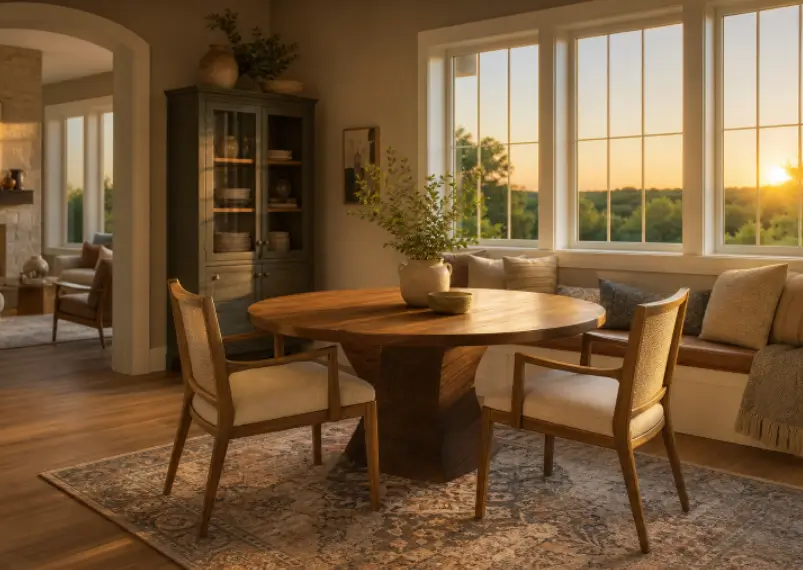

Key Takeaways
- Plan around daily meals and routines before planning for holidays.
- Measure the room, chair clearance, door swings, and walkways before purchasing furniture.
- Choose a table shape that supports movement through the room.
- Prioritize seating comfort, durable materials, and useful storage.
- Use lighting, rugs, and furniture placement to define an open dining zone.
- Leave open floor space so the room remains easy to use every day.
- A good dining room is not reserved for Thanksgiving, birthdays, or a formal meal with guests. In Oklahoma homes, it may be where the family gathers after a long workday, where children finish homework, where neighbors linger over coffee, or where a weekend meal turns into an all-afternoon visit. The most successful spaces are built around those real routines.
Start with furniture that suits your household rather than a showroom display. Whether you are furnishing a Tulsa bungalow, an Oklahoma City suburban home, or a compact apartment in Norman, solid wood dining furniture sets available in Oklahoma can provide a practical foundation for a room designed to be used, not simply admired. Choosing pieces that balance comfort, durability, and everyday functionality can help the dining area remain useful for years to come.
Why Flexible Dining Spaces Matter
Dining rooms increasingly do more than host meals. Open floor plans often place the dining table between the kitchen and living area, making it a natural place for conversation, schoolwork, crafts, laptop time, and casual entertaining. Instead of designing around a few large gatherings each year, choose an arrangement that works on an ordinary Tuesday night.
Ask a straightforward question before making decisions: what needs to happen here most often? A family of five may need generous seating and an easy-clean surface. A couple who hosts game nights may value an extendable table. Someone working from home may need a chair that remains comfortable through an afternoon of emails.
Start With the Room’s Daily Job
Make a quick list of everything the space needs to support. This step prevents you from making expensive choices that look good but do not fit your life.
- Weeknight meals and quick breakfasts
- Holiday dinners and visiting relatives
- Homework, remote work, and paperwork
- Craft projects, puzzles, or game nights
- Serving dishes, linens, and everyday tableware
For example, a small dining nook can work hard with a round table, two comfortable chairs, a bench against the wall, and one slim storage cabinet. It does not need several decorative pieces if those pieces make it harder to sit down or walk through the room.
Measure Before Choosing Furniture
A table can technically fit inside a room and still make the room frustrating to use. Measure the length and width of the space, then mark windows, doors, heating vents, outlets, and any areas that must stay accessible.
Use painter’s tape to outline the proposed table, chairs, and storage pieces directly on the floor. Then walk around the layout as if people were seated. Pull chairs back, open nearby cabinet doors, and check the path from the kitchen to the table. This simple test reveals problems before furniture is delivered.
Choose a Table Shape That Fits the Flow
Rectangular Tables
Rectangular tables are often a natural fit for longer rooms. They provide ample surface area for family-style meals and can seat a larger group, but they require sufficient clearance around them to avoid encroaching on the main walkway.
Round Tables
Round tables can be especially useful in compact rooms, breakfast corners, and open layouts with high traffic. Without sharp corners, it’s easier to move around the dining area. They also make conversation feel more inclusive because everyone faces toward the center.
Square and Extendable Tables
A square table works well for a smaller household in a square room. An extendable table offers another practical option: keep it compact for daily meals, then add leaves when friends or relatives come over. This approach is often more useful than permanently giving a large table the majority of the room.
Build Seating Around Comfort
Seating deserves the same consideration as the table. Test chair height, back support, arm clearance, and how easily each chair slides in and out. Padded chairs can make long meals and work sessions more comfortable, while wood chairs with removable cushions can balance comfort with easy care.
- Use chairs for dependable back support and individual comfort.
- Choose a bench along a wall when it helps preserve an open path.
- Consider a banquette for a defined breakfast nook or corner.
- Mix seating styles to create a more relaxed, less formal room.
Benches are flexible, but they are not ideal for every guest. Older relatives and people who need back support may find individual chairs easier to use, so a mixed arrangement is often the most welcoming choice.
Make a Small Dining Area Feel Complete
Small spaces benefit from restraint. Choose furniture with a clear purpose, such as a drop-leaf table, chairs that tuck fully underneath, or a narrow table placed against a wall when one side of the room must remain open. A round table can also help where corners interrupt movement.
Define the dining zone with a rug and a centered light fixture rather than adding bulky dividers. Keep the route from the kitchen, living room, or entryway clear. Open floor space is not wasted space. It is what allows a compact dining area to feel calm and functional.
Use Storage Without Making the Room Feel Heavy
Storage should solve a real everyday problem. A sideboard can keep serving dishes, placemats, and table linens nearby, while a storage bench can hold seasonal items. In a smaller room, one well-proportioned cabinet is generally more useful than several small units scattered around the walls.
See also: Pest Control Colchester: Fast, Solutions for Homes and Businesses
Closed storage creates a quieter visual effect and helps contain everyday clutter. Open shelving can display a few attractive serving pieces, but it works best when it is edited regularly. Avoid deep cabinets that block light, crowd chair space, or interfere with a doorway.
Balance Style With Everyday Durability
Choose finishes and fabrics that match how your household actually lives. If children, pets, frequent guests, or outdoor activities are part of the routine, select surfaces that can be wiped down and fabrics intended for regular use. A patterned rug may make small marks less noticeable than a solid pale option, while trivets and placemats can protect a wooden tabletop from heat and scratches.
Solid wood can develop character over time, but it still benefits from basic care. Use coasters, clean spills promptly, and avoid treating the dining table like a surface too precious for normal meals. The right material is one that lets everyone use the room comfortably.
Plan Lighting in Layers
A central pendant or chandelier helps visually anchor the table, while lamps, sconces, or nearby ambient lighting can soften the room after dark. Choose a fixture scaled to both the table and ceiling height, and avoid placing a bright bulb where it shines directly into seated guests’ eyes.
Lighting also affects how wall colors, food, artwork, and fabrics appear. Guidance on light and color in the home from Oklahoma State University Extension can help when selecting bulbs and fixtures for a dining area. When possible, use compatible dimmers so the room can shift from bright homework lighting to a calmer evening setting.
Arrange the Room in Five Simple Steps
- Clear the room and identify the main paths people use.
- Position the table where people can sit without blocking those paths.
- Add the primary seating and test it with chairs pulled out.
- Place storage where doors and drawers can open fully.
- Finish with lighting, a rug, artwork, and a few personal details.
Common Dining Room Planning Mistakes
- Buying a table before measuring the furniture’s full footprint.
- Choosing hard or cramped seating because it looks stylish.
- Leaving too little room behind chairs.
- Adding too many cabinets, accent chairs, or decorative pieces.
- Ignoring door swings, vents, and routes between rooms.
- Designing only for major holidays instead of everyday use.
Conclusion
A useful dining space does not have to be large, formal, or perfectly matched. It needs a table that fits, seats that invite people to stay a while, clear paths for movement, and enough flexibility for real life in Oklahoma. When those essentials come first, the room becomes a dependable place for everyday meals, celebrations, and the moments in between.