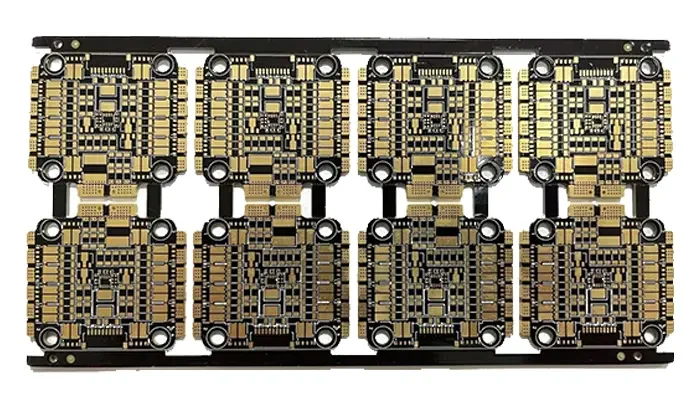

In the bustling world of modern electronics, where portability and functionality must coexist in increasingly compact packages, the flexible pcb manufacture industry serves as the silent enabler that makes today’s wearable devices, portable gadgets, and space-constrained electronics possible. Flexible printed circuit boards, commonly referred to as flex circuits, offer a unique combination of electrical performance and mechanical flexibility that traditional rigid boards cannot match, allowing designers to create products that bend, fold, and conform to the human body and other irregular surfaces. The flexible pcb manufacture process involves the precise fabrication of conductive patterns on thin, pliable substrates, creating circuits that can flex dynamically or bend during installation while maintaining reliable signal transmission and power delivery. The industry that produces these versatile boards has matured significantly, with manufacturers developing sophisticated capabilities in fine-line imaging, multilayer lamination, and controlled impedance production to meet the exacting requirements of modern electronic devices. The global appetite for flexible PCBs continues to expand rapidly, driven by the proliferation of fitness bands, smart garments, medical patches, and the ongoing trend toward miniaturization in consumer and industrial electronics. Understanding the production methodologies, design constraints, and quality requirements of flexible PCBs is essential for hardware developers, manufacturing specialists, and procurement professionals who understand that flexible circuitry is integral to the future of electronic product design.
The Types of Flexible Circuits and Their Structures
The flexible pcb manufacture industry produces several distinct types of flexible circuits, each with specific structural characteristics and application advantages that suit different product requirements and performance needs. The single-sided flex circuit is the simplest and most cost-effective type, consisting of a single copper layer bonded to a flexible substrate with a protective coverlay, and this type is ideal for simple interconnections and applications with minimal routing complexity. The double-sided flex circuit features copper traces on both sides of the substrate, with plated through-holes providing electrical connections between the layers, enabling more complex routing in a compact form factor. The multilayer flex circuit incorporates three or more copper layers, providing the routing density and signal integrity required for complex electronic assemblies, and these circuits are used in applications where space is at a premium and performance is critical. The rigid-flex circuit combines flexible circuit sections with rigid FR4 sections, providing the benefits of both rigid and flexible technology in a single integrated package, and these circuits are widely used in aerospace, medical, and military applications where reliability and space efficiency are essential. The sculptured flex circuit features varying copper thicknesses within the same circuit, with thicker sections providing structural support and thinner sections providing flexibility, enabling optimized mechanical and electrical performance. The selection of the appropriate flexible circuit type depends on the application requirements, including the number of interconnections, the bending requirements, and the environmental conditions the circuit will encounter, and flexible pcb manufacture capabilities have evolved to support all these diverse types.
The Surface Finish Options and Their Implications
The surface finish applied during flexible pcb manufacture is critical to the performance, reliability, and solderability of the finished circuit, with different options offering specific advantages for different applications and assembly processes. The ENIG surface finish is the most widely used finish for flexible PCBs, providing a flat, solderable surface with excellent oxidation resistance and long shelf life, making it suitable for most applications. The ENEPIG surface finish adds a palladium layer between the nickel and gold, providing improved wire bonding capability and corrosion resistance, making it suitable for advanced packaging applications. The immersion silver finish provides excellent solderability and flatness at a lower cost than gold finishes, but it is more susceptible to tarnishing and requires careful handling and storage. The immersion tin finish provides a flat, solderable surface that is well-suited for press-fit applications, but it can be prone to whisker growth and requires careful process control. The OSP finish provides an organic coating that protects the copper from oxidation, offering a cost-effective option for applications where shelf life is not a primary concern. The selection of the appropriate surface finish depends on the assembly process, the storage requirements, and the application environment, and the flexible pcb manufacture process must be carefully controlled to achieve consistent finish quality across production runs.
The Design Guidelines for Flexible Circuit Reliability
The reliability of flexible circuits depends significantly on adherence to established design guidelines during the flexible pcb manufacture process, because the physical characteristics of the flexible substrate require different design approaches than rigid boards. The placement of the neutral bend axis is a critical design consideration, because locating the copper traces near the neutral axis minimizes the stress they experience during bending, extending the dynamic flex life of the circuit. The use of radiused corners and gradual trace transitions reduces stress concentration, preventing the formation of stress risers that can lead to cracking under repeated bending. The staggered via placement prevents the creation of rigid columns that could reduce flexibility and create stress points during bending, and the use of tear-drop pads at via and trace connections improves mechanical strength at critical junctions. The avoidance of plated through-holes in high-stress bend areas prevents cracking, and the addition of stiffeners in connector and component areas provides mechanical support where needed without compromising overall flexibility. The optimization of copper weight to balance flexibility and current-carrying capacity is essential, because heavier copper provides better current handling but reduces flexibility. The design guidelines for flexible circuits are essential to achieving the reliability required for demanding applications, and the flexible pcb manufacture process must be capable of realizing these design features with precision and consistency.
See also: Why Every Small Business Should Add SMS to Its Communication Strategy
The Volume Production Considerations
The flexible pcb manufacture process must be carefully managed to achieve the high yields and consistent quality required for volume production, with several key considerations affecting production efficiency and cost. The panel utilization is an important consideration, because efficient nesting of individual circuits on the production panel reduces material waste and improves overall production economics. The process optimization, including careful control of etching, lamination, and finishing parameters, ensures consistent quality across production runs and reduces the cost of rework and scrap. The automation of handling and inspection processes improves throughput and consistency, while reducing the labor costs associated with manual operations. The statistical process control techniques enable the monitoring and improvement of process performance, identifying variations before they affect product quality and enabling corrective action. The careful management of production scheduling, material inventory, and equipment maintenance ensures that production capacity is effectively utilized and that delivery commitments are met. The flexible pcb manufacture industry has developed extensive expertise in high-volume production, enabling the cost-effective manufacture of flexible circuits for consumer electronics and other high-volume applications. The volume production considerations are essential to achieving the cost-effectiveness required for commercial success, and manufacturers who optimize their production processes can achieve significant advantages in cost and delivery performance.