
Industrial processes often involve extremely high temperatures, chemical exposure, and demanding operating conditions. In these environments, ordinary construction materials may not provide the thermal resistance required for reliable performance. This is where refractory materials become important.
Ceramic refractory materials are widely used in equipment and structures that must withstand elevated temperatures. They can help protect industrial components, improve thermal efficiency, and extend the useful life of equipment.
Understanding their characteristics and applications can help manufacturers select materials that are appropriate for their specific operating conditions.
What Are Refractory Materials?
Refractory materials are designed to withstand high temperatures without losing their essential structural or functional properties.
They are used in furnaces, kilns, boilers, foundries, reactors, and other industrial equipment where extreme heat is part of the manufacturing process.
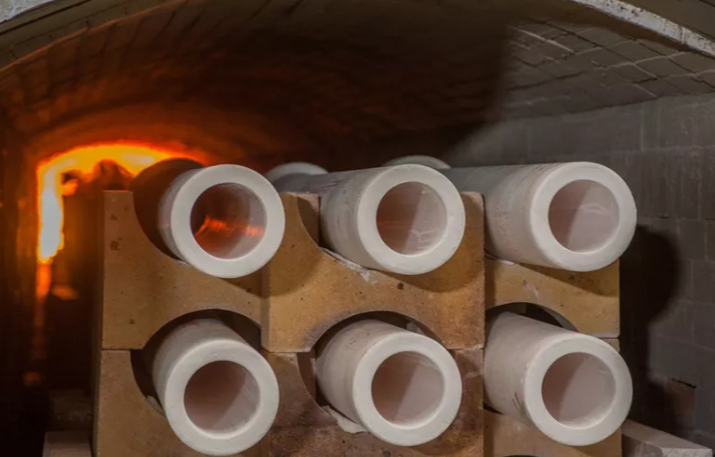
Ceramic-based refractory products can be manufactured in different forms, including bricks, boards, castable materials, tubes, and specialized components.
Why Ceramic Materials Are Used
Ceramics are known for their ability to withstand high temperatures. Certain ceramic compositions can maintain their properties even when exposed to prolonged heating.
Depending on their formulation, they can also provide resistance to thermal shock, chemical attack, and wear.
The exact performance depends heavily on the composition and manufacturing process.
Applications in Industrial Furnaces
Furnaces are one of the most common environments where refractory materials are required.
The internal surfaces of a furnace can be exposed to intense heat and repeated heating and cooling cycles. Refractory linings help protect the surrounding structure and reduce heat transfer to areas that are not designed for extreme temperatures.
Different furnace zones may require different refractory materials depending on the temperature and chemical conditions.
Use in Kilns
Industrial kilns are used for processes such as ceramics production, mineral processing, and other heat-treatment applications.
The refractory lining inside a kiln needs to withstand continuous exposure to heat and, in some applications, abrasive materials.
Selecting the appropriate material can help maintain kiln performance and reduce maintenance requirements.
Thermal Insulation
Some ceramic refractory products also provide useful thermal insulation.
Good insulation can help keep heat within the processing area and reduce unnecessary energy loss.
However, insulation performance depends on material density, thickness, temperature, and system design.
Resistance to Chemical Exposure
High-temperature industrial environments may also contain gases, vapors, molten materials, or chemicals that can react with equipment surfaces.
A suitable refractory material should therefore be selected according to the chemical environment as well as temperature.
Choosing a material based only on its maximum temperature rating may not provide adequate protection.
Thermal Shock
Industrial equipment may experience rapid temperature changes.
Repeated heating and cooling can create internal stresses within refractory materials. Materials with appropriate thermal-shock resistance can be valuable in applications where temperature changes happen frequently.
The design of the refractory structure also influences how well it handles thermal cycling.
Wear and Mechanical Stress
Some refractory linings are exposed to abrasion or mechanical impact.
For example, particles moving through industrial equipment may gradually wear down the refractory surface.
In such applications, manufacturers need to consider mechanical durability along with thermal performance.
Selecting the Right Material
There is no single refractory material suitable for every industrial application.
Important considerations can include:
- Maximum operating temperature
- Temperature fluctuations
- Chemical environment
- Mechanical loads
- Abrasion
- Thermal conductivity
- Required service life
- Installation method
- Maintenance requirements
Engineers should evaluate these factors before selecting a product.
Manufacturing Quality
The quality of refractory materials can have a direct effect on performance.
Consistent composition, controlled manufacturing processes, accurate dimensions, and proper firing or processing can all contribute to reliable results.
For specialized applications, manufacturers may also provide custom shapes or formulations.
Installation Matters
Even a high-quality refractory material may perform poorly if it is installed incorrectly.
Installation should follow the manufacturer’s specifications. Surface preparation, joints, curing, drying, and heating procedures can all affect the final performance of the refractory system.
Proper installation can also reduce the risk of premature cracking or failure.
Maintenance and Inspection
Regular inspection helps identify problems before they become serious.
Maintenance teams can check for cracks, erosion, loose sections, discoloration, or other visible changes.
The inspection frequency depends on the application and operating conditions.
Final Thoughts
Ceramic refractory materials are essential in many industries where equipment must operate under high temperatures and challenging conditions. Their ability to provide thermal protection, insulation, and resistance to certain forms of chemical and mechanical stress makes them valuable for furnaces, kilns, reactors, and other systems.
Businesses should select refractory materials according to their actual operating environment rather than relying on temperature ratings alone.
Working with an experienced supplier of ceramic refractory materials can help manufacturers identify suitable products for specific industrial requirements.