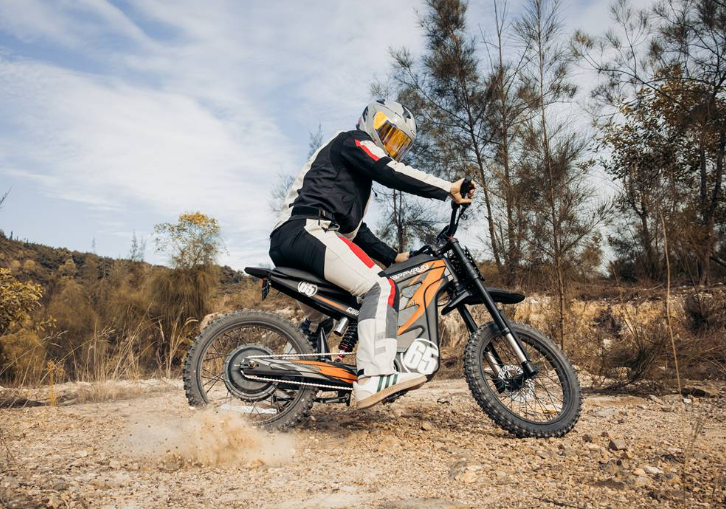
From Motocross to Trail Riding: How Electric Bikes Are Expanding What “Off-Road” Means

Off-road riding used to be a fairly well-defined category. You had motocross — competitive, track-based, helmet-to-helmet — and you had trail riding, which existed in its own quieter, less structured world. Both ran on gas, both required a mechanical aptitude to sustain, and both operated within cultures that had strong traditions and tight internal communities. Outsiders weren’t always welcomed with open arms.
Electric bikes are doing something interesting to this landscape. They’re not just providing an alternative fuel source — they’re reshaping the categories themselves and creating new entry points that didn’t exist before.
The Motocross-to-Trail Pipeline Is Running in Reverse
Traditionally, riders moved from trail riding to motocross as their skills developed and their ambitions grew more competitive. The pathway was reasonably clear: learn the basics on trails, develop speed and technique on motocross tracks, eventually compete. Motocross was the apex, and trail riding was the training ground.
Electric bikes are disrupting this progression in interesting ways. Some competitive motocross riders are discovering that electric trail riding scratches an entirely different itch — the immersive, exploratory quality of trail riding that disappears in the controlled environment of a track. The silence, the varied terrain, the navigation element — these offer something motocross tracks genuinely don’t, and riders who’ve been chasing lap times are finding genuine enjoyment in a slower, more observational kind of riding.
This cross-pollination is producing a more fluid off-road riding culture, where the categories overlap more than they used to.
Adventure Biking: The Third Category Electric Opens Up
There’s a middle space between aggressive technical riding and casual weekend trail use that doesn’t have a fully settled name yet — adventure biking, perhaps, borrowing from the street riding category that’s already well established. It describes extended exploratory riding across varied terrain, typically covering more distance than a motocross session but through more challenging terrain than a paved road tour.
Electric bikes are particularly well-suited to this kind of riding. The consistent torque delivery handles loose terrain, hill climbs, and technical sections without the rider needing to manage gear selection or clutch work. The reduced fatigue from not managing a gas engine over long hours translates to longer, more enjoyable sessions. And the lower acoustic profile makes the riding experience more compatible with the observational, exploratory mindset that adventure biking requires.
Manufacturers that have studied this emerging use case — brands like PostJoy among others building specifically for off-road electric use — are configuring bikes with riding geometry, suspension travel, and battery placement optimised for mixed-terrain adventure use, rather than simply transplanting motocross frames into electric drivetrains.
The Weekend Warrior Who Never Owned a Gas Bike
Perhaps the most significant shift electric bikes are enabling is the emergence of a rider demographic that simply didn’t exist in the gas era: the recreational off-road rider who comes from a cycling or outdoor recreation background, not from motorsport.
These riders are comfortable with physical activity in natural settings, interested in the technical challenge of varied terrain, but have no particular attachment to combustion engines and no desire to develop the mechanical knowledge gas bikes require. Electric off-road bikes speak directly to this group. The interface is immediately familiar to anyone who’s ridden an electric bicycle — throttle control without gearing, regenerative braking, simple charging process — scaled up to genuine off-road capability.
This group is bringing new demographics into off-road riding: older active adults who wouldn’t attempt gas bike learning curves, cyclists looking for motorised options for specific trail situations, hikers and campers who want mobility without carrying heavy gear. The sport is genuinely broadening.
Trail Culture and the Etiquette Question
Any conversation about electric bikes expanding access to off-road spaces has to acknowledge the etiquette dimension. More riders on trails — from more backgrounds, with more varied experience levels — requires stronger shared norms around responsible use.
Trail yielding conventions, speed management around vulnerable trail users, riding only on designated surfaces, and respecting seasonal closures are all norms that established off-road communities have developed over time. Newcomers entering through the electric bike on-ramp aren’t always aware of these conventions, and the burden of transmission falls on existing communities and brands that market to new riders.
The most responsible brands in this space include trail etiquette education in their marketing and customer onboarding material — an increasingly important differentiator as the industry navigates the access question.
Competition Is Catching Up
The competitive side of electric off-road riding has moved faster than most observers expected. Dedicated electric motocross classes now exist in several major series. Enduro events specifically for electric bikes have found enough participants to sustain regular programming. The performance benchmarks being set by purpose-built competitive models — including those in the PostJoy Electric Dirt Bike range designed for demanding terrain — demonstrate how far the technology has moved from its early trial phase. The performance gap between electric and high-end gas bikes on competitive circuits has narrowed substantially in the past three years.
For the competitive rider, the question is no longer whether electric bikes are capable of serious racing — they clearly are — but whether the charging infrastructure at venues is reliable enough to support multi-heat competition formats. That infrastructure question is being worked through, and the trajectory is clearly toward more, not fewer, electric options in competitive settings.
See also: Clinical Trials: Driving Medical Innovation Through Technology, Diversity, and Regulatory Evolution
What This Means for the Off-Road Community Long-Term
The expansion of who rides off-road, where they ride, and what they ride is broadly positive for the culture and the infrastructure that supports it. More riders means more political weight behind trail access advocacy. More varied use cases means more product development investment from manufacturers. More entry-level accessible options means a larger next generation of riders to sustain the community.
The transformation isn’t without friction — any cultural shift creates resistance from those who have the most invested in existing norms. But the direction of travel is clear, and riders who engage with electric options on their merits rather than dismissing them out of hand tend to find more there than they expected. Off-road riding has always been about finding terrain that pushes back. The bikes that take you there just keep getting better.