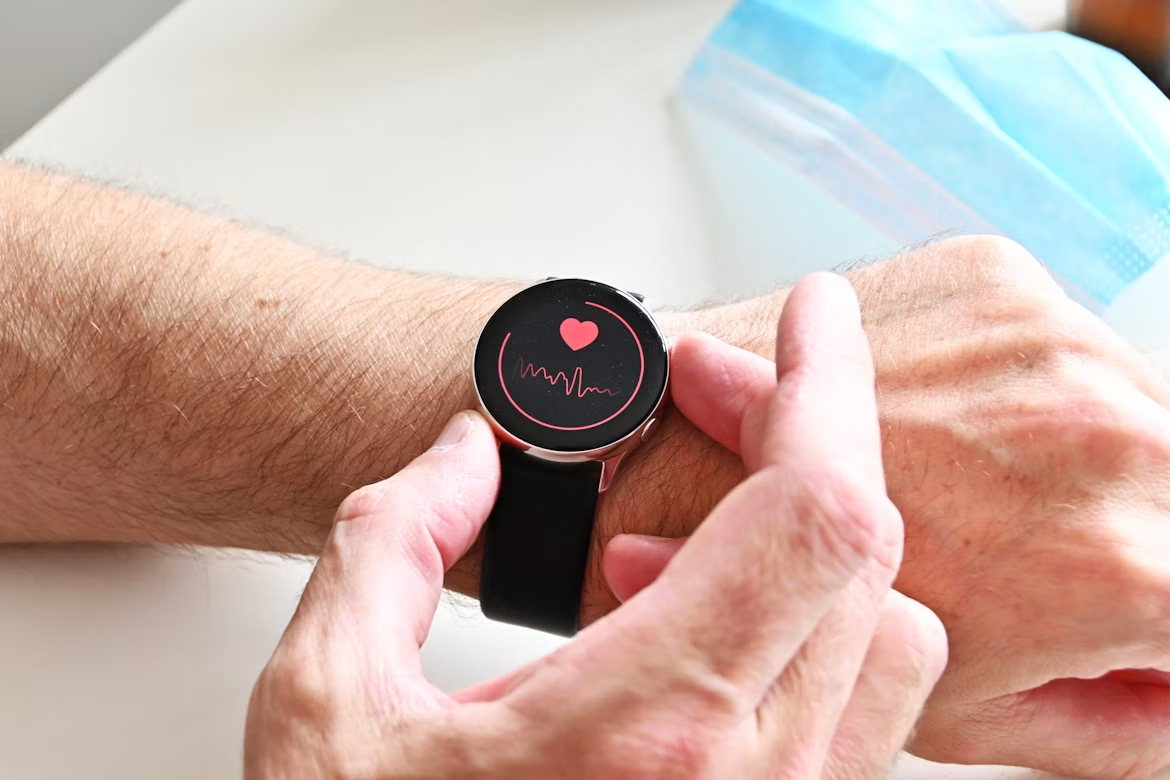

Want to spot a relapse before it happens?
Recovery isn’t easy. Stress can really sabotage it. Studies reveal that relapse at 1 year ranges from 40%-60% for those struggling with addiction.
Here’s the thing…
Most relapses don’t happen suddenly. Days beforehand your body usually gives you warning signs. And the smartwatch or ring on your wrist may be able detect them.
In this guide you will learn how wearable technology complements evidence-based addiction treatment so you can:
- Manage stress in real time
- Catch early warning signs
- Stay on track with recovery
Let’s jump in!
Inside this guide:
- Why Stress And Relapse Go Hand In Hand
- How Wearables Track Stress
- 4x Ways Wearables Support Relapse Prevention
- Getting The Most From Your Device
Why Stress And Relapse Go Hand In Hand
Stress is a trigger. Plain and simple.
Cravings can happen when stress accumulates. Those in recovery will want to go back to their old ways because that is what their brain knows as “relief”. Therefore stress management is a component of almost every quality treatment program.
Evidence-based addiction treatment modalities such as cognitive behavioural therapy (CBT) and mindfulness-based relapse prevention train individuals to observe stress and react to it in healthier ways. Recovery facilities like Lanier Recovery Center incorporate these proven therapies into their treatment programs so clients learn lasting coping skills they can use after treatment. However, there’s a problem…
Therapy sessions only happen a few times a week. Stress happens every single day.
That gap is where wearables come in.
The problem is massive as well. Today, 5.7 million people in the U.S. suffer from opioid use disorder. Anything that can help between sessions deserves attention.
See also: The Life-Saving Benefits of Having a Trickle Charger
How Wearables Track Stress
Wearables are electronics that you wear on yourself. Such as smart watches, fitness trackers, and smart rings.
They collect data all day and all night. That includes:
- Heart rate: how fast your heart beats
- Heart rate variability (HRV): the small changes in time between each heartbeat
- Sleep: how long and how well you sleep
- Movement: how active you are during the day
HRV is important. Generally speaking the higher your resting HRV is the better your body can cope with stress. Deviations from your normal HRV can indicate that something isn’t right.
Pretty cool, right?
Your body tallies up the score even if you don’t consciously register stress. The wearable just makes those numbers visible to you.
4x Ways Wearables Support Relapse Prevention
Now to the good stuff. Here is how this technology can help protect recovery.
1. Early Warning Signs
This is the most exciting part of wearable tech in recovery…
For example, researchers provided wearables to 77 individuals enrolled in a treatment program. Of those, 34 participants experienced relapse throughout the study. The information collected revealed…
There was a significant alteration in their HRV prior to resumption of use.
Think about it:
One whole week’s warning. That’s a week where intervention from a counsellor, sponsor or loved one could occur. Scientists term this “golden window” of opportunity.
2. Real-Time Stress Alerts
Many wearables now send you a nudge when your stress levels spike.
It could be a quiet vibration on your wrist. Or a text nudging you to take a breath. Helpful hints like these can prevent a stressful situation from becoming a craving.
Most of them have also incorporated paced breathing exercises. Spending 1-2 minutes practicing slow breathing can signal your nervous system to calm down. It’s easy, free and you can practice anywhere.
3. Better Sleep Tracking
Poor sleep and recovery don’t mix well.
Sleep deprivation makes you more easily annoyed. Stressors seem more overwhelming. Cravings become intense. Wearables monitor your nightly sleep so you can identify poor habits sooner.
Here’s what to look out for:
- Going to bed at very different times each night
- Waking up often during the night
- Several nights of short sleep in a row
When you notice these signs, it may be helpful to check in with your treatment team. Improving sleep can be one of the simplest improvements to your recovery.
4. Stronger Connection With Care Teams
Wearables don’t replace therapy. They make it better.
Programs are now available that allow clinicians to track patient trends over time (with permission obviously). When someone’s numbers start to look concerning, a counselor can reach out earlier.
Big players are signing on as well. Digital Medicine Society has joined forces with Oura, Google Fitbit, Duke University and more to research how wearable data can be used to detect opioid relapse sooner. The hope is to create tools that notify care teams at the right time.
That’s a win-win for patients and clinicians.
Getting The Most From Your Device
A wearable is only useful if you use it correctly. Here are some tips. Keep it simple.
Keep it on all the time. The more information your device has to establish your “normal,” the better it can detect deviations from it. Missing data creates holes that may be harder to detect. Charge it when you’re typically not using your phone, like when you’re showering.
Get to know your baseline. Watch your numbers for the first couple of weeks. Don’t freak out if you have a bad day. Watch for trends.
Match with healthy behaviors. Your wearable will let you know when you’re stressed. Now it’s your turn to take action. Consider:
- A short walk
- Calling a trusted friend
- A breathing exercise
- Writing in a journal
Share the data. Discuss with your therapist what your wearable is tracking. Having numbers can allow for more productive conversations during your sessions.
Relax. There are writers who look at their stats every few minutes. No, really. Calm down. Set aside one or two times a day to check your stats and move on.
The Bottom Line
Wearable devices are not a silver bullet for addiction. However, they are a seriously useful tool in your toolbelt. Why? Because wearable devices help you:
- See stress before it takes over
- Spot warning signs days before a possible relapse
- Stay connected with the people helping you recover
Pairing wearables with evidence-based addiction counseling gets you two very powerful tools. Counseling teaches you the skills. Wearable technology tells you when to use them.
To quickly recap:
- Stress is one of the biggest relapse triggers
- Wearables track heart rate, HRV, sleep and activity
- HRV changes may show up a week before relapse
- Consistent use and sharing data with your care team gets the best results
Recovery is a process. Now you’ve got a little recovery companion on your wrist.