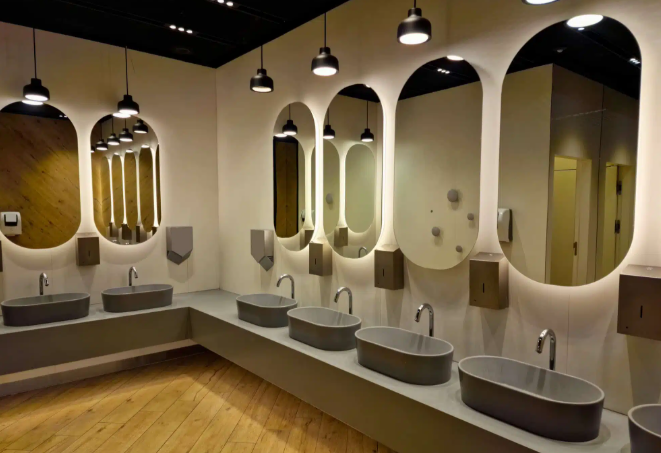

A commercial restroom is an important part of any business property. Customers may not spend much time thinking about the restroom when everything works properly, but they quickly notice when dispensers are empty, fixtures are difficult to use, or maintenance is poor.
Designing a practical restroom requires more than choosing attractive fixtures. Businesses need to consider hygiene, traffic levels, maintenance, accessibility, durability, and long-term operating costs. Working with an experienced commercial restroom supplier can make the selection process easier by providing products designed for professional environments.
Understand the Needs of the Facility
Every commercial restroom has different requirements. A small office may have relatively low daily traffic, while an airport, shopping center, school, restaurant, or public facility may serve hundreds or thousands of people.
Before selecting restroom equipment, businesses should estimate the number of users and understand how frequently the facilities require cleaning and restocking.
High-traffic locations generally benefit from durable products that are easy to maintain and refill.
Focus on Hygiene
Hygiene should be one of the primary considerations in commercial restroom design. Handwashing facilities need to be convenient and easy to use.
Soap dispensers, paper towel dispensers, hand dryers, faucets, and other fixtures should be selected with hygiene and usability in mind.
Touch-free equipment can also be considered where appropriate because it can reduce the amount of physical contact between users and restroom surfaces.
However, technology should not be selected simply because it is modern. Businesses should consider reliability, maintenance, energy use, and replacement costs.
Choose Durable Materials
Commercial restrooms experience much more use than most residential bathrooms. Fixtures therefore need to withstand frequent cleaning and repeated use.
Materials such as stainless steel and other durable commercial-grade materials are often considered for high-use environments.
When comparing products, businesses should look at construction quality, resistance to corrosion, ease of cleaning, and availability of replacement components.
A product with a slightly higher initial cost may be more practical if it lasts longer and requires less maintenance.
Make Maintenance Simple
Cleaning staff need to be able to maintain restroom equipment efficiently. Complicated fixtures can increase service time and make routine maintenance more difficult.
Dispensers should be easy to refill, waste containers should be easy to empty, and surfaces should be accessible for cleaning.
Simple maintenance can help facilities maintain better hygiene standards throughout the day.
Consider Accessibility
Commercial restrooms should be designed with accessibility in mind. Fixtures and equipment should be positioned so that people with different mobility requirements can use them comfortably.
Businesses should review applicable local building and accessibility requirements before completing a restroom installation.
Accessibility should be considered during the planning stage rather than treated as an afterthought.
Think About Capacity
A dispenser that works well in a small office may not be suitable for a busy restaurant or public facility.
Businesses should consider the capacity of soap, paper products, and waste containers. Larger-capacity dispensers can reduce the frequency of refilling in high-traffic locations.
At the same time, equipment should not be unnecessarily oversized for a facility with limited usage.
Improve the User Experience
A commercial restroom does not have to be complicated to provide a good experience. Clear layouts, reliable fixtures, adequate lighting, clean surfaces, and convenient dispensers can make a noticeable difference.
Users should be able to find soap, paper towels, hand dryers, and waste containers without confusion.
Good design is often about making everyday tasks simple.
Match Products Across the Facility
A consistent appearance can also make a restroom look more professional. Businesses may choose dispensers and fixtures from the same product family so that the overall design feels coordinated.
Consistency can also simplify maintenance because cleaning teams may become familiar with similar operating mechanisms and refill procedures.
Work With an Experienced Supplier
Choosing the right products can become easier when businesses work with a supplier that understands commercial requirements.
An experienced commercial restroom supplier may offer different categories of dispensers, hygiene equipment, and restroom accessories suitable for different environments.
Businesses should provide information about expected traffic, available space, installation conditions, and maintenance requirements when requesting recommendations.
Plan for Long-Term Costs
Initial purchase price is only one part of restroom equipment costs. Businesses should also consider replacement parts, consumables, cleaning requirements, energy use, and expected product lifespan.
A product that is inexpensive initially may become expensive if it needs frequent replacement or difficult maintenance.
Long-term planning helps businesses make more informed purchasing decisions.
Final Thoughts
A well-designed commercial restroom should be hygienic, accessible, durable, easy to maintain, and convenient for users. Businesses should consider traffic levels and operational requirements before choosing equipment.
By working with a dependable commercial restroom supplier, facility managers can compare products designed for commercial environments and build a restroom system that supports both users and maintenance teams.