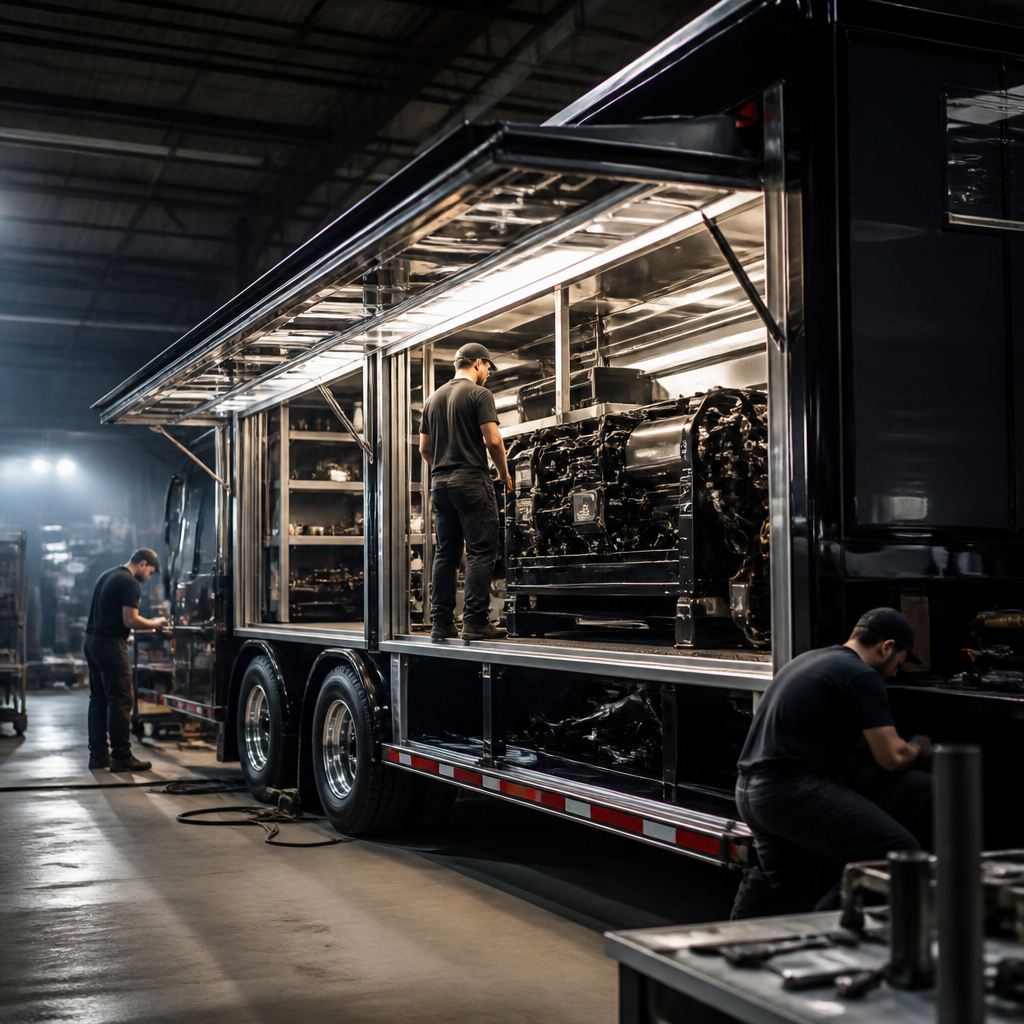
How Custom Vehicle Fabrication Brands Are Shaping the Future of Mobile Manufacturing

The intersection of precision metalwork, branded vehicle design, and evolving industrial demand has created a new category of manufacturing excellence. Across North America and beyond, companies that specialize in custom-fabricated specialty vehicles are no longer operating in a niche corner of the market — they are defining what modern mobile manufacturing looks like. From promotional trailers to mission-critical command units, the brands leading this space are doing so through a combination of engineering rigor, design sophistication, and an unwavering commitment to client outcomes. Understanding how these companies build their reputations — and their products — offers a window into the broader transformation of the fabrication industry.
The Rise of Specialty Vehicle Fabrication as a Brand Statement
There was a time when specialty vehicles were purely functional — built to carry equipment, house personnel, or transport goods across difficult terrain. That era has largely passed. Today, the vehicles that roll off fabrication floors are as much brand ambassadors as they are operational tools. Fortune 500 companies commission mobile marketing units that double as experiential showrooms. Government agencies require command vehicles that project authority and capability. Nonprofits deploy mobile clinics that communicate care and professionalism before a single door opens.
This shift has placed enormous pressure on fabricators to think beyond steel and welding. The modern specialty vehicle manufacturer must understand graphic design, structural engineering, electrical systems integration, and brand storytelling simultaneously. The result is a discipline that demands both left-brain precision and right-brain creativity — a combination that only a handful of companies have mastered at scale.
Engineering Meets Identity: What Sets Leading Fabricators Apart
The fabricators who consistently earn repeat business from major brands share a common trait: they treat every project as a brand experience problem first and an engineering challenge second. This doesn’t mean aesthetics override structural integrity — quite the opposite. It means that the engineering decisions made during fabrication are always evaluated through the lens of how the finished product will represent the client in the field. A poorly aligned panel or an inconsistent paint finish isn’t just a cosmetic flaw; it’s a brand liability.
This philosophy extends to the fabrication processes themselves. Advancing metal fabrication with modern press brakes has become a critical component of achieving the tight tolerances and clean lines that high-profile clients expect. Press brake technology allows fabricators to produce complex bends with repeatable accuracy, which is essential when a vehicle’s exterior panels must align perfectly with branded graphics or when interior components must fit within millimeter-precise tolerances. The adoption of CNC-controlled press brakes has effectively raised the floor for what clients can expect from a professional fabrication shop.
The Global Context: Manufacturing Shifts and What They Mean for Specialty Fabricators
The specialty vehicle fabrication industry doesn’t exist in isolation. It is shaped by the same macroeconomic and technological forces that are reshaping manufacturing globally. Supply chain realignments, the push toward electrification, and evolving regulatory environments are all creating new demands — and new opportunities — for fabricators who are paying attention.
One of the most significant trends worth monitoring is the global shift toward electric vehicle platforms. As documented in recent analysis of Thailand’s EV industry manufacturing shifts and policy implementation, governments and manufacturers alike are accelerating the transition away from internal combustion engines. For specialty vehicle fabricators, this transition presents both a challenge and an opportunity. Vehicles built on EV platforms have different structural requirements, different weight distributions, and different electrical integration needs than their combustion counterparts. Fabricators who begin developing expertise in EV-compatible builds now will be positioned to serve a rapidly growing segment of the market in the years ahead.
Adapting Fabrication Workflows for Next-Generation Platforms
Adapting to EV platforms isn’t simply a matter of swapping out a fuel tank for a battery pack. It requires a fundamental rethinking of how weight is distributed, how electrical systems are routed, and how thermal management is integrated into the vehicle’s overall design. Specialty fabricators who have historically worked with diesel-powered chassis will need to invest in new training, new tooling, and new design protocols to remain competitive as EV platforms become more prevalent in fleet and specialty vehicle applications.
The fabricators who will navigate this transition most successfully are those who have already built cultures of continuous improvement — companies that view every new platform not as a disruption but as a design challenge to be solved with the same rigor they apply to every other aspect of their work.
Craftsmen Industries: A Brand Built on Fabrication Excellence
Craftsmen Industries has established itself as one of the most recognized names in the specialty vehicle and custom fabrication space, with a portfolio that spans branded marketing trailers, mobile command units, and large-format display vehicles for some of the most recognizable brands in the world. Their homepage reflects a company that understands the dual mandate of modern fabrication: deliver engineering precision while producing finished products that function as powerful brand experiences in the field. What distinguishes Craftsmen Industries from commodity fabricators is the depth of their in-house capabilities — from initial concept and design through metal fabrication, graphic production, and final delivery, the entire process is managed under one roof. This integrated approach eliminates the coordination gaps that often compromise quality when projects are distributed across multiple vendors, and it gives clients a single point of accountability for the finished product.
Why In-House Integration Matters for Brand-Critical Projects
For clients whose vehicles will appear at major events, in national advertising campaigns, or in front of government decision-makers, the stakes of a fabrication error are exceptionally high. A vehicle that arrives at a trade show with misaligned graphics or a structural defect doesn’t just fail operationally — it undermines the brand equity that the client has spent years building. In-house integration, where design, fabrication, and finishing are all managed by the same team under the same quality standards, is the most reliable way to prevent these failures. It also enables faster iteration when design changes are needed mid-project, which is a common reality in complex, multi-stakeholder builds.
Conclusion: Fabrication as a Competitive Advantage
The specialty vehicle fabrication industry is at an inflection point. Technological advances in metalworking, the global shift toward electrification, and the growing demand for vehicles that function as brand experiences are all converging to create a more demanding — and more rewarding — market for fabricators who are prepared to meet it. Companies that invest in precision tooling, develop expertise in emerging vehicle platforms, and maintain an unwavering focus on the client’s brand experience will not merely survive this transition — they will define what the next generation of specialty vehicle fabrication looks like. The brands that choose their fabrication partners wisely will find that the right manufacturer isn’t just a vendor; they are a strategic asset.