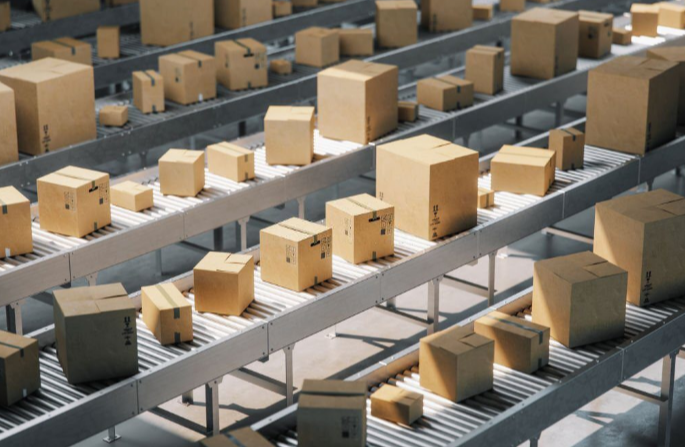

As manufacturing operations grow, packaging can become one of the most important areas for improving production efficiency. A product may be manufactured quickly, but if the packaging process depends heavily on manual work, the overall production line can still experience delays, inconsistent output, and unnecessary labor costs.
For shisha manufacturers handling substantial volumes, automated cartoning provides an opportunity to create a more organized and repeatable packaging process. An 80–120 PPM Shisha Cartoning Machine can be considered when production requirements demand a higher level of packaging throughput.
The Growing Need for Packaging Efficiency
Modern manufacturers are under pressure to produce consistently while keeping operating costs under control.
Packaging involves several repetitive tasks, including carton preparation, product positioning, loading, and closing.
When these tasks are performed manually, production capacity can become dependent on the number of available workers and their ability to maintain the same pace throughout a shift.
Automation can make the process more predictable.
From Manual Packaging to Automation
Manual packaging still has a place in small-scale production.
However, as production volumes increase, repetitive packaging tasks can become difficult to manage efficiently.
Automated cartoning equipment can perform standardized movements continuously, reducing the amount of manual intervention required.
This allows production managers to organize labor around supervision, material preparation, quality control, and maintenance rather than repetitive carton handling.
Understanding High-Speed Cartoning
An 80–120 PPM Shisha Cartoning Machine operates within a production range designed for relatively high packaging requirements.
PPM means packages per minute.
The actual output achieved during production can vary depending on product dimensions, carton specifications, feeding systems, machine settings, changeovers, and interruptions.
Therefore, businesses should evaluate expected real-world production rather than relying only on maximum rated speed.
Consistency Across Production Runs
One of the strongest arguments for automation is consistency.
A properly configured machine can repeat carton-forming and product-loading operations with controlled timing.
This can help reduce variations in package appearance and placement.
For businesses supplying distributors or retailers, consistent presentation can be particularly important.
Reducing Repetitive Labor
Workers performing repetitive packaging movements throughout an entire shift can experience fatigue.
Fatigue may eventually affect productivity and consistency.
Automation can reduce repetitive physical work and allow employees to take on more supervisory or quality-focused responsibilities.
This does not necessarily eliminate the need for workers. Instead, it changes how their time is used.
Better Use of Production Space
An automated packaging system can also help organize the production area.
Products can move through defined stages using conveyors and controlled feeding systems.
This can reduce unnecessary movement between workstations and create a more structured workflow.
The exact layout depends on the factory and equipment configuration.
Packaging Accuracy
Accuracy is important at every stage.
The product must reach the carton in the correct position, and the carton must be formed and closed properly.
Automation can help maintain consistent positioning by controlling timing and movement.
Sensors can also support monitoring and detection of certain process issues.
Product Protection
The carton is responsible for protecting the packaged item during handling and transportation.
Inconsistent folding or closing can weaken the package.
A properly adjusted cartoning system can help produce more uniform finished cartons.
Reducing Material Waste
Packaging errors can lead to rejected cartons and wasted materials.
Examples include damaged cartons, incorrect product placement, or improperly closed packages.
Automation can reduce some of these errors when the machine is correctly configured and maintained.
Reduced waste can contribute to more efficient use of packaging materials.
Integration With Other Machines
High-volume packaging rarely involves a single machine.
Manufacturers may use conveyors, product feeders, coding systems, inspection equipment, and case-packing systems.
A cartoning machine should therefore be considered as one component of a larger production line.
Good integration helps prevent one stage from becoming significantly slower than another.
Changeover Flexibility
Manufacturers may need to package different products or use several carton sizes.
Changeover time can therefore influence overall efficiency.
Before purchasing equipment, businesses should ask how the machine is adjusted between different formats and how much operator involvement is required.
Importance of Maintenance
Automated machinery needs regular care.
Moving components, sensors, feeding mechanisms, and electrical systems should be inspected according to the manufacturer’s recommendations.
Preventive maintenance can help reduce unexpected interruptions.
A machine that is maintained consistently is more likely to provide stable performance over time.
Training Operators
Employees still play an important role in an automated packaging environment.
Operators should understand machine controls, material loading, changeovers, cleaning procedures, alarms, and safety requirements.
Proper training can also help workers recognize early signs of technical problems.
Quality Control
Automation should be supported by quality inspection.
Operators or inspection systems can check finished cartons for proper formation, product presence, closure, labeling, and appearance.
Regular checks can identify problems before a large number of packages are affected.
Choosing the Right Capacity
Not every manufacturer needs the same machine speed.
A business should calculate current output and expected future demand.
Choosing equipment with appropriate capacity can prevent both underutilization and unnecessary investment in excessive production capability.
Evaluating the Supplier
When comparing an 80–120 PPM Shisha Cartoning Machine, businesses should consider technical specifications, product compatibility, carton dimensions, machine footprint, installation, training, maintenance, spare parts, and after-sales support.
A supplier should understand the actual packaging application rather than focusing only on headline speed.
Long-Term Benefits
Packaging automation can become a long-term production asset.
When correctly integrated, maintained, and operated, it can support consistent output and make production planning easier.
It can also provide a foundation for future expansion if demand increases.
Conclusion
High-volume shisha production requires more than efficient manufacturing equipment. Packaging must also keep pace with production while maintaining consistency and product presentation.
An 80–120 PPM Shisha Cartoning Machine can help manufacturers automate repetitive packaging tasks, improve consistency, reduce manual handling, and support higher throughput.
The best results come from evaluating the complete production line, including feeding, carton quality, changeovers, maintenance, operator training, quality control, and future production needs.
With careful planning, packaging automation can become an important part of a reliable and scalable manufacturing operation.