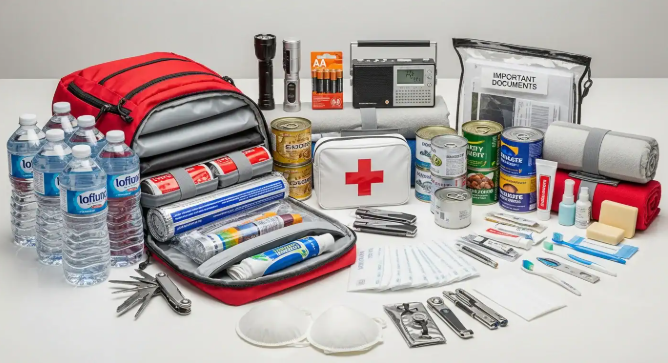

The power suddenly cuts out at 8:17 p.m. Someone checks the breaker. Someone else checks the weather app. The dog starts barking because, apparently, darkness is suspicious. Then comes the question: Where are the flashlights?
This is where a home emergency kit earns its keep.
Food and water are obvious starting points, but a useful household kit needs to address the less glamorous problems too. Power, communication, sanitation, basic repairs, medication, and information can become just as important when normal services are interrupted.
Start With Light and Power
A flashlight belongs somewhere everyone can find it without searching through three drawers. Keep multiple light sources available, preferably including battery-powered flashlights or headlamps. Store spare batteries in a protected location and check them periodically.
Portable power banks can keep phones operating during an outage. For longer disruptions, consider which household devices are essential and whether you have a safe way to maintain them.
Candles may seem like an obvious backup, but open flames introduce fire risks. Battery-powered lighting is generally easier to manage during a stressful situation.
See also: How To Create A Dining Space That Works for Everyday Life in Oklahoma
Don’t Forget Communication
A household emergency plan should work even when the internet does not. Write down important phone numbers and addresses instead of relying exclusively on contacts stored in smartphones. Include emergency contacts, family members, medical providers, and other information your household may need.
A battery-powered or hand-crank radio can also provide access to official information during certain outages or severe-weather events.
Everyone in the household should know where these supplies are kept. A kit that only one person can find is really a one-person kit.
Build a Small Repair Station
Emergencies have a habit of creating annoyingly ordinary problems. A flashlight will not fix a leaking pipe. Bottled water will not secure a loose fitting. Food will not help if a door or window needs a temporary repair.
Keep basic household tools available, along with items such as heavy-duty tape, work gloves, utility cord, zip ties, plastic sheeting, and basic fasteners. The exact contents should reflect the home and the types of problems that are realistically possible.
You do not need a hardware store in a plastic container. A handful of versatile supplies is enough to cover many minor issues.
Think About Health and Hygiene
A first-aid kit is only one part of medical preparedness. Keep necessary prescription medications, basic over-the-counter supplies, personal hygiene products, and any items required for household members with specific needs.
Sanitation deserves attention, too. Soap, disinfectant, garbage bags, paper products, and personal-care supplies can become surprisingly valuable when water service or regular garbage collection is disrupted.
Parents should account for children, while pet owners should include appropriate food, medication, and supplies for animals.
Keep Important Information Accessible
During an emergency, information can be just as valuable as equipment. Keep copies of important documents in a secure location. Depending on your household, these may include identification records, insurance information, medical details, property information, and emergency contacts.
A simple household list can also record utility shutoff locations and important service numbers.
Do not put sensitive documents somewhere anyone can casually access them. Emergency preparedness still needs sensible privacy and security.
Review Firearm and Ammunition Storage
Some households also keep firearms and ammunition at home. Emergency planning should not turn those items into an afterthought.
Firearms should remain securely stored with access limited to authorized individuals. Ammunition should likewise be stored responsibly and kept in appropriate conditions. For lawful owners researching Cheap Ammo, price should not replace basic considerations such as cartridge compatibility, intended lawful use, storage, and reliable function in the specific firearm. Any ammunition should be handled responsibly and used according to applicable laws and manufacturer guidance.
During an emergency, unusual circumstances are not a reason to abandon ordinary safety practices. Secure storage remains important.
Make the Checklist Household-Specific
Generic emergency lists are useful starting points, but every home has different needs. An apartment may require different supplies from a rural house. A family with young children has different priorities from a household of adults. Someone dependent on powered medical equipment may need a much more detailed backup plan.
Walk through your home and imagine losing electricity, water, internet access, or normal shopping for several days. What would become difficult first? Those answers should shape your checklist.
The Boring Stuff Is Often the Useful Stuff
An emergency kit does not need to look impressive. It needs to be findable, maintained, and suited to the people who actually live in the house. Check batteries. Replace expired supplies. Update contact information. Rotate consumables. Make sure everyone knows where the important equipment lives.
Food and water may get the headlines, but preparedness is really about everything around them.
The flashlight has batteries. The phone has backup power. The first-aid kit is stocked. The documents are accessible. The tools are where they should be. That is the kind of preparation that makes an unexpected night at home a little less chaotic, and a lot more manageable.