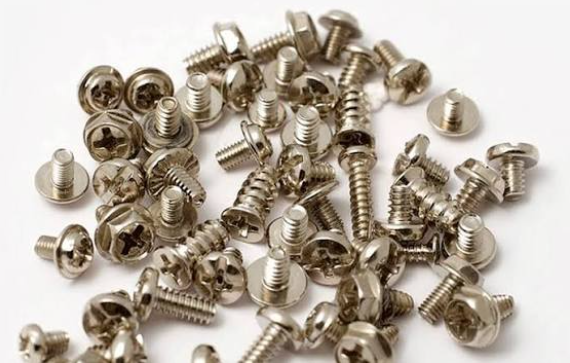

Manufacturing efficiency depends on many small decisions. One of these is the selection of fastening components.
A fastener that is easy to install, compatible with standard tools, and appropriate for the joint design can help simplify assembly. In high-volume production, even a small improvement can become meaningful when repeated across thousands of units.
Integrated flange-head designs are one example of a fastening approach that can combine multiple functions into a single component.
Simplifying Component Management
Every additional component in an assembly creates another item that must be stored, supplied, positioned, and installed.
A fastener with an integrated bearing surface can reduce the need for a separate washer in suitable applications.
This can simplify inventory and reduce the number of individual components handled by assembly workers.
Installation Efficiency
A hexagonal head allows the use of common tools, depending on the fastener specification.
This can make installation straightforward for technicians who are already familiar with standard mechanical fastening procedures.
The actual installation process should still follow the manufacturer’s and engineer’s specifications.
See also: How To Create A Dining Space That Works for Everyday Life in Oklahoma
Load Distribution
The flange beneath the head increases the contact area.
A larger bearing surface can help distribute clamping pressure across a wider portion of the connected material.
The benefit depends on the joint design, material, surface condition, and applied load.
Choosing Appropriate Materials
Manufacturers may use different materials depending on their requirements.
Titanium can be considered when low weight and corrosion resistance are important. Other materials may be more appropriate when maximum strength, lower cost, or different temperature characteristics are the primary concern.
Material selection should therefore be application-specific.
Understanding Dimensions
Fastener dimensions must be carefully controlled.
Important measurements include:
- Thread diameter
- Thread pitch
- Overall length
- Head width
- Head height
- Flange diameter
- Thread length
These specifications affect compatibility and installation.
Quality in Mass Production
High-volume manufacturing requires consistency.
A small dimensional variation that causes no problem in one assembly could become a major issue when repeated across thousands of units.
Manufacturers should therefore maintain effective process controls and inspection procedures.
Maintenance Benefits
Fasteners that are properly selected and installed can contribute to easier maintenance.
If an assembly needs to be opened for inspection or repair, standardized fasteners can simplify removal and replacement.
Using consistent specifications throughout a product can also make technician training easier.
Procurement Considerations
Purchasing teams should communicate detailed requirements to suppliers.
A request should ideally include drawings, material requirements, dimensions, quantity, inspection expectations, and packaging requirements.
Clear specifications help prevent misunderstandings.
FAQs
1. Can an integrated flange reduce components?
In suitable designs, the flange can perform a bearing function that might otherwise require a separate washer.
2. Why is dimensional consistency important?
Consistent dimensions help ensure that fasteners fit correctly and can be installed reliably across production batches.
3. Should fastener selection focus only on price?
No. Material, quality, installation efficiency, service life, and overall assembly requirements should also be considered.
Conclusion
Fastener design can influenc head flange e both assembly efficiency and long-term reliability. Integrated flange designs can provide useful advantages by combining a wrenching head with a larger bearing surface.
Manufacturers can achieve better results by considering dimensions, material, quality control, installation procedures, and lifecycle requirements together rather than treating the fastener as a simple commodity component.