
A 400G port does not tell you which module belongs in it. That is the first thing network engineers discover when they compare QSFP-DD and QSFP112. Both form factors move 400 Gbps. Both fit into the broader QSFP mechanical family. Yet they are built around fundamentally different assumptions about how a host switch or NIC delivers that bandwidth across its electrical lanes. Understanding that difference is what prevents a deployment from stalling at link initialization—or from locking a data center into an architecture it cannot scale.
The Electrical Architecture is the Whole Story
QSFP-DD, short for Quad Small Form-Factor Pluggable Double Density, reaches 400G by doubling the electrical lane count of a standard QSFP port from four to eight. Each of those eight lanes runs at a nominal 50G PAM4, producing a host interface commonly referred to as 400GAUI-8. The “double density” label is literal: the cage carries an extra row of contacts behind the familiar QSFP footprint, which is why QSFP-DD cages are deeper than a standard QSFP28 or QSFP56 cage. The payoff is not just 400G today; the same eight-lane electrical foundation scales to 800G when those lanes are pushed to 100G PAM4 in QSFP-DD800 implementations.
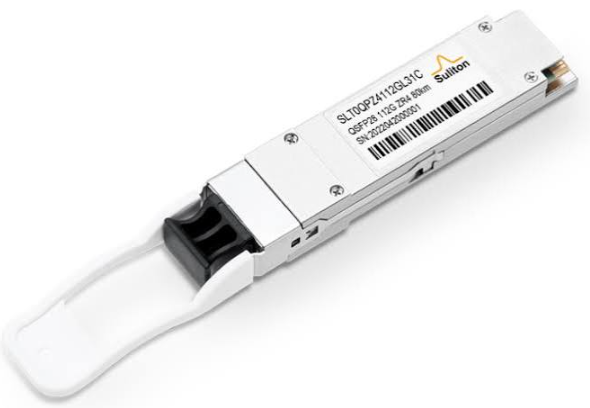
QSFP112 takes the opposite approach. It keeps the four-lane electrical structure of the original QSFP family and instead accelerates each lane to roughly 106.25 Gb/s, or 112G-class PAM4, yielding an aggregate signaling rate near 425 Gb/s over a 400GAUI-4 host interface. The physical envelope remains the compact 18.4 × 89.4 × 8.5 mm QSFP footprint, so a QSFP112 module slides into a standard QSFP-style cage without the deeper connector required by QSFP-DD. In practical terms, QSFP-DD spreads 400G across more, slower lanes; QSFP112 concentrates 400G into fewer, faster lanes. Neither delivers more total bandwidth. They simply allocate it differently.
See also: How To Create A Dining Space That Works for Everyday Life in Oklahoma
Power and thermal consequences follow the lane count
Lane count is not an abstract specification. It drives the electrical SerDes burden on the host and shapes the thermal profile of the module. A four-lane QSFP112 architecture generates less heat than an eight-lane QSFP-DD design, all else being equal, because there are fewer high-speed electrical paths to drive and equalize within the module. That thermal advantage matters at rack scale. A typical 400G QSFP-DD transceiver draws in the range of 10 to 14 W, and the cumulative optical power budget across a dense switching fabric can become a constraint on cooling and PDU capacity.
However, the four-lane design also places more demand on the host ASIC. QSFP112 requires a switch or NIC SerDes capable of 112G PAM4 per lane, while many existing 400G-capable platforms were designed around 50G PAM4 SerDes and eight-lane QSFP-DD ports. A legacy port that accepts a QSFP112 module physically will not necessarily initialize it electrically if the host cannot drive four lanes at the higher rate. Thermal savings at the module level do not offset an incompatible host architecture.
Optical interfaces cut across both form factors—and the variants prove it
The most persistent misconception about QSFP-DD versus QSFP112 is that the form factor name determines the optical link. It does not. Both are electrical host-interface definitions. The optical reach, fiber type, and connector are set by the specific optical module built inside the housing. A 400G QSFP-DD can carry eight 50G optical lanes in an SR8 application, or it can combine eight 50G electrical lanes into four 100G optical channels for a duplex LC single-mode link. A 400G QSFP112 module, despite its four-lane electrical interface, can likewise present a four-lane optical interface in an SR4 or DR4 configuration, or a CWDM-based interface for reach beyond multimode limits.
This is where the concrete variants become instructive. A 400G FR4 QSFP-DD module, for example, accepts eight 53.125 Gb/s PAM4 electrical lanes from the host and converts them into four 106.25 Gb/s CWDM optical channels at 1271, 1291, 1311, and 1331 nm, multiplexed onto a single duplex LC single-mode fiber for reaches up to 2 km. A 400G QSFP112 FR4 variant performs the same optical function—four CWDM wavelengths over duplex LC single-mode fiber—but does so from a four-lane 100G PAM4 host interface rather than an eight-lane 50G interface. The optical handshake between the two modules can succeed if both ends use the same optical specification, because the fiber does not care how many electrical lanes fed the transmitter. What must match is the host electrical interface on each side. A QSFP-DD DR4 link and a QSFP112 DR4 link can interoperate optically, but the QSFP112 module will not operate in a host that only supplies eight-lane 50G PAM4 signaling.
Compatibility, migration, and the 800G question
QSFP-DD’s clearest strategic advantage is backward compatibility. Most QSFP-DD cages electrically accept QSFP28 and QSFP56 modules, which means a migration from 100G or 200G to 400G can happen port by port without replacing every leaf switch on day one. QSFP112 does not offer that same flexibility across all platforms. Its physical fit is standard, but its electrical expectations are not, and support for lower-speed modules in a QSFP112-capable port depends entirely on the switch or NIC implementation. QSFP112 also has no defined 800G variant within the same form factor, whereas QSFP-DD has a direct upgrade path to 800G through QSFP-DD800.
For buyers, the decision usually starts with the hardware already in the rack rather than with the module data sheet. If the switch ASIC supports eight-lane 50G PAM4 and the goal is a staged 400G rollout with an eye toward 800G, QSFP-DD is the natural fit. If the platform is built around 112G SerDes and the priority is port density with lower per-module thermal load in a standard QSFP envelope, QSFP112 delivers 400G without the deeper cage and extra lane count. The form factor that matches the host is the one that will actually bring the link up. Everything else is optics.